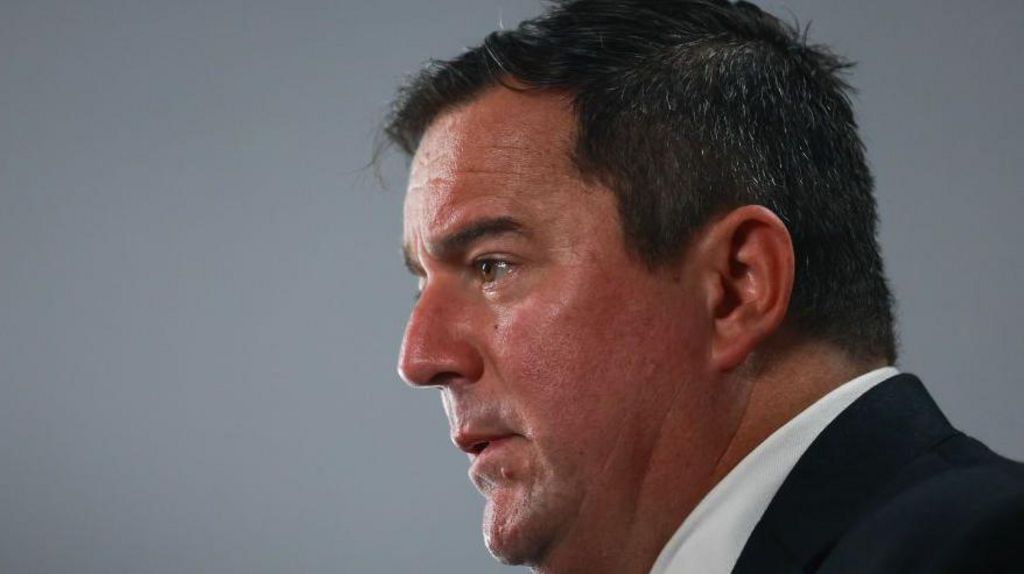
South Africa’s political landscape faces renewed turbulence as Democratic Alliance (DA) leader John Steenhuisen announces his resignation following multiple scandals that have shaken the party’s carefully cultivated image of integrity. The development triggers a potentially divisive leadership contest that threatens to expose racial faultlines within the opposition party.
The DA, historically perceived as representing racial minorities, joined the governing coalition for the first time following the 2024 elections that failed to produce an outright winner. Steenhuisen, serving as Agriculture Minister in President Cyril Ramaphosa’s cabinet, found himself embroiled in controversies that ultimately forced his political retreat.
The minister faced intense criticism from farming communities over his handling of a devastating foot-and-mouth disease outbreak that crippled South Africa’s livestock industry. Theo de Jager of the Southern African Agri Initiative accused Steenhuisen’s administration of systematically silencing critics through exclusion and isolation tactics.
More damaging emerged a financial scandal revealing Steenhuisen faced a default court judgment for unpaid personal credit card debt exceeding 150,000 rand despite earning an annual salary of 2.69 million rand. The Daily Maverick’s revelation prompted public scrutiny of how a leader unable to manage personal finances could oversee national agricultural policy.
The controversy deepened when Steenhuisen orchestrated the dismissal of Environment Minister Dion George, the DA’s federal finance chair. While official reasons cited under-performance, conservation groups decried the move as a ‘political execution’ linked to George’s anti-wildlife trafficking stance. The EMS Foundation accused Steenhuisen of aligning with wildlife breeding interests upon assuming his ministerial portfolio.
George’s subsequent resignation revealed further complications: he had confiscated Steenhuisen’s party-issued credit card last year due to unreconciled spending on UberEats, car rentals, and hotel accommodations. Although a DA inquiry cleared Steenhuisen of wrongdoing, the cumulative scandals proved politically insurmountable.
Political analysts offer contrasting assessments of Steenhuisen’s legacy. Sandile Swana cited the leader’s 2010 extramarital affair, public fallout with George, and financial management issues as evidence of poor leadership. Conversely, Khanyi Magubane suggested Steenhuisen’s cooperative relationship with the ANC in coalition government represented the ‘core issue’ leading to his departure, disappointing DA hardliners expecting continued opposition.
The leadership contest now pits Cape Town mayor Geordin Hill-Lewis against Gauteng leader Solly Msimanga, with analysts suggesting racial dynamics may influence the outcome. Magubane noted the DA’s conservative base might resist a black leader, reflecting persistent racial divisions within the party despite efforts to broaden its appeal following Mmusi Maimane’s leadership from 2015-2019.
The developments underscore the challenges facing South Africa’s political evolution three decades after apartheid’s end, as historical divisions continue shaping contemporary governance dynamics.