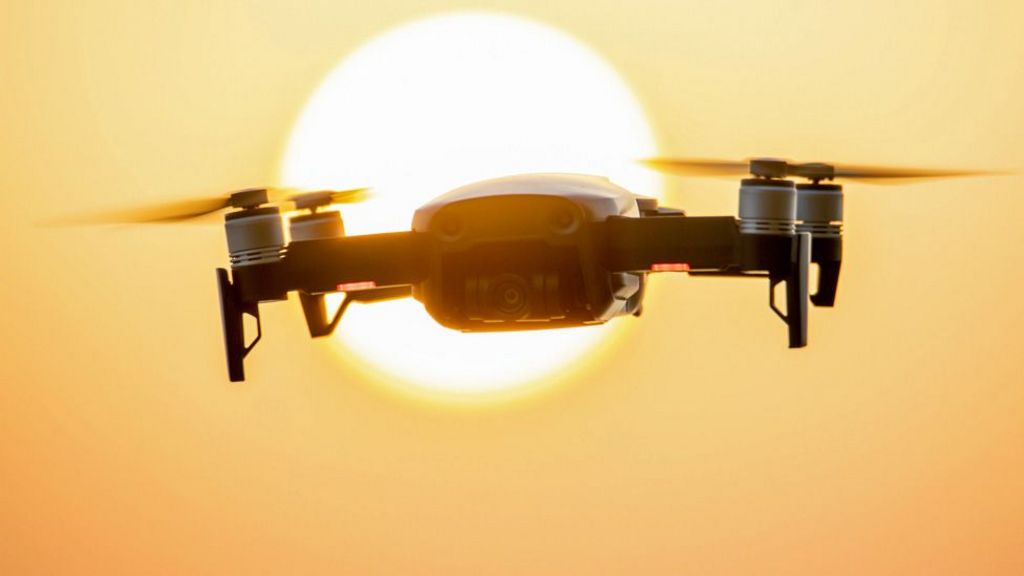
West Africa faces an emerging security crisis as jihadist organizations increasingly deploy armed drone technology, transforming the regional conflict landscape through aerial warfare capabilities. Monitoring group Acled documents at least 89 confirmed drone strikes since 2023, with al-Qaeda affiliate Jama’at Nusrat al-Islam wal-Muslimin (JNIM) responsible for 69 attacks across Mali and Burkina Faso, while Islamic State affiliates Islamic State West Africa Province (ISWAP) and Islamic State Sahel Province (ISSP) have conducted approximately 20 combined operations primarily in Nigeria.
The tactical evolution represents a significant shift in militant capabilities, with groups utilizing commercially available quadcopter drones rigged with explosives for both surveillance and direct attacks. According to Acled senior Africa analyst Ladd Serwat, these inexpensive unmanned systems lower operational costs while enabling intelligence gathering with minimal risk to militants.
A January 29th dual assault in Nigeria’s Borno state exemplifies this new threat paradigm, where ISWAP coordinated armed drones with ground fighters against a military base, resulting in nine soldier fatalities. That same day, ISSP targeted Niamey’s international airport and adjacent military installations in Niger, though conflicting reports exist regarding drone deployment in this incident.
Security analyst Audu Bulama Bukarti notes the concerning progression: “Drones allow militants to gather intelligence with minimal risk and enable strikes on military targets that were previously harder to reach.” Despite import restrictions across the region, jihadists exploit porous borders and smuggling networks to acquire these technologies, according to Good Governance Africa researcher Malik Samuel.
JNIM has demonstrated particularly advanced capabilities, incorporating first-person view (FPV) drones—similar to those used in Ukraine—for precision targeting. In February 2025, the group deployed FPV systems to drop improvised explosives on Burkinabe military positions in Djibo, marking a technical escalation.
While most attacks target military and allied militia positions, civilian casualties have occurred. Acled reports JNIM has struck markets in communities perceived as government-aligned, while ISWAP’s sole documented civilian attack killed two pastoralists in northern Cameroon in June 2025.
Experts warn that without enhanced countermeasures including jamming technology, air defense systems, and preemptive strikes against drone facilities, jihadist groups could further develop capabilities for high-impact assaults that exacerbate regional instability.