A fatal collision at New York’s LaGuardia Airport last month that claimed two Air Canada pilots’ lives has unexpectedly ignited a national firestorm over linguistic policy in Canada, culminating in the announcement that the airline’s long-serving CEO will step down earlier than planned. On March 22, an Air Canada flight originating from Montreal crashed into an emergency vehicle while attempting to land, killing the two pilots and injuring dozens of passengers. The incident marked Air Canada’s first fatal crash in more than 40 years, a devastating milestone that put the airline under immediate public scrutiny.
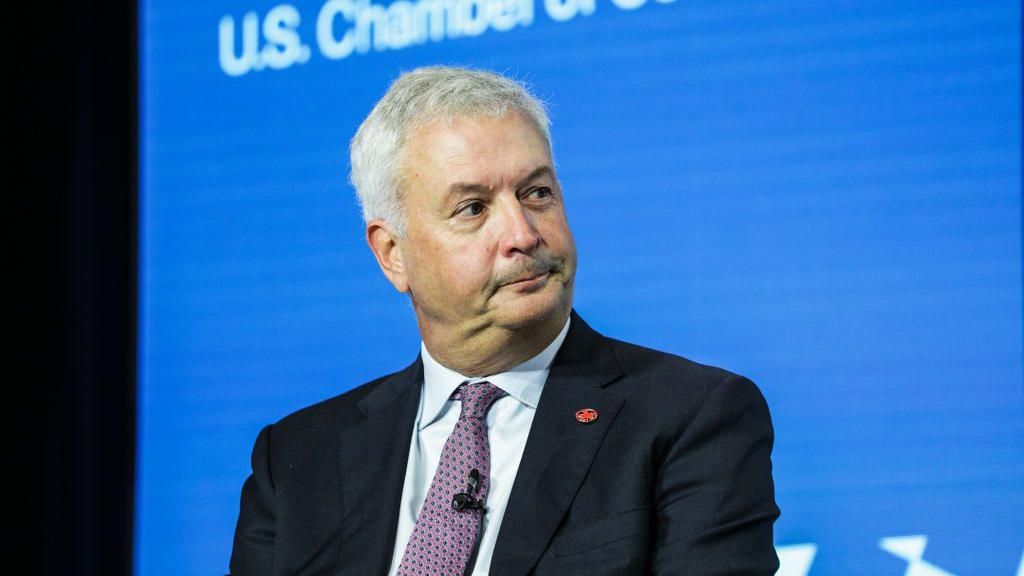
The controversy did not stem from the crash itself, however. It erupted 24 hours after the collision, when Air Canada published a four-minute condolence video from CEO Michael Rousseau on its social media channels. While the video included dual-language subtitles, Rousseau delivered his entire address exclusively in English. The public backlash was swift and intense: Canada’s Office of the Commissioner of Official Languages received dozens of formal complaints within hours, and a parliamentary committee voted unanimously to summon Rousseau to testify and explain his choice to speak only English.
Quebec, Canada’s majority French-speaking province, led the calls for Rousseau’s resignation. Provincial lawmakers passed a non-binding resolution calling for his departure, with politicians accusing the CEO of a “gross lack of respect” for the Quebecois family of one of the fallen pilots, Antoine Forest. Canadian Prime Minister Mark Carney joined the criticism, saying the unilingual video demonstrated a clear “lack of compassion” for grieving French-speaking communities. Prominent Canadian author Jack Jedwab wrote in French-language daily La Presse that Rousseau’s admitted weakness in French sends a harmful message to Air Canada staff that national bilingualism is “a constraint, not a value,” adding that Rousseau was unfit to serve as the national carrier’s public face.
Three days after the original video sparked public outrage, Rousseau released a formal apology, acknowledging that his choice had diverted attention from the families mourning the victims and admitting that despite years of language classes, his French proficiency remains limited. Less than a week later, the 68-year-old CEO announced he would retire from his position by September this year.
Air Canada has attempted to frame Rousseau’s departure as a natural transition: a company spokesperson told the Wall Street Journal that the CEO had reached standard retirement age and that his exit was unrelated to the language controversy. But the timing of the announcement, coming directly on the heels of the national backlash, has led many political observers and members of the public to question that official narrative.
For international observers unfamiliar with Canada’s linguistic history, the intensity of the reaction to Rousseau’s unilingual address may seem surprising. The controversy is rooted in Canada’s unique cultural and legal framework for bilingualism, as well as Air Canada’s specific status as Canada’s iconic national carrier. Originally a federally owned and operated crown corporation, Air Canada has always been bound by Canada’s Official Languages Act, which guarantees all Canadians access to federal services in both English and French. Although Air Canada was privatized in 1988, the federal government passed special legislation requiring the airline to retain its full bilingual obligations, because it has long been viewed as a central symbol of Canadian national identity that represents the country across the globe. As François Larocque, research chair in language rights at the University of Ottawa, explained, this means bilingual communication is not optional for the airline’s top leadership.
This is not the first time Air Canada has run afoul of its bilingual mandate, nor is it the first time Rousseau’s unilingualism has sparked controversy. In 2019, the airline was fined after a French-speaking couple complained that in-flight signage on a domestic route was only available in English. When Rousseau first took the CEO position in 2021, after decades of living and working in Montreal, his inability to answer a reporter’s question in French made national headlines. At the time, he attributed his lack of progress in French to the heavy demands of his work schedule; five years later, his failure to improve his language ability became the final straw for many critics.
The controversy has also exposed deep divides across the country over the place of bilingualism in Canadian public life. While anger ran high in Quebec, many commentators and members of the public in other English-majority provinces have questioned the intensity of the backlash. Toronto-based National Post columnist Chris Selley argued that the expectations placed on Rousseau are unique to Canada’s political context, while others have accused Quebec politicians of manufacturing outrage to pander to French-speaking voters ahead of upcoming elections. “Two young men died. Be heartbroken, be respectful, but do not exploit this tragedy to advance political popularity,” Joanne O’Hara, a resident of Oakville, Ontario, wrote in a letter to the editor of the Globe and Mail.
Scholars of Canadian politics note that bilingualism is far more than a cultural preference: it is a core foundation of Canadian national unity. As Larocque explained, as a country formed from both French and British colonial territories, bilingualism is “intimately tied to the history of Canada,” and there is very little chance Quebec would remain part of the Canadian federation if French were not recognized as an equal official language. This has created an unspoken rule that all senior national leaders, from the prime minister onward, must be proficient in both languages. Even current Prime Minister Mark Carney, an anglophone from western Canada, spent years improving his French before launching his leadership campaign, and his language ability was a key point of public scrutiny during the election.
In the wake of Rousseau’s announcement, Air Canada confirmed it launched an external search for a new CEO back in January, well before the LaGuardia collision, and that proficiency in French will be a required qualification for the role.