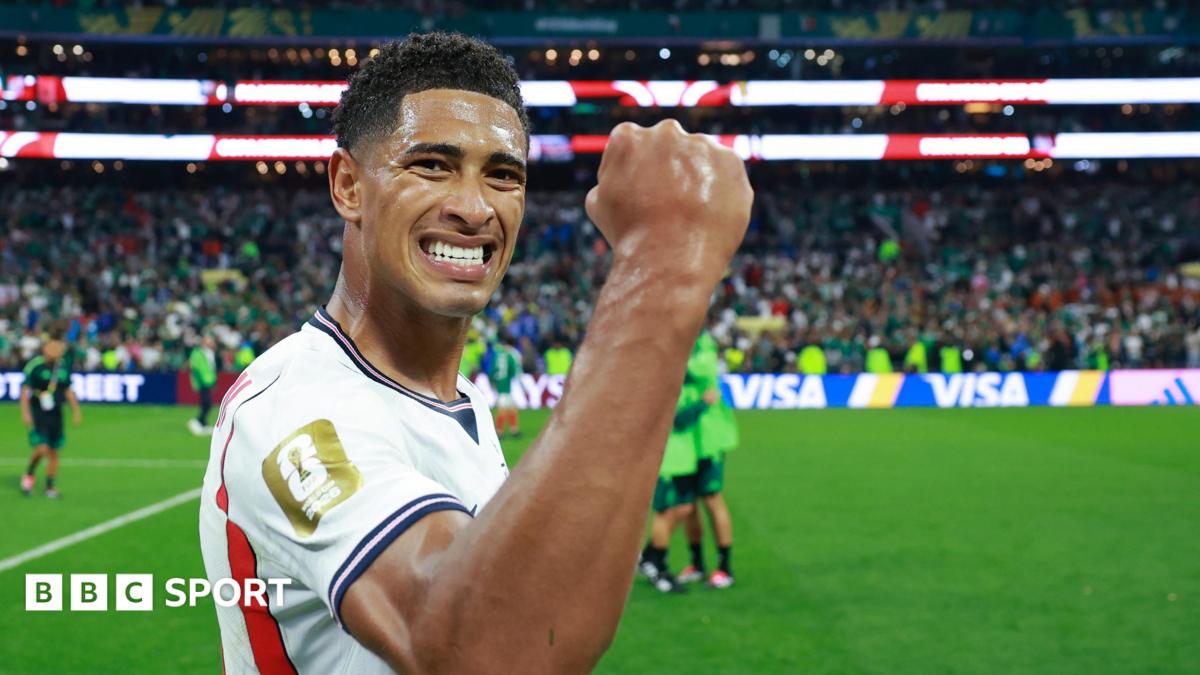
At a raucous, high-altitude Azteca Stadium in Mexico City, England delivered a masterclass in adaptive knockout football to secure a dramatic victory over Mexico and advance to the 2026 FIFA World Cup quarter-finals. From the opening whistle, the Three Lions faced a perfect storm of challenges: a partisan sell-out crowd, Mexico City’s thin mountain air, and a ferocious early pressing game from the host nation that left many pre-match analysts predicting an upset. What unfolded over 90 minutes proved why manager Thomas Tuchel holds a reputation as one of the world’s sharpest tactical minds, as England navigated five distinct phases of play to claim a win that will go down as one of their most impressive knockout tournament results.
Pre-match, Tuchel had adjusted his core philosophy of relentless high pressing to suit the conditions, urging his side to pick their moments carefully rather than expending valuable energy chasing every pass. That game plan was confirmed by assistant coach Anthony Barry at halftime, who explained the squad had prepared to absorb Mexico’s fast start. “We told the players the opening stretch up to the first water break would be difficult,” Barry said. “We knew we’d have to suffer, and that a 0-0 halftime score would be a great result.”
England stuck to the script, muting much of Mexico’s early momentum with a far more measured defensive shape than they had shown in their previous round win over DR Congo. When Mexico built play from their own defensive third, England added an extra man to their pressing line – one more than against DR Congo – with Harry Kane and Jude Bellingham leading the effort to cut off passing lanes. Midfielder Elliot Anderson adapted his role specifically to plug gaps, holding a deeper position close to England’s centre-backs rather than pushing high, to stop Mexico from playing quick outlet passes to open attackers. This adjustment would prove pivotal as the match unfolded.
When Mexico did manage to establish higher possession, England dropped into a disciplined mid-block, prioritizing protecting dangerous spaces over immediate ball recovery. Data highlighted this dramatic tactical shift: over England’s first four tournament games, they recovered possession in an average of 12.1 seconds after losing it. In the first half against Mexico, that average jumped to 37 seconds, with wingers Bukayo Saka, Anderson and Anthony Gordon regularly dropping back to form a compact five or six-man defensive line.
The closing minutes of the first half brought the first defining turning point of the game. As Mexico rotated their attack to stretch England, 17-year-old Gilberto Mora, playing out of his usual position on the left flank, failed to close down England goalkeeper Jordan Pickford as he prepared to clear. Pickford quickly found Declan Rice, who drove forward with the ball before playing a wide pass to Saka. Saka delivered a pinpoint cross to the far post, where the late-arriving Bellingham nodded home the opening goal.
Things went from bad to worse for Mexico immediately after the restart. England pressed hard from kick-off, and this time Anderson pushed forward to fill the space behind the pressing line, winning back possession to launch a second attack that ended with Bellingham scoring his second goal of the night, putting England 2-0 up ahead of halftime.
England emerged for the second half on the front foot, shifting to a higher pressing block with Saka and Gordon taking turns acting as the third forward in the high line. The bold tactical change opened the game up into an end-to-end thriller, but it also brought a major setback: when Bellingham chased down Mexico goalkeeper Raul Rangel out of position, he left England outnumbered at the back. Mexico left winger Julian Quinones dragged England right-back Jarell Quansah out of position, creating a gap that Mexico exploited. Quansah slid in late to challenge Jesus Gallardo, and was shown a red card, leaving England down to 10 men for the final hour of the contest.
Down a man, England navigated two more distinct phases of the match, first shifting to a 4-4-1 shape after John Stones replaced Saka, with Ezri Konsa moving to right-back. Sticking to a core Tuchel principle of drawing pressure deep before playing long balls into attacking runners, England created another chance when pacey forward Gordon won a penalty after running onto a long clearance.
But Mexico remained dangerous down their left flank, where Quinones’ constant movement dragged England defenders out of position, creating space for left-back Gallardo to deliver dangerous crosses. The hosts built dangerous passing triangles on their left side – a tactic mirroring England’s own approach through the tournament – that created space for Quinones to shoot, switch play, and deliver crosses, one of which led to Mexico being awarded a penalty of their own.
Tuchel once again adjusted his tactics during a second-half hydration break, bringing on Dan Burn and Djed Spence to form a five-man back line in a 5-3-1 shape. The three-man midfield of Bellingham, Rice and Gordon was picked for its relentless work rate and ability to cover large swathes of the pitch, while Burn, standing at 6-foot-7, provided the dominant aerial presence at the back post that England needed to deal with Mexico’s incoming crosses.
In the closing stages, Mexico manager Javier Aguirre made a substitution that played directly into England’s hands, replacing the versatile, dynamic Quinones with 6-foot-3 striker Guillermo Martinez, shifting the hosts to an entirely cross-heavy game plan. With England defending deep and well-equipped to clear incoming aerial balls, Mexico lost the varied attacking threat that had troubled them earlier, with every attack funnelled wide into hopeful crosses that England’s defence cleared comfortably.
The result capped off a masterclass in knockout football adaptability, a core requirement for tournament success. Playing with 10 men on hostile foreign soil, England’s carefully prepared tactics and ability to adjust mid-match saw them through to the final eight, proving the value of their squad depth and tactical flexibility ahead of their quarter-final tie.