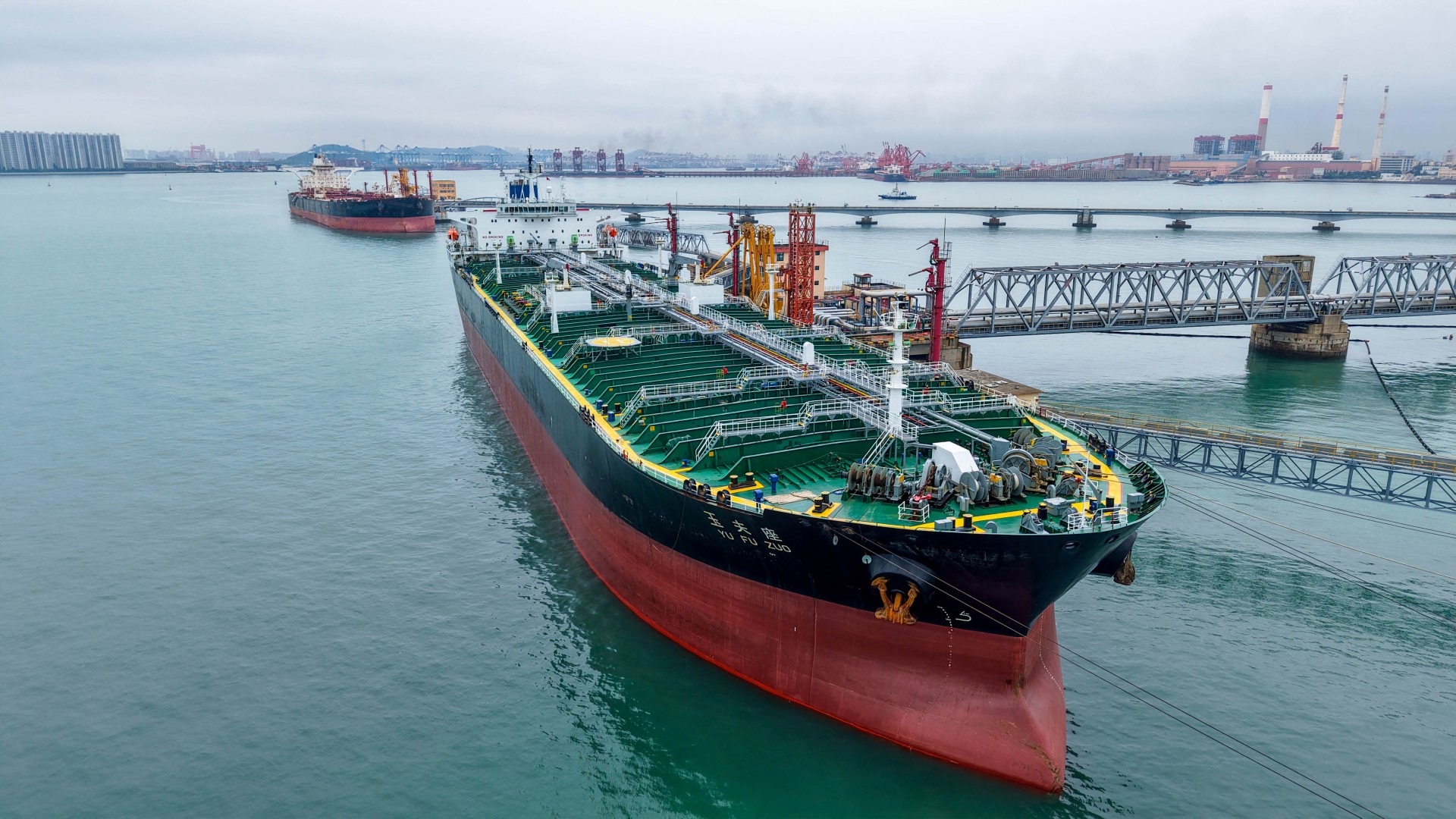
Six months after major supply disruptions shut down much of the Strait of Hormuz — the world’s most critical chokepoint for global oil trade — energy markets have avoided the catastrophic price spikes that marked comparable Middle Eastern crises in decades past. Analysts largely credit one unexpected factor for this muted volatility: China’s deliberate strategy of drawing down its massive strategic petroleum reserves (SPR) instead of bidding up crude prices on a disrupted global market.
Before the current crisis, the Strait of Hormuz carried roughly 20 million barrels of crude per day, equal to one-fifth of total global daily oil consumption. Six months into the ongoing disruption, an estimated 10 to 14 percent of the world’s total oil supply remains locked in, a far larger share of global output taken offline than during past major Middle East energy shocks. For comparison, the 1973 Arab oil embargo, which quadrupled global oil prices, only disrupted 7 percent of global supply. Both the 1979 Iranian Revolution and the 1990 Iraqi invasion of Kuwait doubled crude prices despite cutting off just 6 to 7 percent of global supply each.
Against this historical context, the current market outcome has been remarkably stable: international benchmark Brent crude has only risen around 50 percent since the start of the year, stabilizing at a steady $85 to $90 per barrel, after an initial jump when the strait closed. Two key factors explain this relative calm: coordinated emergency releases from the International Energy Agency totaling 400 million barrels, and a sharp pullback in crude purchasing from China, the world’s largest crude oil importer.
China’s ability to cut back on imports stems from its 20-year program of building up strategic reserves, which has accelerated since 2022. Today, Beijing holds more than 1.2 billion barrels of stored crude, enough to cover more than 100 days of net imports and sustain domestic supply for at least a full year even with a complete halt to seaborne imports. To preserve its stockpile while meeting domestic needs, Beijing sharply slowed refinery output to prioritize essential domestic demand, and restricted exports of refined products including diesel, gasoline, and jet fuel, allowing it to draw on reserves instead of purchasing expensive crude on the open market.
As Jack Prandelli, a veteran commodity trader, explained to Middle East Eye, Beijing’s strategy has effectively served as a price buffer: “China is preserving a high cushion, using its reserve as a buffer instead of chasing barrels in a disrupted Gulf market.”
In recent weeks, however, Beijing has begun to adjust its approach: it has partially lifted restrictions on refined product exports and made small, temporary purchases of Gulf crude. This shift has sparked market speculation about when China will resume full-scale restocking of its SPR, a move that analysts warn could trigger substantial upward pressure on global oil prices.
In July, China recorded a surprise small surplus of 210,000 barrels per day, a figure that caught many analysts off guard given the steep drop in crude imports since March. But Prandelli noted the surplus stems from refiners cutting output faster than export restrictions were loosened, not a meaningful rebound in crude imports. “It looks more like a pause in an extended destocking cycle than a decisive pivot to aggressive restocking,” he said.
Duncan Wrigley, chief China economist at Pantheon Macroeconomics, added that the minor uptick in oil imports seen in August can be traced to improved refinery margins following a brief drop in global crude prices, which dipped to $78 per barrel in the first week of August after averaging more than $90 the prior month. Prandelli cautioned that this minor import growth is unlikely to hold, predicting that “import volumes are already expected to stall or even reverse in August” as refiners continue leaning on reserves amid ongoing Hormuz disruptions and no diplomatic breakthrough between the U.S. and Iran.
For the second consecutive month in August, China further relaxed caps on refined fuel exports, approving a quota of up to 2.7 million metric tons for international shipments, according to a Reuters report citing industry sources. This move surprised many analysts, given the ongoing instability for vessels transiting the strait. Wrigley argued the easing “indicated perhaps misplaced optimism that global oil supplies would start to normalise.” A stabilization of conditions through the Hormuz would allow Chinese refiners to return to full normal output levels, he noted.
Early August had raised hopes for a diplomatic breakthrough: mediation from Qatar and Pakistan signaled that the U.S. and Iran might reach a long-term agreement to reopen the strait, where traffic had already fallen to record lows. Those hopes faded quickly, however, when former U.S. President Donald Trump reaffirmed plans to maintain harsh economic pressure on Iran and reiterated military threats just weeks before the existing bilateral memorandum of understanding expired on August 17 without renewal. The following weekend saw only five vessels transit the waterway, an all-time record low.
Even with the ongoing disruption, Wrigley noted that China’s loosening of export restrictions signals Beijing is not concerned about running low on either commercial or strategic oil inventories. The current reserve stockpile is enough to cover more than 100 days of net imports, according to Prandelli, and analysts do not expect Chinese refiners to actually export the full 2.7 million tons approved in the latest quota, which falls just short of the pre-crisis 2025 monthly average of 3.04 million tons. While the quota easing is widely seen as a small step toward restoring pre-crisis oil flows, Prandelli noted that since refiners are still drawing on reserves, the move will not automatically translate to an immediate increase in crude imports or refinery runs.
Across the board, analysts agree that China will not resume filling its strategic reserve with Gulf crude until the Strait of Hormuz stabilizes. Chinese refiners act as opportunistic buyers, Wrigley explained, and will only ramp up purchases after a marked fall in crude prices. Rory Green, a China economist at TS Lombard, projected that once China does restart restocking, the dynamic that has kept global prices muted will shift sharply: “China is likely to move from an oil price deflator to an inflator, limiting the scope for declines in global benchmarks.”
Prandelli laid out two clear conditions for China to resume large-scale Gulf crude purchases: first, confirmation that the acute crisis has shifted to long-term stability, and second, a meaningful price discount for Gulf crude compared to alternative supplies from Russia and the Atlantic Basin. That discount will most likely only emerge once the strait reopens, or if Saudi Arabia and the United Arab Emirates scale up alternative bypass pipelines to move crude past Hormuz. If China resumes imports before those infrastructure expansions are complete while the strait remains closed, Prandelli warned, that could push global prices higher even before the chokepoint fully reopens.
To date, China’s strategic reserve strategy has had a deflationary effect on global oil prices: the sharp, rapid pause in crude imports cut global demand enough to absorb most of the initial shock from the Hormuz closure. Beyond its reserves, China’s broader long-term energy strategy has left it far more resilient to this energy shock than many other major economies. It relies on a mix of large-scale domestic energy production, rapid mass electrification, and intentional supplier diversification to reduce exposure to Gulf disruptions.
Domestically, China produces 60 percent of its natural gas from domestic shale and coal-to-gas projects, and the rapid growth of electric vehicle adoption — EVs now make up more than half of all passenger cars on Chinese roads — has cut overall oil import demand. On the supply side, China has systematically diversified its crude suppliers beyond the Middle East, adding major volumes from Central Asia, Russia, Latin America, and Africa, alongside continued discounted purchases from Iran.
This diversification has left China much better positioned than neighboring economies including Japan, South Korea, and Taiwan, all heavily reliant on Middle Eastern crude, as well as developing economies like the Philippines, Pakistan, and Thailand, which have already been forced to implement emergency energy conservation measures. “China can cover a substantial portion of its needs through sanctioned barrels sitting in floating and bonded storage, especially Iranian cargoes already positioned in Asia and Chinese ports,” Prandelli explained, a flexibility few other economies can match.
Before the current crisis, China purchased up to 90 percent of Iran’s total oil exports, and despite the overall drop in volumes, it continues to source discounted crude from Tehran, evading Western sanctions largely via small tankers that disable their location transponders during transit. Today, Russia is China’s largest single crude supplier, delivering more than 2 million barrels per day, equal to more than one-fifth of China’s total imports. Most of this crude is moved via Russia’s “shadow fleet” of aging, unregulated tankers used to evade Western sanctions, a fleet that carries growing risks of major environmental disasters like the recent leak from the tanker Caroline Bezengi off the coast of Oman. Russia has also begun using the Arctic Northern Sea Route to cut transit time to China by more than half, compared to the increasingly geopolitically vulnerable Suez Canal route.
Even with growing Russian imports, analysts warn that Russian crude is not a permanent long-term replacement for Gulf supplies. “While Russian oil is a workable substitute in the near term, it’s not a perfect one-for-one replacement for Middle Eastern flows in terms of logistics, grades, and political diversification,” Prandelli noted.
In recent months, some analysts have argued that China is beginning to take on some of the market influence long held by the Organization of the Petroleum Exporting Countries (OPEC), a shift accelerated by the United Arab Emirates’ departure from the group last April. While China’s reserve strategy has undeniably helped stabilize global prices since the Hormuz closure, the analysts consulted by Middle East Eye are skeptical that this amounts to a lasting challenge to OPEC’s market power.
When asked whether Beijing is now rivaling OPEC, Wrigley said: “I don’t think China is doing so at all. The drop in China’s oil imports is an intended by-product of policy, rather than a strategic move to set oil prices.”
Prandelli echoed that view, noting that for now, China is setting the cyclical pace of the global oil market, but OPEC still controls the market’s structural trajectory. “If and when Hormuz resolves, that balance shifts back toward a more traditional Opec+ centric structure,” he said.