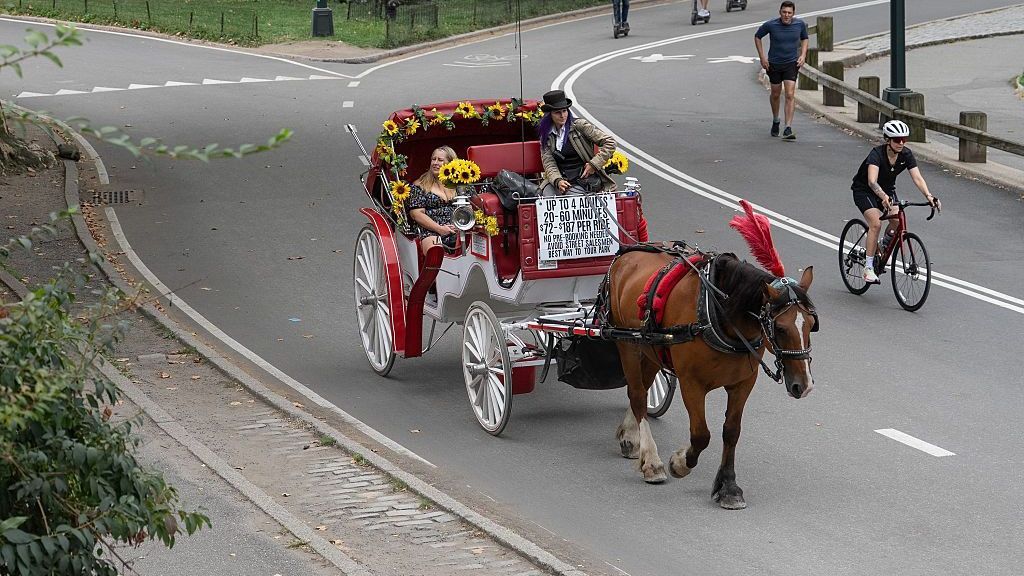
For more than a century, horse-drawn carriages have stood as one of New York City’s most iconic tourist traditions, drawing millions of visitors eager for a leisurely, nostalgic ride through Central Park. But after decades of escalating debate over animal welfare and public safety, and a pair of tragic deaths that galvanized public and political support for change, the city is on the cusp of voting to eliminate the industry entirely, with a full ban set to take effect in June 2028.
The legislation, dubbed Romanch’s Law in honor of the 18-year-old Indian tourist who died in a Central Park carriage accident earlier this year, already holds a clear majority support on the New York City Council, and has backing from Mayor Eric Adams’ administration. The fatal June incident, in which the harnessed horse bolted and threw Romanch Mahajan from the carriage, was the catalyst that pushed Council Speaker Julie Menin to throw her full weight behind the ban, which will go to a full floor vote on October 22.
“Horse-drawn carriages have long been woven into New York City’s history, but in an increasingly busy Central Park, this long-held tradition has become a growing public safety liability,” Menin told the BBC in a formal statement. “Next week, the Council will take decisive action by voting on [this bill] to protect New Yorkers, visitors, and the horses themselves.”
In addition to the fatal accident involving Mahajan, a second tragedy earlier this year amplified calls for a ban: a carriage horse named Dennis died in Central Park after ingesting a toxic plant, renewing longstanding concerns that working horses are exposed to unnecessary hazards and inhumane living conditions on crowded city streets.
Unlike previous failed attempts to end the industry, the current legislation includes a structured framework to support workers affected by the transition. Administration officials confirmed that the mayor’s office has been negotiating with all stakeholders—including city council members, union representatives, carriage drivers, animal welfare activists, and local community leaders—to design a just transition that safeguards workers’ livelihoods while phasing out the carriage trade permanently. The plan includes provisions for financial compensation, job placement services, skills training, and career counseling for drivers and other industry employees. Critically, the legislation also prohibits the affected horses from being sold for slaughter or reallocated to continue the same work in other locations.
Efforts to ban horse-drawn carriages in New York stretch back more than a decade. Former Mayor Bill de Blasio made a ban a central campaign promise and announced his intention to eliminate the industry shortly after his 2014 inauguration, citing widespread reports of animal abuse and overcrowding hazards. He even proposed replacing the traditional carriages with a fleet of vintage electric tourist vehicles. Ultimately, de Blasio was only able to pass limited restrictions on where carriages could pick up passengers, falling short of his goal of a full ban.
Opposition to the current ban remains organized, primarily from industry workers and their union representatives. The Transport Workers Union, which represents roughly 300 carriage drivers and owners across the city, has pushed back aggressively against the legislation, arguing that the vast majority of horses are well cared for, and that the ban would eliminate hundreds of stable, working-class jobs that are central to New York’s tourist economy.
But support for the ban crosses many sectors. Last year, the Central Park Conservancy—the non-profit organization that manages daily operations and maintenance of the park—officially endorsed the ban, a decision that carried significant political weight. In a formal statement, the conservancy’s president noted that the organization did not take the position lightly, but that record-breaking annual visitation to Central Park has made the presence of horse-drawn carriages an unacceptable risk to public health and safety for all visitors.
After Mahajan’s death, his father Deepak spoke to the city council to urge support for the ban, describing the terrifying experience inside the out-of-control carriage and voicing his hope that no other family would have to suffer the same loss. As the city prepares for next week’s vote, that testimony has loomed large over the debate, pushing what was once a perennial city political issue to the cusp of becoming law.