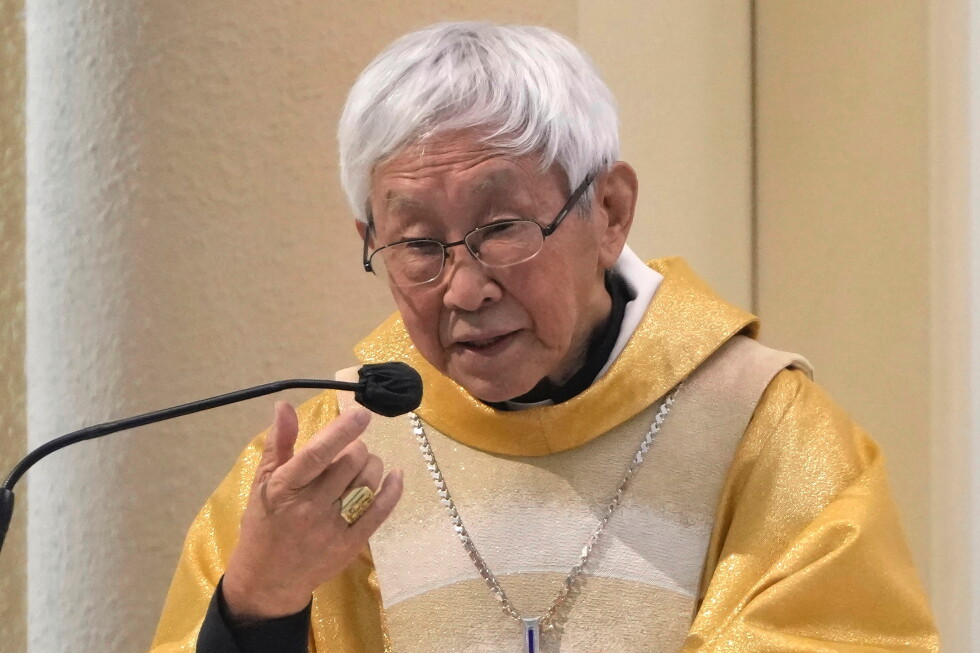
HONG KONG – In a closely watched legal outcome that carries major implications for civil society space in Hong Kong, a local court on Thursday threw out appeals from five high-profile pro-democracy figures, including 94-year-old retired Roman Catholic Cardinal Joseph Zen, who had challenged their 2022 convictions related to an unregistered protest relief fund.
The five defendants, all former trustees of the now-shuttered 612 Humanitarian Relief Fund, were originally found guilty of violating Hong Kong’s Societies Ordinance, which mandates that all local organizations complete official registration or secure an exemption within 30 days of founding. Each was fined 4,000 Hong Kong dollars, equivalent to roughly $512 U.S., marking the first convictions of their kind under the regulation.
Established in 2019, the 612 Humanitarian Relief Fund was created to cover medical and legal expenses for demonstrators arrested during the large-scale anti-government protests that roiled Hong Kong that year. The movement originally erupted in opposition to a proposed extradition bill that would have allowed criminal suspects to be sent to mainland China for trial; the bill was later withdrawn, but the unrest stretched on for months. The fund ceased all operations in October 2021.
Alongside Zen – a prominent and long-standing vocal advocate for democratic governance in Hong Kong – the other co-defendants are prominent Cantopop singer and activist Denise Ho, academic Hui Po Keung, and former pro-democracy legislators Margaret Ng and Cyd Ho.
The case has drawn widespread global attention in the wake of sweeping political shifts in Hong Kong following the 2019 protests and the 2020 enactment of the Beijing-imposed national security law. Observers widely frame the ruling as a pivotal marker for the future of freedom of association in the semi-autonomous territory.
Notably, all five were first taken into custody in 2021 on suspicion of violating the national security law through alleged collusion with foreign forces, though none ultimately faced formal charges under that statute. Zen’s arrest at the age of 90 sent immediate shockwaves through the global Catholic community, raising alarms about the status of religious freedom in Hong Kong. Following his 2022 conviction, Zen himself publicly stated that his case should not be interpreted as a reflection of the city’s religious freedoms.
Since the national security law came into force, it has fundamentally weakened Hong Kong’s pro-democracy movement, leading to the arrest and imprisonment of dozens of prominent activists. The law has also eroded international confidence in the long-term commitment to the guaranteed freedoms Hong Kong was promised under the 1997 handover from British to Chinese rule. Officials from both Beijing and the Hong Kong government have repeatedly defended the legislation as an essential measure to restore public stability and national security.