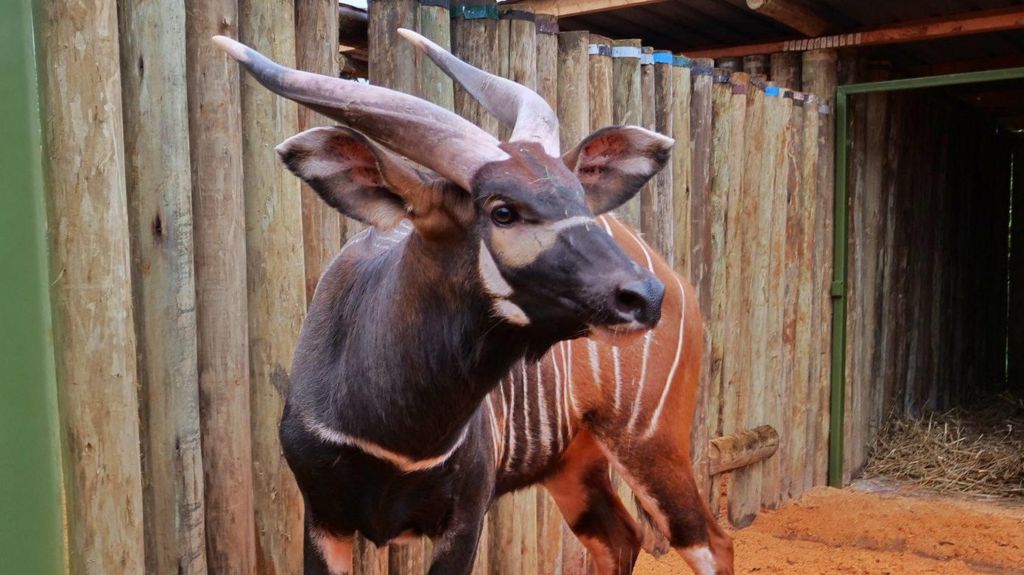
In a landmark step toward reversing the decline of one of the world’s most endangered large mammals, four male mountain bongos – a rare antelope species endemic to Kenya’s central highland forests – have touched down in Nairobi after being transported from a Czech zoo, kicking off a new phase of a decades-long species recovery initiative.
The rare arrivals were formally welcomed at Nairobi’s main international airport on Tuesday night by Kenya’s Cabinet Secretaries for Foreign Affairs and Tourism, alongside senior wildlife conservation officials. Following their entry, the antelopes were immediately transferred to the Mount Kenya Wildlife Conservancy (MKWC), a private protected reserve located at the base of Mount Kenya in central Kenya, where they will undergo a carefully structured acclimatization process before eventual release into the wild.
Kenya Wildlife Service (KWS), the government agency leading the national recovery effort, framed the translocation as a historic homecoming that represents a meaningful milestone for the species’ long-term survival in its native habitat. Once numbering around 500 wild individuals in the 1970s, current estimates place the total remaining wild mountain bongo population at fewer than 100 – a lower count than the global population held in zoos and captive breeding facilities around the world, per KWS data.
“This is a moment of hope, responsibility, and renewed commitment to securing the future of one of the world’s rarest large mammals,” said KWS Director-General Erustus Kanga in remarks following the arrival.
Native exclusively to Kenya’s isolated highland forest ecosystems, the mountain bongo is a visually distinct large antelope defined by its rich chestnut-red coat, narrow vertical white stripes along its flanks, and striking long spiral horns. For decades, KWS and global conservation partners have collaborated on a coordinated program of captive breeding and repatriation to reverse steep population declines driven by habitat loss, poaching, and disease.
The latest translocation builds on two prior large-scale repatriation efforts: an initial group of 18 antelopes was flown to Kenya in 2004 to launch the program, followed by 17 more repatriated from the Rare Species Conservation Foundation in Florida last year. Currently, around 400 mountain bongos are held in captive breeding facilities across North America, with additional populations housed in European zoos such as Prague Zoo, which supplied the four new arrivals.
Before captive-bred bongos can be released into the wild, they must complete a multi-stage adaptation process designed to help them build the natural immunity required to withstand wild pathogens and environmental conditions. Ahead of their departure from the Czech Republic, Prague Zoo confirmed that each bongo would undergo acclimatization and continuous health monitoring as part of MKWC’s established breeding program, with the new individuals expected to boost the genetic diversity of Kenya’s growing founder population.
By Wednesday morning, KWS confirmed via a social media post accompanied by photos of the new arrivals that the antelopes had reached their destination safely, and are “now settling in under close care.” The agency added that the translocation marks “a quiet but vital step in strengthening their population and securing their future.”
The recovery effort has already shown promising early results: in 2022, MKWC told local media that previously repatriated bongos have successfully integrated into wild habitats and begun breeding naturally. That said, the program has faced setbacks, with some repatriated individuals succumbing to tick-borne diseases, a key risk for captive-bred animals new to wild ecosystems.
Kenya’s national mountain bongo recovery plan, led by KWS, sets an ambitious target of growing the wild population to approximately 700 individuals by 2050, a goal that will require continued translocations of captive-bred bongos from global conservation institutions and expanded protection of the species’ native highland forest habitat.