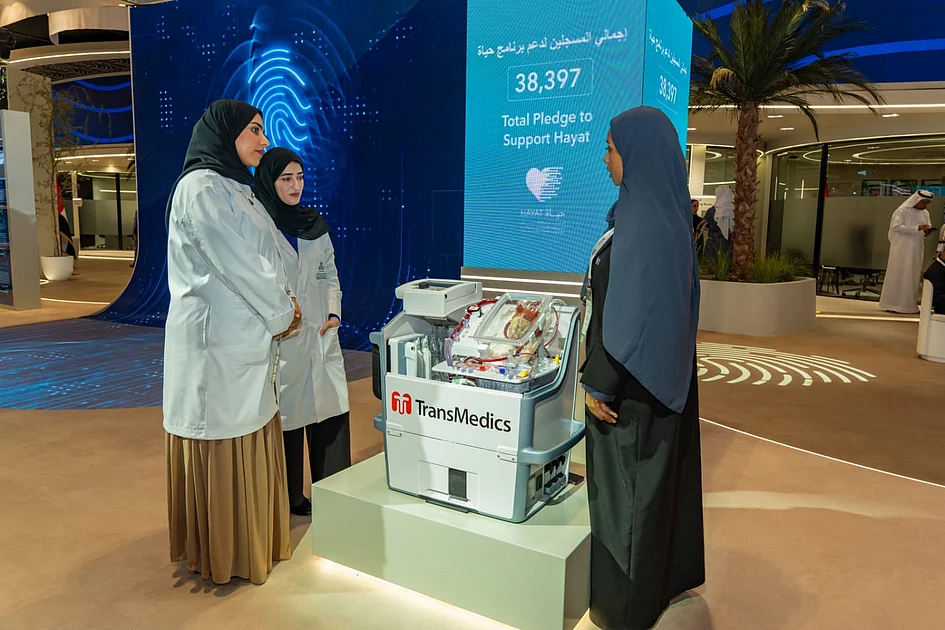
Dubai has become the epicenter of a medical revolution with the unveiling of a groundbreaking organ preservation technology that fundamentally alters the race against time in transplant procedures. Announced at the World Health Expo 2026, this advanced perfusion system enables human organs to function externally outside the human body, creating unprecedented opportunities for successful transplants.
The innovative technology, introduced under the UAE’s national organ donation program ‘Hayat’ through the Emirates Health platform, represents a quantum leap from traditional ice-based storage methods. Rather than merely preserving organs in dormant states, the sophisticated perfusion apparatus actively sustains hearts, livers, and other vital organs in a biologically active condition. This miniature circulatory system meticulously replicates natural blood flow patterns, oxygen absorption mechanisms, and physiological responses—effectively keeping donor organs ‘alive’ during transport and evaluation periods.
Dr. Amin Hussein Al Amiri, Assistant Undersecretary for the Health Regulation Sector at MoHAP, emphasized the transformative implications of this technological breakthrough. ‘This advanced technology extends the safe transport window for organs across cities and nations while significantly enhancing preservation quality,’ he stated. The system enables surgeons to monitor real-time functional performance, measure fluid dynamics, and reassess organs previously deemed unsuitable for transplantation—potentially expanding the pool of viable donor organs and recipient candidates.
Beyond immediate clinical benefits, the technology promises to reshape international healthcare collaboration. Dr. Al Amiri highlighted how the system ‘enhances opportunities for regional and international cooperation in organ exchange’ while strengthening partnerships between medical institutions and research facilities. The integration of smart perfusion devices into the National Centre for regulating Human Organs and Tissues Transplantation is expected to optimize medical resource allocation and improve logistical planning for complex transplant procedures.
Concurrently, MoHAP showcased the National Genome System—an ambitious precision medicine initiative establishing comprehensive genetic databases to revolutionize disease prevention, diagnosis, and treatment protocols. Together, these advancements position the UAE at the forefront of medical innovation, demonstrating the nation’s commitment to leveraging artificial intelligence and cutting-edge technology in therapeutic applications while reinforcing organ donation as a profound humanitarian value.