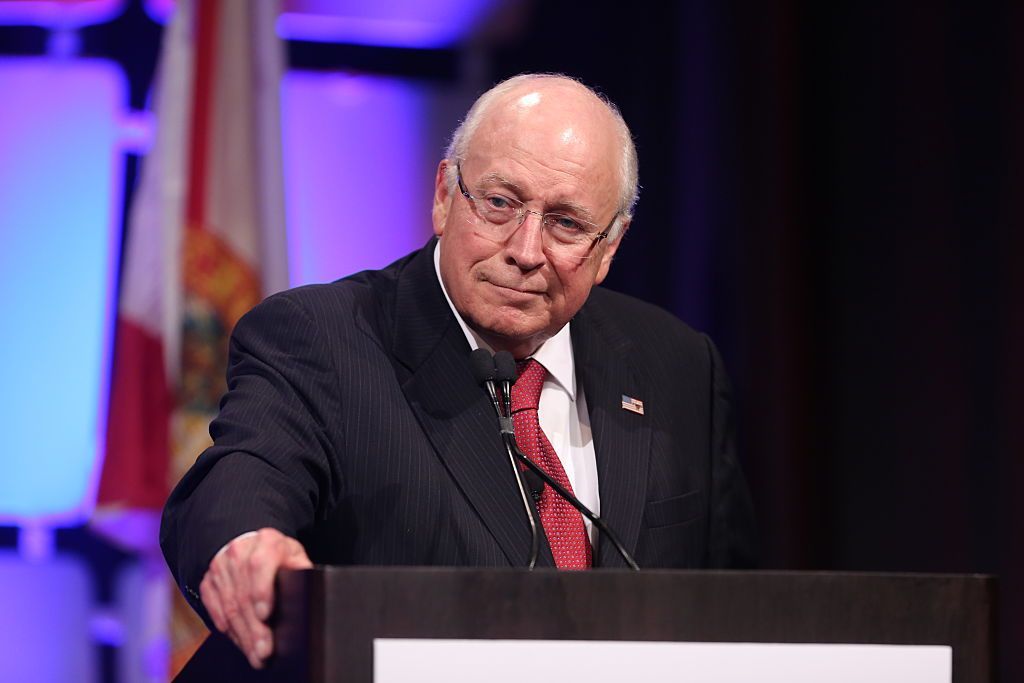
Dick Cheney, the former U.S. Vice President under George W. Bush, passed away at the age of 84, leaving behind a legacy marked by controversy, conviction, and significant influence in Washington. Known for his unorthodox approach to politics, Cheney often made headlines that overshadowed those of his boss. His career was defined by moments that showcased his willingness to break from the president when he deemed it necessary, as well as his ironclad belief in his decisions.
One of the most infamous incidents in Cheney’s career occurred in 2006 during a hunting trip in south Texas. While aiming at a bird, Cheney accidentally shot and injured 78-year-old Harry Whittington, who suffered a minor heart attack and injuries to his face, chest, and neck. Cheney initially remained silent about the incident but later admitted responsibility, stating, ‘I’m the guy that pulled the trigger.’ The event became a source of ridicule for late-night TV hosts, with David Letterman quipping, ‘Good news, ladies and gentlemen, we have finally located weapons of mass destruction: It’s Dick Cheney.’
Cheney’s health struggles also drew attention, particularly his decision to modify his heart pacemaker in 2007 to prevent potential hacking. This move sparked speculation among fans of the TV series ‘Homeland,’ which featured a plot where the vice president dies after terrorists hack into his pacemaker. Cheney’s doctor, Jonathan Reiner, explained that the modification was necessary to ensure the vice president’s safety.
In the aftermath of the September 11, 2001, attacks, Cheney was isolated in an ‘undisclosed location’ to secure the presidential succession in case George W. Bush was killed. From this hideout, Cheney issued the extraordinary order to shoot down any passenger jets thought to be hijacked if they headed toward the White House or the U.S. Capitol building. This decision underscored his role as a wartime leader operating from the shadows.
Cheney’s stance on gay marriage also set him apart from Bush. Despite Bush’s support for a constitutional amendment prohibiting same-sex marriage, Cheney openly supported gay marriage, stating, ‘Freedom means freedom for everyone.’ This position drew criticism from within their Republican party, with conservative groups urging Cheney to align with Bush’s stance.
Cheney’s disregard for Senate traditions was evident in 2004 when he used an expletive on the Senate floor in response to accusations of war profiteering from former Vermont Senator Patrick Leahy. Although using profanity on the Senate floor is against the rules, Cheney reportedly avoided reprimand as the Senate was not in session.
Dick Cheney’s career was marked by moments that highlighted his influence, conviction, and willingness to break from convention, leaving a lasting impact on American politics.