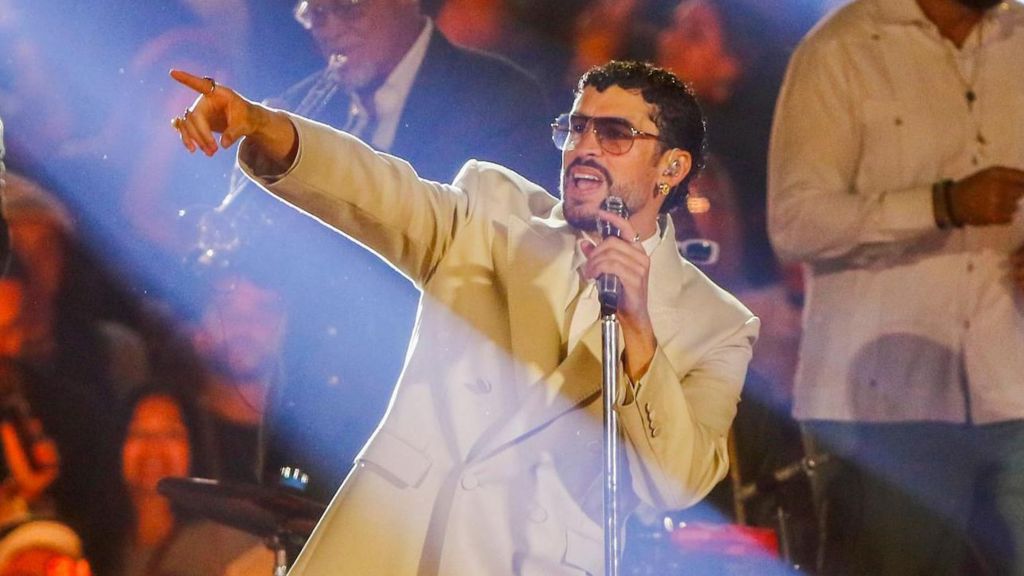
As the Seattle Seahawks and New England Patriots prepare for their championship clash in Super Bowl LX, an equally intense cultural battle is unfolding around the event’s halftime spectacle. Puerto Rican global sensation Bad Bunny, slated as this year’s headliner, has become the center of an unprecedented political firestorm due to his vocal opposition to U.S. immigration policies.
The controversy marks another chapter in the Super Bowl’s history of provocative halftime performances, which includes Janet Jackson’s 2004 wardrobe malfunction and Beyoncé’s politically charged 2016 Black Lives Matter tribute. However, this year’s criticism emerged even before the artist took the stage, with prominent Republicans including former President Donald Trump condemning the selection as “absolutely ridiculous.”
The political backlash prompted conservative organization Turning Point USA to create an alternative “All American” counter-programming event featuring Kid Rock during Bad Bunny’s performance time slot.
Despite the controversy, the Grammy-winning artist remains focused on unity. At a recent press conference, the 31-year-old star emphasized: “I know that the world is gonna be happy this Sunday, and they’re gonna have fun, and they’re gonna dance and they’re gonna have a good time.” This contrasted with his more direct approach at last week’s Grammy Awards, where he opened his acceptance speech with the declaration “ICE out”—referencing Immigration and Customs Enforcement operations.
Cultural experts note that Bad Bunny’s mere presence on the Super Bowl stage carries profound political significance. Vanessa Díaz, professor of Chicano and Latino Studies at Loyola Marymount University, observes that the performance represents a milestone as the first entirely Spanish-language halftime show in Super Bowl history.
The artist’s advocacy extends beyond immigration to include support for LGBTQ rights and Puerto Rican self-determination. His recent tour strategy deliberately avoided mainland U.S. cities over concerns about immigration enforcement, instead opting for a Puerto Rico residency that injected millions into the island’s economy.
Yale University American Studies professor Albert Laguna suggests that “Bad Bunny is offering another vision of what American-ness is—a vision that is not in line with what Trump and the Trump administration is selling.” This perspective aligns with the NFL’s recent efforts to expand its cultural reach and attract more Latino viewers to American football.
Despite the polarized reactions, NFL Commissioner Roger Goodell has defended the selection, praising Bad Bunny’s understanding of “the platform he was on, and that this platform is used to unite people.” With over 100 million expected viewers, the performance represents both a cultural milestone and a potential flashpoint in America’s ongoing culture wars.