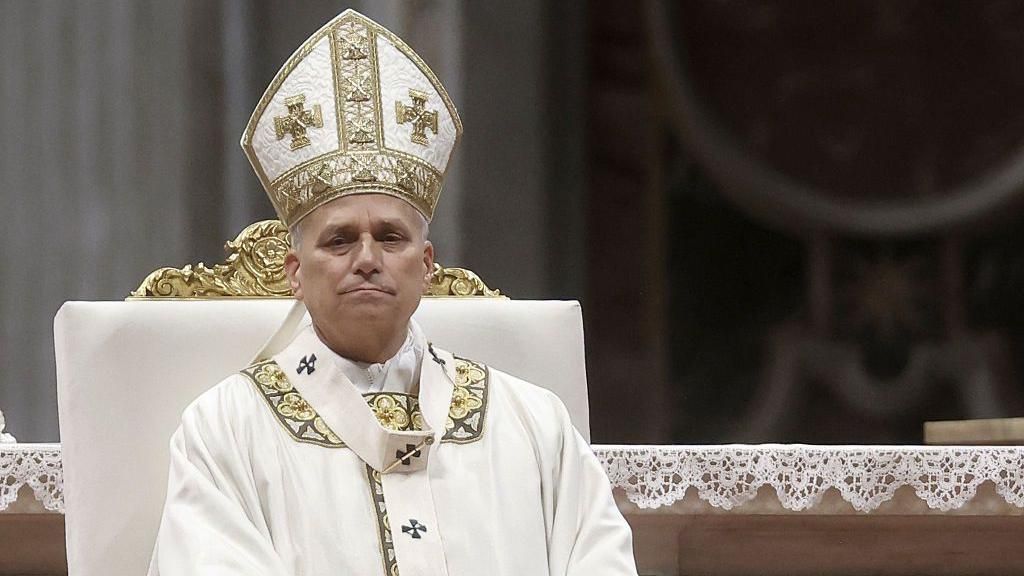
A significant ideological schism has emerged between the Vatican and the Trump administration over immigration policy, creating unprecedented tension within America’s Catholic community. Pope Leo XIV, the American-born pontiff, has repeatedly criticized the administration’s mass deportation approach, calling for “deep reflection” on migrant treatment and invoking the Gospel of Matthew to emphasize Christian duty toward foreigners.
The confrontation escalated in November when the United States Conference of Catholic Bishops (USCCB) issued a rare “Special Message”—their first such communiqué in twelve years—expressing profound disturbance at what they termed “a climate of fear and anxiety.” The bishops explicitly opposed “indiscriminate mass deportation” and condemned dehumanizing rhetoric, with the Pope endorsing their statement as “very important” and urging all Catholics to heed its message.
This ecclesiastical stance has provoked strong reactions from conservative Catholics. Jesse Romero, a prominent Catholic podcaster and Trump supporter, argued that church leadership should focus on spiritual matters rather than governance, stating: “The Pope should tell us how to get to heaven. He has no authority over the government.”
The political dimension is particularly complex given Catholicism’s substantial influence in American politics. With one in five Americans identifying as Catholic, and prominent figures like Vice President JD Vance and Secretary of State Marco Rubio representing the faith, the Church’s internal divisions mirror broader national debates. While nearly 60% of white Catholics approve of Trump’s immigration handling according to the Public Religion Research Institute, Hispanic Catholics—comprising 37% of the U.S. Catholic population—show significantly lower support at around 30%.
David Gibson, director of Fordham University’s Center on Religion and Culture, observes that the administration calculates “there are enough American Catholics who support Donald Trump that it’s politically beneficial to pick a fight with the Pope.” This calculation manifests in direct rebuttals from administration officials, including White House Press Secretary Karoline Leavitt rejecting the Pope’s characterization of U.S. immigration policies as “inhuman.”
At the grassroots level, the conflict takes tangible form. In Chicago, parishioner Jeanne Rattenbury participated in a 2,000-strong “People’s Mass” outside an ICE detention center, part of efforts by the Coalition for Spiritual and Public Leadership to provide religious ministry to detainees—a service they claim is being systematically blocked, leading to federal litigation.
Bishop Joseph Tyson of Yakima, Washington, one of 216 bishops supporting the USCCB statement, emphasizes that current deportation practices are “not surgical” and disproportionately affect parish communities. With many priests themselves immigrants on temporary visas, the Church faces practical vulnerabilities alongside theological concerns. “Anybody can have their paperwork revoked,” Bishop Tyson notes, revealing that seminarians now carry immigration documents at all times due to enforcement anxieties.
The ideological fault lines extend to symbolic protests, including a Boston-area church’s Christmas nativity scene replacing baby Jesus with a sign reading “ICE was here”—a display the Archdiocese ordered removed for being divisive, though the parish has thus far refused.
This confrontation represents a fundamental clash of values between institutional Catholic teaching emphasizing immigrant dignity and political implementation of border enforcement, creating a profound identity crisis for American Catholics navigating competing loyalties to faith and political affiliation.