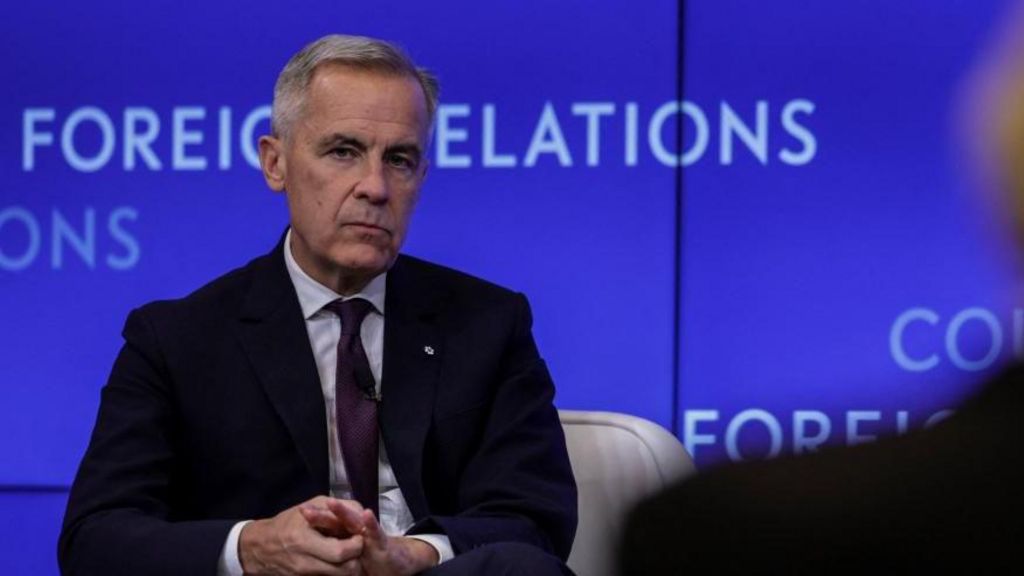
In a significant development that could reshape the global talent landscape, US President Donald Trump’s decision to increase the fee for the H-1B skilled worker visa to $100,000 has sparked a wave of concern among tech companies and foreign professionals. The move, which took effect on Sunday, is expected to deter highly educated foreigners, including recent US university graduates, from pursuing long-term employment in the United States. This policy shift has presented Canada with a unique opportunity to attract and retain skilled workers who may now seek alternatives outside the US. Canadian Prime Minister Mark Carney, speaking at the Council of Foreign Relations in New York on Monday, acknowledged the potential for Canada to benefit from these changes. ‘I understand you’re changing your visa policy,’ Carney remarked. ‘Maybe we can hang on to one or two of them.’ Carney emphasized Canada’s strengths in research and artificial intelligence but lamented that much of this talent has traditionally migrated to the US. The H-1B visa programme has long been a cornerstone for US tech companies to employ foreign workers legally. However, the recent fee hike has left many professionals reconsidering their options. Canada, with its world-class research institutions, proximity to the US, and high quality of life, is emerging as a natural alternative. Immigration lawyer Evan Green described the situation as ‘a wonderful opportunity for the Canadian government to take advantage of.’ Similarly, Build Canada, a non-profit organization, released a memo urging swift action to capitalize on the influx of skilled workers seeking new opportunities. However, challenges remain. While Canada has introduced initiatives like the Global Skills Strategy and Express Entry programmes, experts caution that the country’s immigration system still faces hurdles. Economist Mikal Skuterud noted that Canada’s scaled-back immigration policies and lower wage structures compared to the US could limit its appeal. ‘Canada does not look much more predictable than the US,’ Skuterud warned. Despite these challenges, the potential for Canada to attract top talent is undeniable. The IRCC spokesperson, Matthew Krupovich, highlighted ongoing efforts to identify new solutions to attract the world’s brightest minds. As the US grapples with the implications of its visa policy changes, Canada stands poised to position itself as a global hub for innovation and skilled labor.