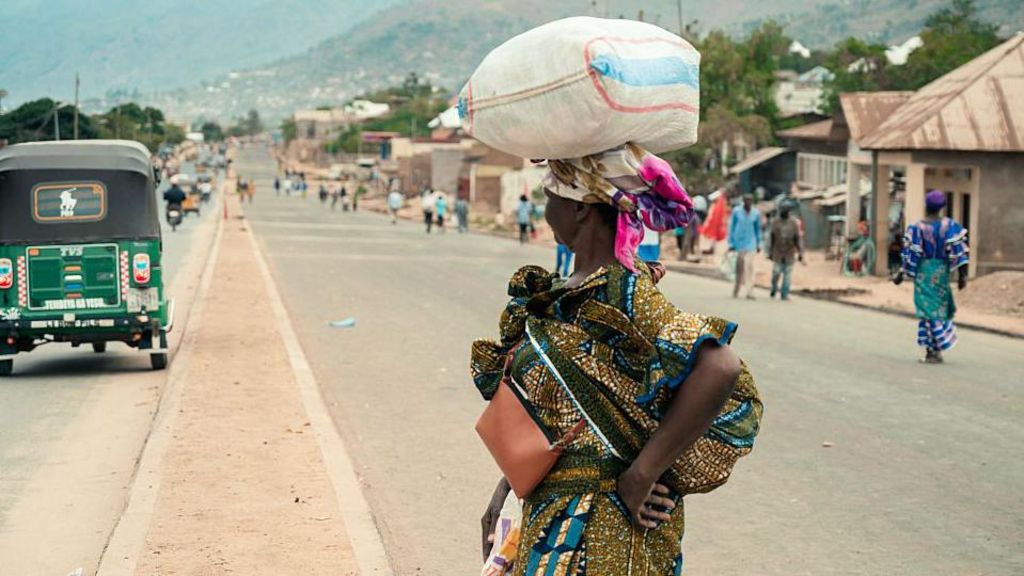
Eastern Democratic Republic of Congo faces a severe humanitarian crisis as M23 rebel forces intensify their offensive toward the strategic city of Uvira, triggering massive civilian displacement and raising alarms about potential regional destabilization. According to United Nations estimates, approximately 200,000 residents have fled their homes since fighting erupted earlier this month, with many crossing into neighboring Burundi for safety.
The situation in Uvira—the last government-held city in the mineral-rich region—remains highly volatile despite conflicting reports about rebel control. Local sources describe chaotic scenes with sporadic gunfire and explosions reverberating through the city, prompting widespread closures of businesses and educational institutions. Terrified civilians have reportedly taken shelter indoors, with some residents describing a climate of fear where ‘every man for himself’ has become the prevailing sentiment.
This escalation occurs despite a recent US-brokered peace agreement between DR Congo President Félix Tshisekedi and Rwandan leader Paul Kagame. Notably, the M23 rebel group is not party to this agreement and is concurrently engaged in separate mediation talks facilitated by Qatar.
The international community has expressed profound concern over the deteriorating situation. The United States, European Union, and eight European nations have jointly accused Rwanda of supporting the rebel offensive—an allegation that Rwandan authorities vehemently deny. Instead, Rwanda claims DR Congo and Burundi have violated ceasefire agreements and conducted bombings near its border, displacing over 1,000 civilians into Rwandan territory.
UN experts have reinforced allegations of Rwandan involvement, stating that Rwanda’s army maintains ‘de facto control of M23 operations.’ The conflict’s roots extend back three decades to the aftermath of the Rwandan genocide, with numerous peace agreements collapsing over the intervening years as armed groups continue vying for control of the region’s substantial mineral wealth.
Humanitarian costs continue mounting, with at least 74 casualties confirmed—mostly civilians—and 83 wounded requiring hospitalization. A Burundian administrative source reported approximately 8,000 daily refugee arrivals over two days, totaling 30,000 within one week, highlighting the crisis’s rapid escalation.