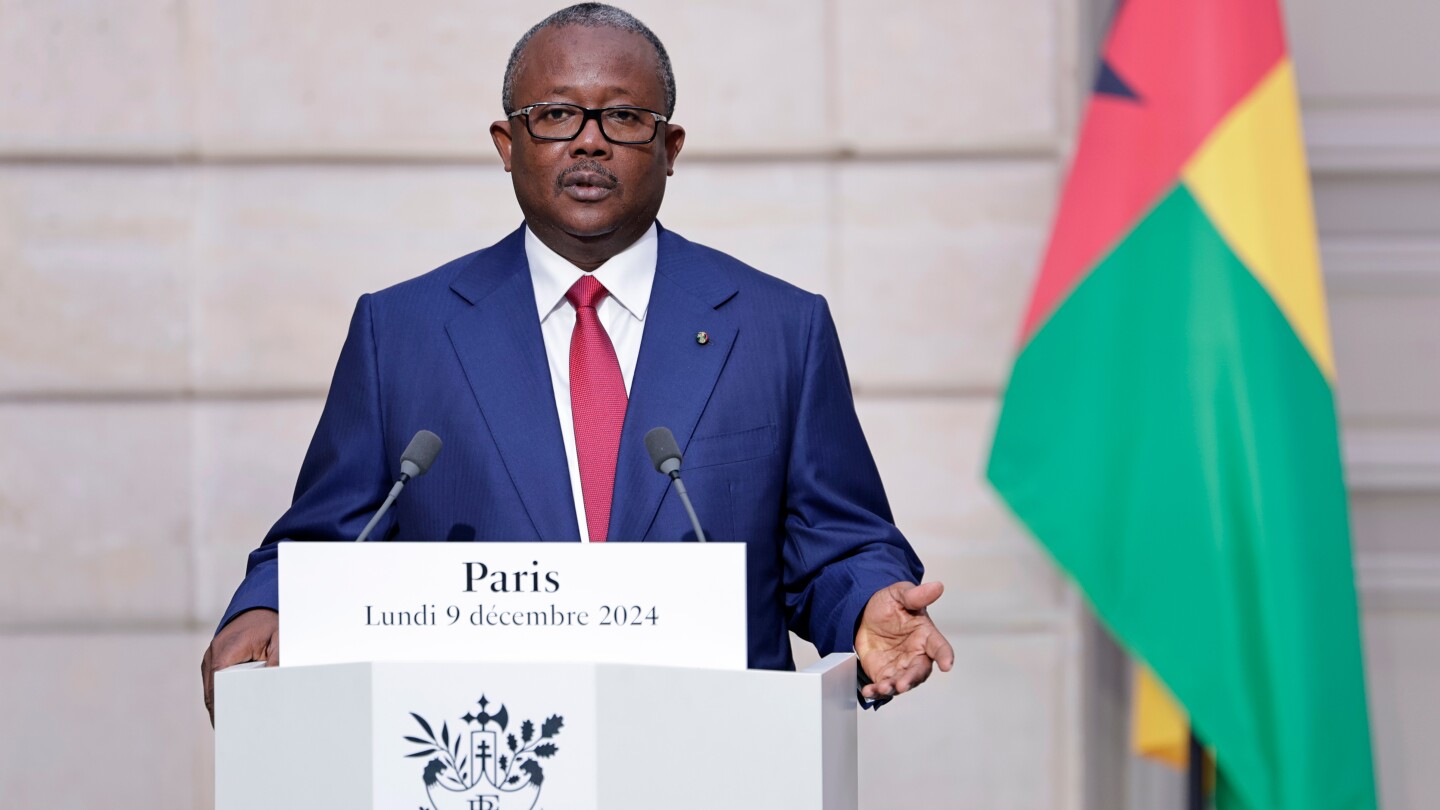
Guinea-Bissau is set to hold a pivotal presidential election on Sunday, with incumbent President Umaro Sissoco Embalo vying for a second term. If successful, Embalo would become the first leader in the nation’s history to secure consecutive terms. The election unfolds against a backdrop of heightened political and ethnic tensions, compounded by the exclusion of the main opposition party, the African Party for the Independence of Guinea and Cape Verde (PAIGC), led by former Prime Minister Domingos Simoes Pereira. Pereira was barred from the race after authorities claimed his party failed to submit its application on time. The election is widely regarded as one of the most contentious in recent history, with analysts warning of potential instability. Nearly half of the country’s 2.2 million population is registered to vote, and a runoff will be held if no candidate secures more than 50% of the votes. Embalo, a 53-year-old former army general backed by a coalition of over 20 political groups, faces stiff competition from 11 other candidates, including Fernando Dias da Costa, a 47-year-old relatively unknown figure supported by Pereira. The election comes at a critical juncture for Guinea-Bissau, one of the world’s poorest nations, which has struggled with coups, drug trafficking, and economic hardship since gaining independence from Portugal over five decades ago. Embalo’s campaign has focused on infrastructure development, while Dias has pledged to prioritize stability, freedoms, and security. The opposition has accused Embalo of authoritarianism and human rights violations, further fueling the political divide. The vote also follows a recent coup attempt in October and a prolonged legitimacy crisis surrounding Embalo’s tenure. Political analyst Augusto Nansambe lamented the erosion of democratic norms, stating, ‘The democracy we knew … is no longer the model we are experiencing; we are experiencing a model defined by a single person.’ Despite the challenges, some residents remain hopeful that the election will bring peace and prosperity to the nation. ‘I hope that these elections will bring peace and tranquility so that there is no more hunger,’ said Marinho Insoldé, a resident of the capital, Bissau.