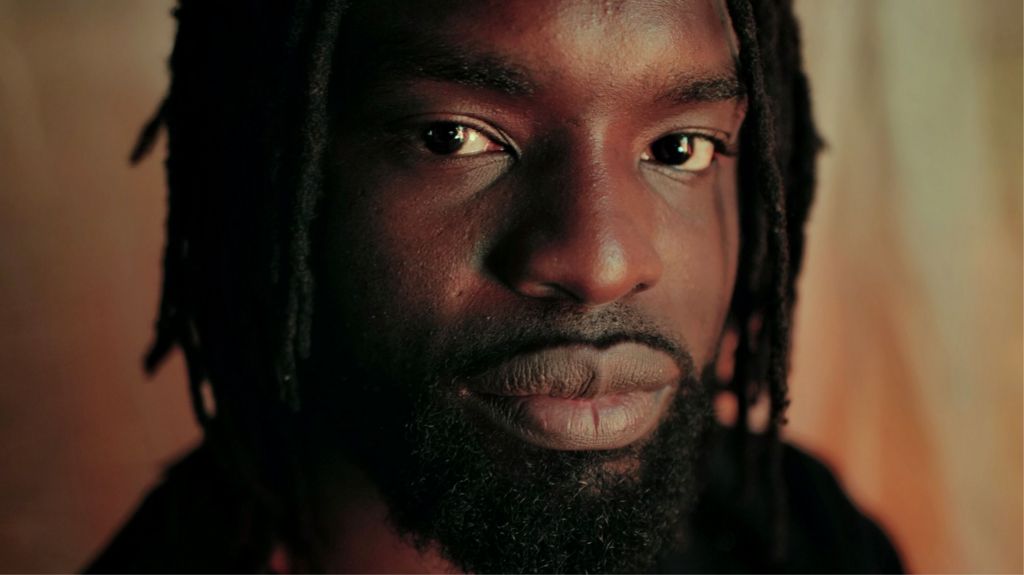
Meji Alabi has built a global reputation as one of the most innovative music video directors of his generation, crafting viral, visually striking work for A-list artists from Beyoncé to Davido, Stormzy to Burna Boy. A 2021 Grammy win for co-directing *Brown Skin Girl* cemented his status as a powerhouse of the industry, but for Alabi, the biggest creative and emotional challenge of his career would come not from a chart-topping pop hit, but from the quiet, unspoken traumas of his own family’s past, and a chapter of Nigerian history that has long been sidelined from public conversation.
Born in London to Nigerian parents and raised and educated in the United States, Alabi grew up hearing fragmented anecdotes of the 1967-1970 Nigerian Civil War, also called the Biafran War, from his grandfather Godwin Alabi-Isama, a former commando who fought for the Nigerian federal army against Igbo separatists seeking to form the independent breakaway state of Biafra. It was only when he teamed up with his uncle, fellow filmmaker Leke Alabi-Isama, co-founder of Lagos-based production outfit PriorGold Pictures, that the pair began to unpack how little they truly knew about the conflict that shaped modern Nigeria.
“It was very much an eye opener for me. I just grew up not knowing much about the war at all, or who was fighting who,” Alabi shared in an interview.
For Leke, who grew up in southwestern Nigeria hearing his father framed as a war hero for his role as chief of staff to a top federal army commander, that reckoning came decades later when he began deep diving into archival research. What he uncovered upended every assumption he had carried about his family’s legacy: mass starvation, allegations of war crimes against federal troops, and the unacknowledged suffering of the Igbo people who made up the Biafran separatist movement.
“I only just saw it from a Nigerian [federal army] perspective. I never knew of the horrors. I never knew of the suffering and the pain of the other side,” Leke explained. “When you find out that, you know, your truth is not the only truth, it was a humbling moment.”
Rooted in this desire to unpack multiple narratives, the pair’s new documentary *Surviving Biafra: Voices from the Nigerian Civil War*, produced by BBC Africa Eye, pulls back the curtain on one of Africa’s bloodiest post-independence conflicts. The film includes never-before-seen frontline footage, and centers first-person testimonies from surviving veterans and civilians, most now in their 70s and 80s, many of whom have never shared their experiences publicly before.
The Biafran War erupted after a series of military coups and targeted massacres of Igbo communities in northern Nigeria pushed more than a million Igbos to retreat to their ancestral homeland in the country’s southeast, where regional leaders declared independence for the Republic of Biafra. The Nigerian federal government responded with a full military campaign and a total blockade of Biafra, cutting off access to food, medicine and all foreign supplies. Over 30 months of fighting, an estimated 500,000 to 3 million people died, most of them children killed by widespread famine. The conflict was the first televised humanitarian disaster in global history, with shocking footage of starving children broadcast into homes around the world, before Biafra surrendered in 1970.
To this day, this traumatic chapter remains largely absent from formal Nigerian education: the civil war was removed from the national school curriculum for more than a decade ending in 2025, and even today, the full scale of suffering is rarely taught. For Leke and Meji, this erasure is part of what made the project urgent.
“This generation of survivors is slowly fading, and if we do not preserve their testimonies now, we risk losing not only their memories, but the chance to fully document this history in a way that can contribute to understanding and healing,” Leke said.
Unlike most mainstream retellings of the war, the documentary centers underrepresented voices, including two female former soldiers who fought on opposite sides of the conflict. It also draws on contributions from across the region: Meji recruited Ghanaian composer Ray Michael Djan Jr, who previously worked on the *Black Panther: Wakanda Forever* soundtrack, to score the film, while the BBC’s Igbo service and independent Igbo historians provided contextual expertise to ensure the narrative centered community perspectives.
One of the documentary’s most raw, pivotal moments comes when Leke confronts his 90-plus year old father Godwin with archival black-and-white footage of emaciated Biafran children. For the first time, Leke said, he heard his father’s voice shake. During the conversation, Godwin also revealed a shocking personal detail: unknowingly, he had eaten human flesh while serving in occupied Biafran territory, after local villagers served the meat to his unit. The federal army’s 3 Marine Commando brigade, where Godwin served, has long faced allegations of systematic war crimes including the execution of civilians, and the BBC’s editorial team pushed Godwin to respond directly to those claims during the interview.
In a response to the upcoming documentary, Nigeria’s federal government noted it hoped the film would serve as a reminder of how far the country has progressed in the 59 years since the war ended, and of “the enduring importance of dialogue, reconciliation and shared purpose in building a stronger nation for generations to come.”
For Meji, who has spent much of his career elevating Nigerian popular culture to a global audience, this project fills a different critical gap. The war has long been a topic discussed only in whispers in Nigerian society, he said, never confronted head-on by a younger generation of creators seeking honest answers.
“It hasn’t been attacked head on and, you know, presented from an inquisitive younger generation like this before,” he said.
Both filmmakers share a core hope for the project: that the documentary will open the door for broader national reckoning, encourage more survivors to step forward with their stories, and help Nigerians confront the darker parts of their shared history with honesty and empathy.
“We really hope this documentary encourages more survivors to tell their stories and document our history further. It’s up to us to do it,” Meji said.