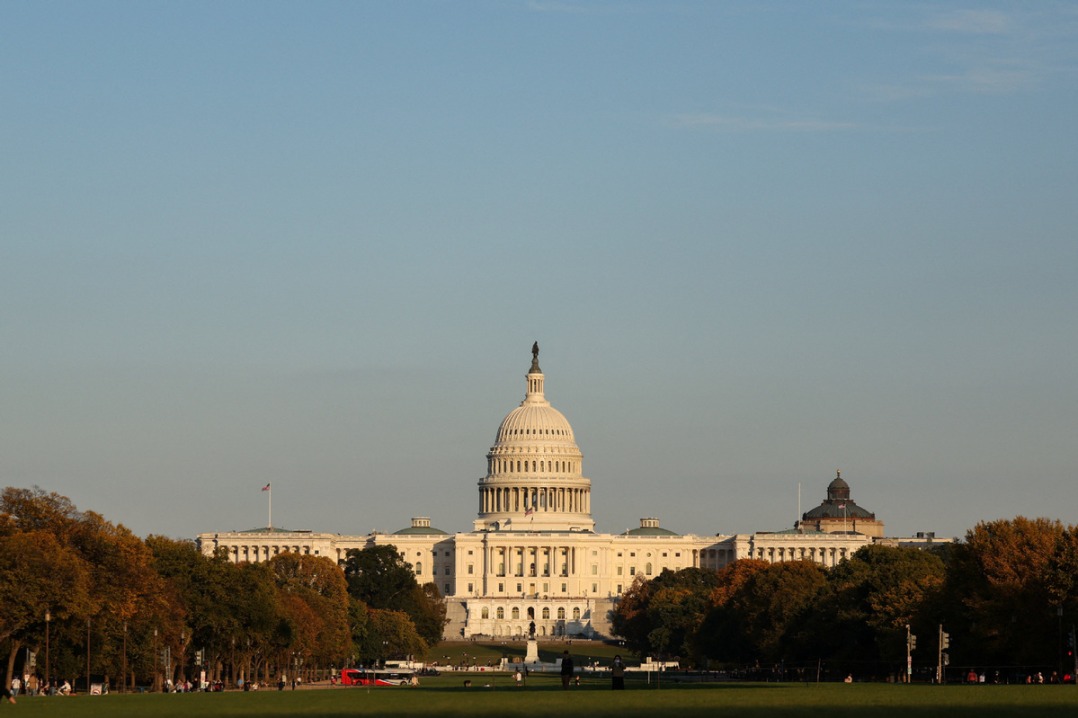
The United States is grappling with its longest full government shutdown in history, now entering its third week with no resolution in sight. The shutdown, which began on October 1, 2025, has surpassed previous records, becoming the third-longest in US history. If it continues beyond Tuesday, it will surpass the 21-day shutdown of 1995, positioning it as the second-longest shutdown ever. The longest shutdown remains the 35-day partial closure during Donald Trump’s first term from December 2018 to January 2019.
The repercussions of the shutdown are intensifying, affecting critical sectors across the nation. The National Nuclear Security Administration (NNSA), a key agency under the Department of Energy responsible for overseeing the US nuclear stockpile, has begun furloughing employees. Energy Secretary Chris Wright confirmed that up to 1,400 workers could be furloughed, with only 400 federal employees and contractors remaining on duty. The NNSA also plays a crucial role in managing nuclear materials globally, raising concerns about international security.
In the health sector, researchers from the Centers for Disease Control and Prevention (CDC) were forced to skip IDWeek, the largest annual gathering of infectious disease experts. This comes at a critical time, following recent surges in measles and whooping cough across the US. The CDC, which typically sends numerous researchers to such events, had only a handful of scientists listed as speakers, none of whom attended due to the shutdown.
The cultural and tourism sectors are also feeling the strain. Major attractions like the Smithsonian Institution museums and the National Zoo have closed their doors to the public. The US Travel Association estimates that the travel economy is losing $1 billion weekly as visitors cancel trips to national parks, historic sites, and Washington, DC. Additionally, the Small Business Administration has halted its loan programs, affecting 1,600 small businesses that rely on approximately $860 million in weekly funding.
The Federal Aviation Administration (FAA) has reported air traffic controller shortages, leading to flight delays in major cities such as Nashville, Dallas, and Newark. The shutdown has also disrupted flood insurance policy issuances and renewals, delaying mortgage closings and real estate transactions.
Public opinion remains divided on who is to blame for the impasse. According to a poll by The Associated Press-NORC Center for Public Affairs Research, roughly 60% of US adults hold Republicans in Congress responsible, while 54% attribute the shutdown to Democrats.
The economic impact is significant, with Oxford Economics estimating that the shutdown reduces economic growth by 0.1 to 0.2 percentage points weekly. A prolonged shutdown could lead to a 1.2 to 2.4 percentage point reduction in quarterly growth. Major infrastructure projects, including a new rail tunnel beneath the Hudson River and an extension of New York City’s Second Avenue subway, have been put on hold, along with $7.6 billion in grants for clean energy projects across 16 states.
As the shutdown continues, nearly 750,000 of the federal government’s 2.3 million civilian employees are furloughed daily, while others deemed ‘excepted’ continue to work to protect life, property, and essential services. The nation awaits a resolution as the shutdown’s effects ripple through every sector of American life.