GOMA, Congo — Marking one year since M23 militants seized control of Goma, the strategic eastern Congolese city remains firmly under rebel authority with deteriorating economic conditions. The Rwanda-backed insurgent group, considered the most dominant among over 100 armed factions operating in mineral-rich eastern Congo, has established an unyielding grip on the region despite ongoing humanitarian concerns.
The visual scars from January 2025’s intense combat between Congolese military forces and M23 fighters remain evident throughout the city. While surface-level normalcy has returned with functioning markets and adapted daily routines, the economic infrastructure has suffered catastrophic collapse. Banking institutions have shuttered completely, followed by the closure of Goma’s international airport, creating a financial vacuum that has plunged countless households into severe poverty.
In the central banking district, once vibrant financial buildings stand abandoned with disabled ATMs and deactivated signage. This financial paralysis has forced residents to rely exclusively on mobile money transfer services, albeit at exorbitant costs. “Current withdrawal fees reach 3.5% per transaction—devastating sums for families with virtually no remaining income,” explained Grâce Omari, a resident of the Chaumage neighborhood.
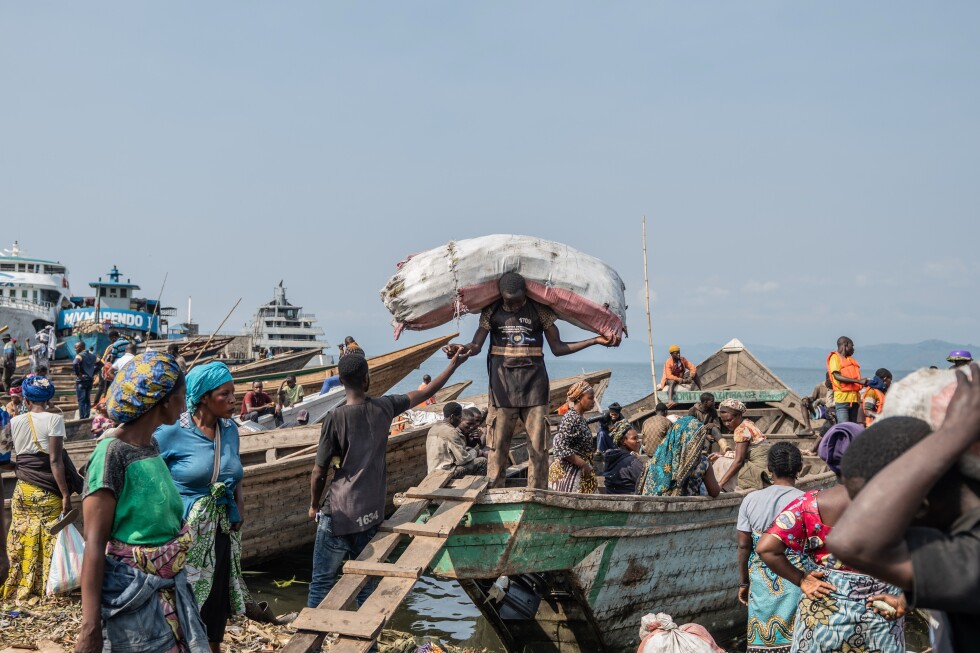
At Kituku Market, the city’s primary trading hub, Monday’s traditional market day maintains visible crowds and activity. Local boats continue docking at piers, unloading agricultural products from surrounding rural areas for market stalls. Women vendors still offer vegetables, flour, secondhand clothing, and basic necessities, yet their movements appear mechanical and their expressions weary. Market activity persists but has lost its economic substance.
Espérance Mushashire, a 44-year-old mother of twelve who has sold vegetables for years, describes a dramatic decline in living standards. “We purchase inventory at high prices but sell almost nothing. Customers merely inquire about prices without purchasing power. Our children no longer attend school,” she recounted.
In Goma’s Mugunga outskirts, daily life continues with resigned quietness. Local resident Agathe Hanghi detailed her evaporated savings: “The situation deteriorated completely. Previously I earned money through sales that covered food and medical needs. Now all savings are gone—rebels took what little remained.” Like most families, Hanghi’s children have abandoned education as priorities shrink to absolute essentials: food, shelter, and basic survival.
University economics professor Deo Bengeya attempts to analyze the unprecedented situation with students, describing an economy paralyzed by absent financial institutions. “Goma’s economy post-capture exists in critical condition,” Bengeya told AP. “Population purchasing power has collapsed, residents have fled, wages have plummeted, and unemployment has skyrocketed.
Without functional banking systems, economic recovery remains impossible—no credit availability, investment mechanisms, or savings security exists. Households consume minimal resources when available, devoid of future prospects. One year after M23’s takeover, Goma’s inhabitants advance incrementally, sustained only by the certainty of continued survival amid profound uncertainty.