Archaeological excavations in western Thailand have uncovered a pair of 2-millennia-old gold rings that offer striking new evidence of ancient cross-cultural trade connections between South Asia and Southeast Asia, Thailand’s Fine Arts Department announced this week. The artifacts were recovered alongside partial human skeletal remains during an ongoing dig at the Don Yai Thong site, located in Phetchaburi province roughly 130 kilometers southwest of Bangkok, and their discovery is reshaping current understandings of regional Iron Age social structures and commercial networks.
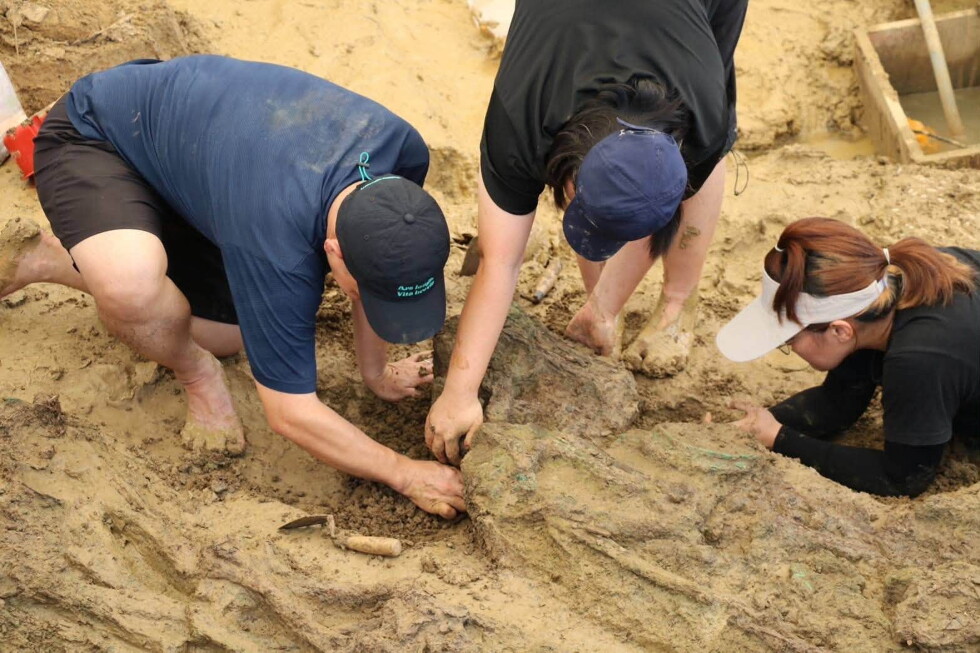
The site itself first came to the attention of cultural authorities earlier this year, when local rice farmers working in their fields stumbled on fragmented pieces of ancient bronze drums. The accidental find prompted the Fine Arts Department to launch a full systematic excavation starting in February, which has already produced a remarkably rich collection of prehistoric artifacts. To date, archaeologists have recovered eight complete human skeletons, a range of bronze and gold decorative pieces, handcrafted pottery, and other objects that point to this being a ceremonial burial ground reserved for elite or wealthy members of Iron Age Thai society.
Of all the finds uncovered so far, the two gold rings recovered last week have emerged as the most significant. The first, unearthed Thursday, bears a fine engraved inscription in Brahmi script, an ancient writing system that originated in India and spread across much of South and Southeast Asia along early trade routes. Initial expert analysis has translated the inscription as *pusarakhitasa*, a term meaning “the one protected by Pushya.” In traditional Indian astronomy, Pushya is classified as one of the most auspicious zodiac signs, linking the artifact to South Asian cultural and astrological traditions. The second ring, found alongside the first in the same burial, is an unadorned solid gold band with no engravings or decorative patterns.
Based on the inscribed text and the presence of two gold items in a single burial, department experts have put forward a working hypothesis that the individual interred here was a merchant belonging to the Vaishya caste, the traditional merchant and trading class of ancient India’s social structure. This aligns with growing evidence that active maritime and overland trade routes connected the Indian subcontinent to mainland Southeast Asia by the Iron Age, creating deep cultural and economic ties that predated later state formation in the region.
The Don Yai Thong site is officially dated to Thailand’s late prehistoric Iron Age, a window of human settlement that falls between 2,500 and 1,500 years before the present, placing the newly found rings at roughly 2,000 years old. The excavation is scheduled to conclude in one month, after which the Fine Arts Department plans to organize a public exhibition of all the significant artifacts recovered from the site to share this new chapter of Thailand’s ancient history with local and international visitors.