A significant structural shift in the gold market is paving the way for sustained higher price levels, according to a new analysis from the Institute of International Finance (IIF). The global financial think-tank projects the precious metal will average $5,300 per ounce throughout 2026 before climbing to an average of $5,500 in 2027, signaling a new long-term trading range driven by increased financialization and changing global monetary conditions.
The IIF’s comprehensive assessment identifies several fundamental factors supporting medium-term demand, notably robust central bank acquisitions and potential ETF inflows. However, short-term price movements will continue to reflect dynamic interactions between real yield fluctuations, US dollar strength, global liquidity conditions, and geopolitical risk perceptions.
Garbis Iradian, Chief Economist for Mena and Central Asia at IIF, emphasized that while gold appears structurally better supported than in previous market cycles, its trajectory remains contingent on multiple variables. ‘Gold prices will ultimately reflect the evolution of key drivers rather than a mechanical continuation of recent gains,’ Iradian stated in the newly released research note.
The analysis outlines specific upside risks that could propel prices beyond baseline projections, including an accelerated decline in real yields, renewed financial system stress, stronger-than-anticipated ETF inflows, or escalating geopolitical tensions that sustain safe-haven demand. Conversely, downside risks emerge from a prolonged high-interest rate environment, US dollar appreciation, weakening global liquidity, or a deceleration in official-sector purchasing activity.
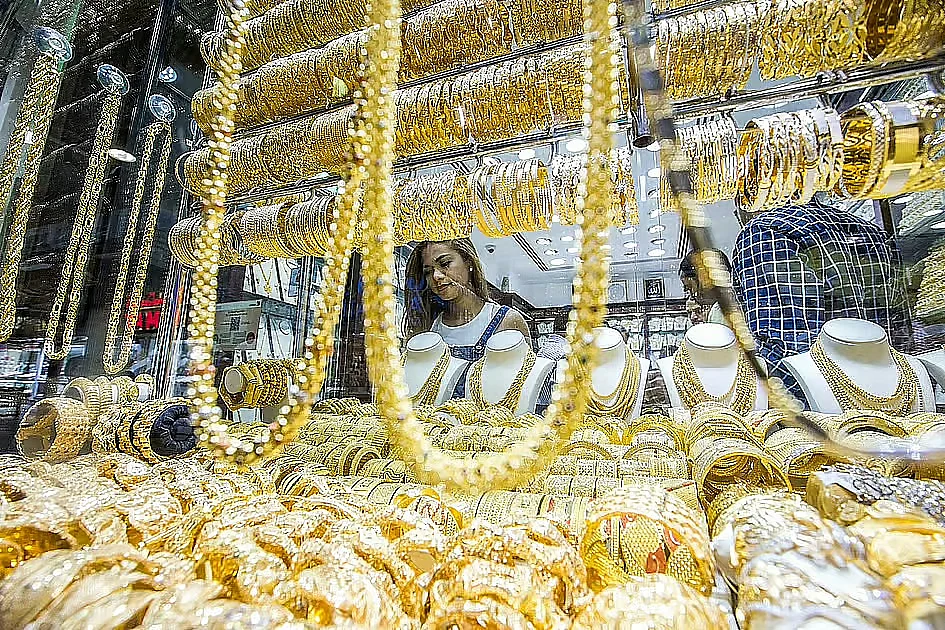
Market context shows gold trading around $5,000 per ounce on Thursday after reaching record highs of $5,500 earlier in the year, with prices demonstrating volatility throughout the trading session. In UAE markets, 24K gold was quoted at Dh600.75 per gram, reflecting regional price variations.
The IIF’s baseline projection assumes a soft-landing scenario characterized by gradual monetary easing, modest US dollar weakness, improving global liquidity conditions, and sustained official-sector demand. Under these conditions, gold prices are expected to remain elevated through 2026–2027, though the pace of appreciation may moderate as macroeconomic tailwinds gradually diminish.