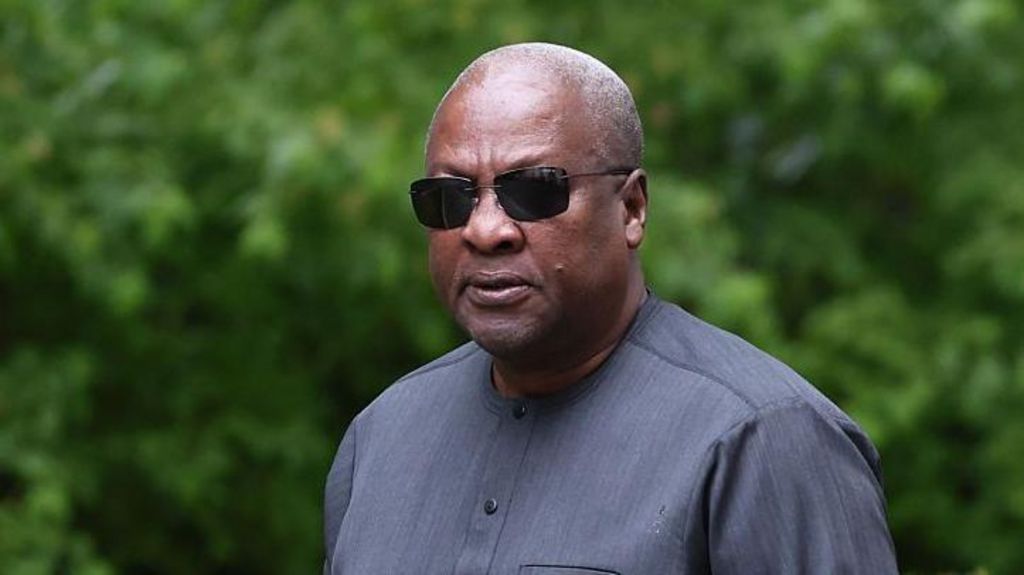
During an official visit to the United Kingdom, Ghanaian President John Mahama has confirmed that a newly parliament-passed bill criminalizing LGBTQ+ activities will go through a multi-stage review process before it can receive formal presidential approval. Introduced as a private members’ motion rather than an official government-sponsored piece of legislation, the bill will first be examined by Mahama’s legal council and the country’s attorney general, the head of state clarified.
Approved by Ghana’s parliament on a Friday, the controversial draft legislation proposes harsh penalties including up to three years of imprisonment for individuals who openly identify as lesbian, gay, bisexual, transgender or queer. It also imposes a legal mandate requiring people to report any prohibited activities related to LGBTQ+ identity to local law enforcement. Mahama stressed that the administration will conduct a thorough check to ensure all provisions align with legal and constitutional standards, noting that any provisions flagged for issues will be forwarded to the Council of State, the president’s top advisory body, for further review.
Since taking office last year, Mahama has faced sustained pressure from influential religious leaders across the country to toughen existing anti-LGBTQ+ laws, a framework that first originated from colonial-era legislation inherited from British rule. During a public question-and-answer session held in London on the Monday of his visit, Mahama also acknowledged that procedural irregularities occurred during the bill’s parliamentary passage, issues that are currently being addressed by the Speaker of Ghana’s parliament.
This marks the second time Ghanaian lawmakers have backed a restrictive bill targeting sexual minorities. The first iteration of the legislation was tabled in parliament back in August 2021, shortly after authorities shut down an LGBTQ+ community resources center in the capital city of Accra. Then-president Nana Akufo-Addo, Mahama’s predecessor, never granted his assent to the 2024 version of the bill, citing ongoing legal challenges filed against it at Ghana’s Supreme Court as his justification for withholding approval.
The bill was reintroduced to the current parliament earlier this year by a coalition of cross-party legislators. Members of Ghana’s parliamentary minority have voiced criticism of the updated version, arguing that recent amendments have weakened its restrictive provisions. Minority spokesperson John Ntim Forjour explained that the current draft has “substantially lost the force and the bite and the thrust, the deterrence, the efficacy that it contained and carried in 2024.” Key changes in the current iteration include exemptions from punishment for legal, healthcare, and media professionals who provide services to LGBTQ+ people or cover LGBTQ+ related news. However, the updated bill still allows for prison sentences for anyone who identifies as an open ally to LGBTQ+ communities.
Both versions of the legislation have drawn widespread condemnation from international and local human rights organizations, which warn the bill fundamentally infringes on the basic human rights of sexual minority Ghanaians. Human Rights Watch has issued a formal submission to Accra’s constitutional and legal affairs committee, which is currently reviewing the bill, calling for the legislation to be scrapped entirely. Supporters of the bill, by contrast, argue that the restrictive measures are necessary to protect and preserve what they frame as traditional Ghanaian family values.
The proposed Ghanaian law fits into a broader regional trend of growing restrictions on LGBTQ+ rights across several African nations in recent years. In March of this year, Senegal’s parliament passed similar legislation that sets a maximum 10-year prison sentence for same-sex sexual activity and criminalizes the “promotion” of homosexuality. Two years prior in 2023, Uganda enacted a law that allows the death penalty for certain same-sex sexual acts, a move that sparked global outcry from rights advocates.