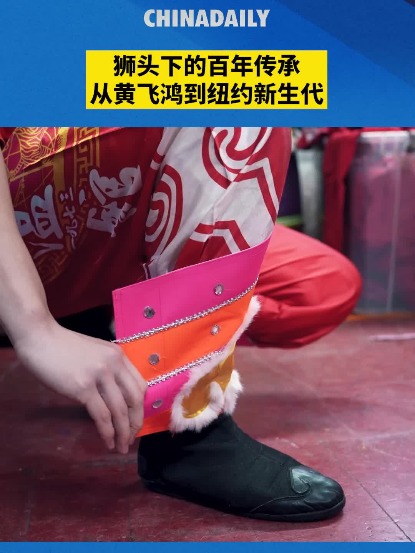
Fifty years ago, a Chinese master named Wan Chi Ming carried a centuries-old cultural inheritance across continents and planted its roots in the heart of New York City. This year marks the golden anniversary of that momentous journey, and the legacy Wan brought to the United States remains as vibrant and resonant as ever: the roar of the traditional Chinese lion dance still echoes across New York’s communities, unbroken by five decades of change.
Wan’s line of transmission stretches all the way back to the legendary Chinese martial artist Wong Fei-hung, a icon of kung fu and folk culture whose legacy has been preserved carefully through successive generations of practitioners. When Wan chose to build a new life in New York after being born and raised in China, he did not leave his cultural heritage behind. Instead, he committed himself to sharing this centuries-old tradition with new audiences in the United States, and to passing his skills and knowledge down to a new generation of learners rooted in American life.
Today, half a century after Wan first brought the legacy to New York, that commitment has borne lasting fruit. Young New Yorkers from different backgrounds now step into the role of the lion, learning the intricate movements, the cultural significance, and the core values that have defined the tradition for hundreds of years. For these new practitioners, the lion dance is far more than a performance art—it has become a space to connect with their cultural roots, to build community, and to discover their own sense of identity. What began as one man’s promise to preserve his ancestral tradition has grown into a living, evolving practice that continues to thrive across generations, proving that authentic traditional spirit never fades when it is nurtured and passed forward.