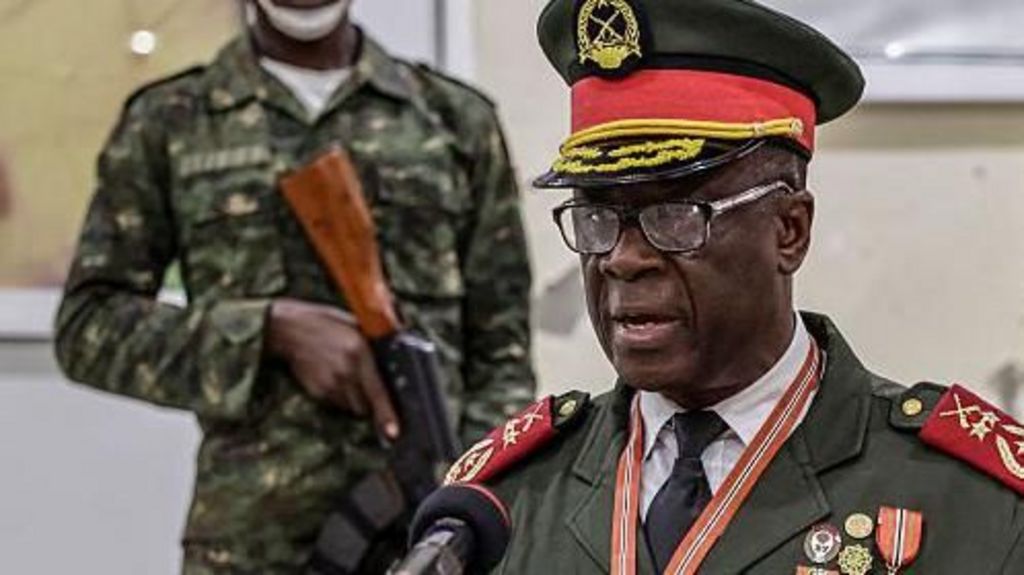
In a dramatic turn of events, Guinea-Bissau has plunged into political chaos as General Horta N’Tam was sworn in as the transitional head of state on Thursday, following an apparent military coup. The brief and subdued ceremony took place at the army headquarters, marking the beginning of a one-year transitional period. This development comes just a day after the military suspended the electoral process and blocked the release of the presidential election results, which were initially expected on the same day. The election, held on Sunday, saw both incumbent President Umaro Sissoco Embaló and his closest rival, Fernando Dias, claiming victory. Civil society groups have accused Embaló of orchestrating a ‘simulated coup’ with military backing to prevent the election results from being published, should he lose. Embaló, who has not responded to these allegations, has previously claimed to have survived multiple coup attempts during his tenure. Critics, however, argue that he has fabricated crises to suppress dissent. Guinea-Bissau, a West African nation sandwiched between Senegal and Guinea, has a tumultuous history marked by nine coups or attempted coups since gaining independence from Portugal in 1974. The country, known as a notorious drug-trafficking hub, has struggled with political instability and economic challenges. On Wednesday, military officers announced they had seized control of the country, following reports of Embaló’s arrest. Gunshots were heard in the capital, Bissau, though details about the shooting and potential casualties remain unclear. The officers appeared on state TV, declaring the suspension of the electoral process and accusing unnamed politicians, allegedly supported by a drug baron, of plotting to destabilize the country. They also announced the closure of borders and imposed a night-time curfew. Embaló, in a phone call to France 24, confirmed his deposition. Government sources revealed that Dias, former Prime Minister Domingos Pereira, and Interior Minister Botché Candé were also detained. The coup leaders took army chief General Biague Na Ntan and his deputy, General Mamadou Touré, into custody. The African Union and the West African bloc Ecowas expressed ‘deep concern’ over the coup, emphasizing that the country had been prepared for the announcement of election results after an ‘orderly and peaceful’ process. Portugal, the former colonial ruler, called for a return to constitutional order, urging all parties to refrain from violence. As of Thursday, Guinea-Bissau’s borders have reportedly reopened. Embaló, 53, had aimed to secure a second consecutive mandate, a feat not achieved in the last 30 years. His legitimacy was questioned by the opposition, who argued his term should have ended in February 2025. Guinea-Bissau, one of the world’s poorest nations with a population of over two million, faces significant challenges, including its role as a key transit point for cocaine trafficking from Latin America to Europe.