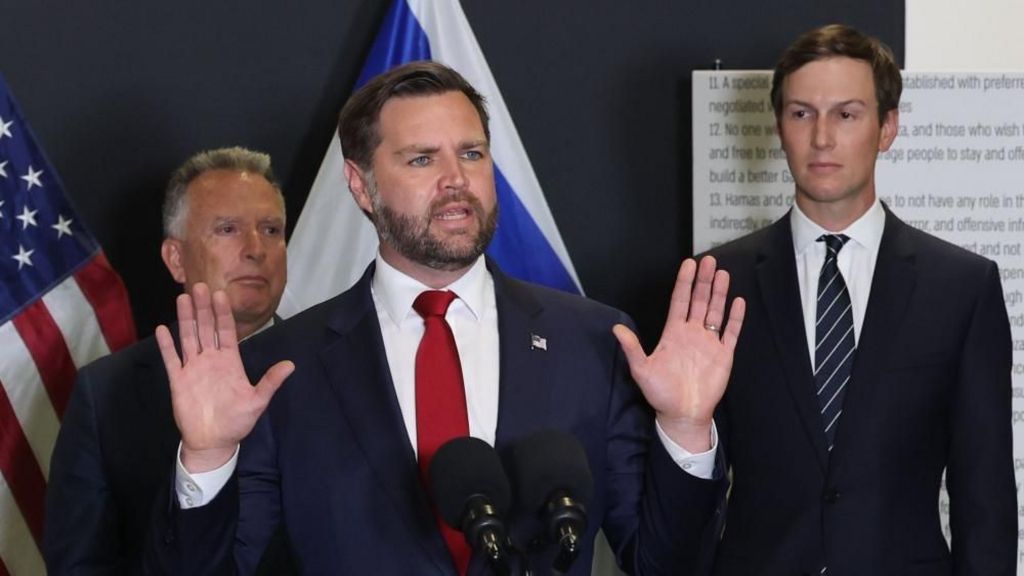
US Vice-President JD Vance, during his visit to Israel, expressed cautious optimism about the Gaza ceasefire agreement, stating that its implementation is progressing better than anticipated. However, he issued a stern warning to Hamas, emphasizing that failure to cooperate would result in its obliteration. Vance refrained from setting a deadline for Hamas to disarm, a contentious element of US proposals yet to be finalized. President Donald Trump, who brokered the ceasefire earlier this month, echoed this sentiment, asserting that US allies in the Middle East are prepared to intervene forcefully if Hamas continues to act disruptively. Vance’s visit follows a recent escalation in violence, including a Hamas attack that killed two Israeli soldiers, prompting retaliatory strikes that claimed dozens of Palestinian lives. Despite these tensions, Vance praised Israel for its constructive role in advancing the ceasefire’s objectives but acknowledged the significant challenges ahead. He is expected to press Israeli Prime Minister Benjamin Netanyahu to initiate long-term negotiations for a permanent resolution to the conflict. The US delegation, including special envoys Steve Witkoff and Jared Kushner, is working to sustain the ceasefire and advance the second phase of Trump’s 20-point peace plan, which includes establishing an interim Palestinian government, deploying an international stabilization force, and ensuring Hamas’s disarmament. Meanwhile, Hamas’s chief negotiator, Khalil al-Hayya, reaffirmed the group’s commitment to the ceasefire, despite logistical challenges in recovering the bodies of deceased hostages. The UN’s World Food Programme highlighted the ceasefire’s critical role in delivering humanitarian aid, though logistical hurdles persist. As the fragile truce holds, the international community remains vigilant, urging all parties to uphold their commitments and avoid further escalation.