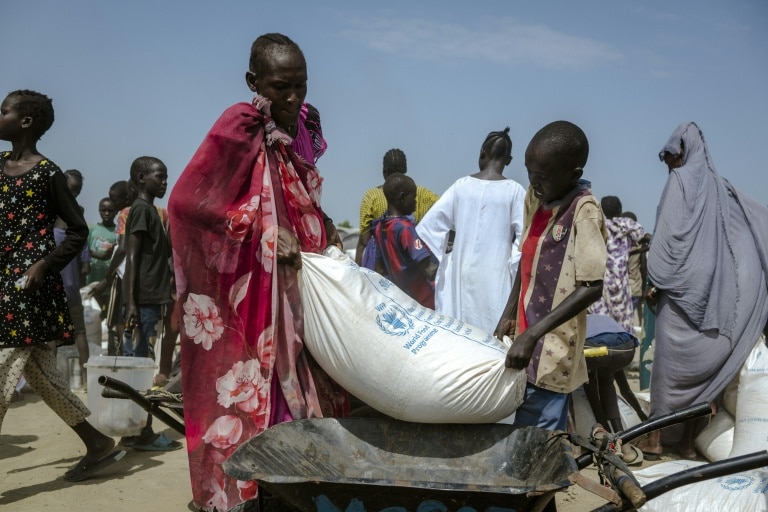
Three months into the ongoing Middle East conflict sparked by cross-border strikes in late February, the United Nations World Food Programme (WFP) confirmed Friday that dire earlier predictions of a soaring global hunger crisis are no longer a hypothetical threat — they are becoming reality.
When the conflict first erupted and roiled global energy markets, WFP analysts issued a stark warning in March: if oil prices held steady near $100 per barrel through the end of June, an additional 45 million people across the world would fall into acute food insecurity. That would add to the nearly 320 million people already facing urgent hunger at the start of 2026.
Weeks of fraught negotiations, marked by hostile rhetoric and repeated outbreaks of violence, have failed to secure a ceasefire deal that would reopen the Strait of Hormuz, the world’s most critical chokepoint for global oil supplies. Jean-Martin Bauer, director of WFP’s food and nutrition analysis service, told reporters that the worst-case scenario the agency warned of is now materializing. “The closure of Hormuz is translating into increased hunger,” he explained, noting that prices for staple foods including wheat and rice have skyrocketed as costs are passed down global supply chains. “Unfortunately, the pessimistic projections that were made earlier this year are coming to pass, and we need to act.”
The crisis has sent shockwaves far beyond the Middle East, generating cascading cross-border spillovers that hit vulnerable nations the hardest through fuel price hikes, food inflation, lost income, and disrupted trade routes. When these new pressures combine with pre-existing structural vulnerabilities in low-income nations, they rapidly erode food security and livelihoods, WFP’s analysis found.
Take Somalia as a pressing example: the East African nation already has 6 million people facing acute hunger. By the end of 2026, WFP projects an additional 2.5 million Somalis will be unable to cover their basic food needs, pushing the share of households unable to afford essential goods to nearly 60%, up from 47% in 2025.
Bauer warned the world is now facing a return to the crippling global cost-of-living crisis that followed Russia’s 2022 full-scale invasion of Ukraine. But unlike 2022, when the global humanitarian community was able to mobilize rapid, well-funded support, the system is now stretched thin by deep cuts to international aid funding, particularly following U.S. policy shifts after Donald Trump’s return to the White House. “In 2022, humanitarian programmes were better funded. Humanitarians were in places where they are no longer,” Bauer said.
Compounding this strain, logistical disruptions and broad inflation tied to the Middle East conflict have pushed up the cost of delivering aid worldwide. WFP’s analysis warns the humanitarian system is facing an unprecedented double squeeze: rapidly growing demand for assistance paired with soaring delivery costs, which has created major gaps in coverage. The agency now expects to serve 1.5 million fewer people in 2026 than its original planning target. If the conflict drags on for six months, more than 9 million vulnerable people could lose critical food assistance entirely.
In Somalia alone, the WFP risks completely running out of food to distribute within months, Bauer revealed. The agency is bracing for a “pipeline break” as soon as next month, when no food will be available to distribute to vulnerable communities. The hardest hit will be young children under five, a group already at extreme risk of malnutrition, and one Somali district already faces an active threat of famine. “This is a very serious situation that requires immediate attention,” Bauer said.
With no clear path to a ceasefire in the Middle East, the global food security outlook is likely to worsen further before it improves. The conflict is far from the only threat facing global food systems, Bauer added: a high-likelihood strong El Niño event is on track to supercharge climate instability in the coming months, which could further disrupt crop production and food markets, adding more pressure on vulnerable populations through 2027.