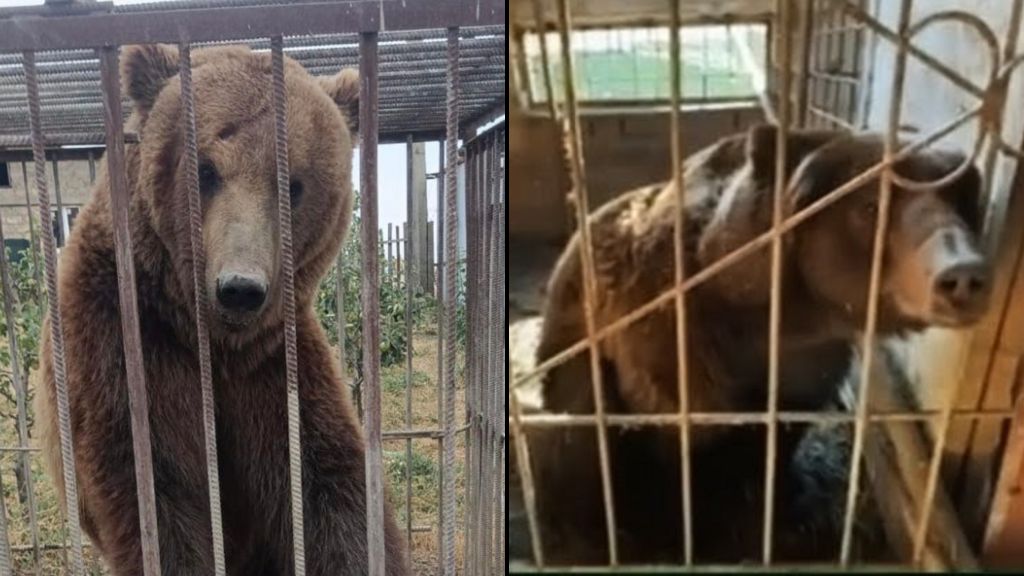
Two formerly mistreated brown bears, Bu and Tyapa, are now thriving in the lush, wooded grounds of Wild Ireland, a dedicated animal sanctuary in Burnfoot, County Donegal, following an extraordinary five-year rescue mission that navigated cross-border red tape, two major international conflicts, and coordinated the efforts of more than 100 specialists across three continents. The pair were first discovered living in horrific conditions in the Republic of Dagestan, Russia: Bu spent years trapped in a cramped indoor cage after being forced to perform in a circus, while Tyapa was confined to a 2.5m x 2.5m x 2m enclosure too small for him to stand fully upright, exposed to freezing winter cold and scorching summer heat with no dedicated water source, and bred explicitly to be killed for a taxidermy display. When Wild Ireland founder Killian McLaughlin first learned of the two bears’ plight in 2021, he immediately launched a campaign to relocate them to the purpose-built Donegal sanctuary, which first opened its doors in October 2019 to provide lifelong refuge for displaced and mistreated wildlife including wolves, lynx, monkeys and brown bears. The rescue effort quickly hit unforeseen, catastrophic barriers: the 2022 Russian invasion of Ukraine completely closed off the originally planned overland transport route, and a subsequent alternative path through the Middle East was derailed in February 2026 by regional escalation involving Iran that shut down widespread commercial and cargo airspace across the area. After years of logistical problem-solving, a team of rescuers from St. Petersburg’s Tiger House sanctuary completed a 36-hour cross-country drive to Dagestan in late October 2025, where they carefully cut the two bears out of their rusted steel cages, sedated them for safe travel, and transported them back to the St. Petersburg facility for urgent veterinary care and mandatory quarantine. The final coordinated effort drew in more than 100 contributors: volunteer caregivers, legal advisors, specialized wildlife veterinarians, international animal transport experts, cargo logistics teams, and regulatory officials based in Russia, the United Arab Emirates and Ireland. The bears finally completed their multi-leg journey from Moscow via Abu Dhabi to Dublin, landing in Ireland on 3 August 2026. Upon their arrival, veterinary assessments confirmed the pair were severely malnourished, exhibited clear signs of long-term psychological trauma, and suffered from serious kidney damage caused by years of chronic dehydration. Less than three months after settling into their new Irish habitat, the bears have made remarkable recoveries: they have regained healthy body weight, their fur coats have grown thick and glossy, and follow-up blood work shows their kidney function has returned to fully normal levels. Their new 20-acre habitat features dense native woodland, natural water sources, miles of open grass to explore, and private sheltered nooks where the bears can retreat away from public view whenever they choose. The Wild Ireland care team, including zoology graduate Chloe McElhatton who has worked at the sanctuary for over a year, has implemented targeted enrichment activities, hiding food across the terrain to encourage the bears to engage in natural foraging behaviours, helping them build confidence as they adjust to their first experience of open, unrestricted natural space. Visitors to the sanctuary have warmly welcomed the new residents: French tourist Liam named the large, majestic bears as his favourite sight during his trip, while long-time local regular Chris Roberts, who lives 20 minutes from the site and has visited dozens of times since it opened, expressed profound joy at seeing Bu and Tyapa thriving after their years of abuse. McLaughlin noted that the entire rescue was driven by a single goal: to give the two bears the peaceful, unconfined, happy life they were never allowed for the first years of their existence.
From Russian cages to Irish sanctuary: The five-year rescue journey of Bu and Tyapa