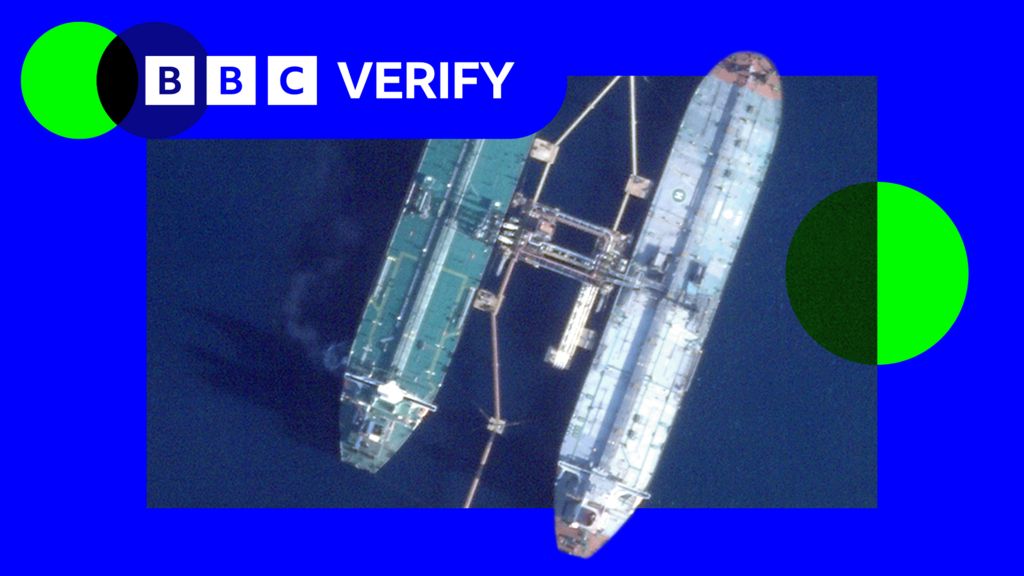
In a significant maritime enforcement action, US military forces have captured the oil tanker ‘Skipper’ near the Venezuelan coast, exposing sophisticated methods employed by vessels evading international oil sanctions. The operation, conducted via helicopter raid on Wednesday, targeted a vessel with an extensive history of deceptive practices, according to ship tracking analyses.
Maritime intelligence reveals the 20-year-old tanker systematically falsified its location data and engaged in covert operations to transport sanctioned oil from Venezuela and Iran. Despite requirements under UN treaty for vessels to maintain operational Automatic Identification Systems (AIS), the Skipper consistently manipulated its tracking signals in a practice known as ‘spoofing’ to conceal its activities.
US Attorney General Pam Bondi identified the vessel as a critical component of an ‘international oil smuggling network,’ originally sanctioned in 2022 when operating under the name Adisa. The tanker had most recently sailed under the Guyanese flag, though the government quickly disavowed any legitimate registration, stating the vessel was ‘falsely flying the Guyana Flag.’
Analysts from maritime analytics firm Kpler documented the vessel’s elaborate deception patterns. While its AIS indicated presence at Iraq’s Basrah Oil Terminal in July, terminal records showed no such visit. Instead, the vessel loaded Iranian crude at Kharg Island before conducting ship-to-ship transfers in August and ultimately delivering its cargo to China under false declarations.
The Skipper’s most recent activities involved loading approximately 1.1 million barrels of Merey crude from Venezuela’s Port of Jose in November, with Cuba listed as its destination. Satellite imagery confirmed the vessel participated in another ship-to-ship transfer just days before its seizure, occurring near Venezuela’s coast at Barcelona despite previous tracking showing it near Guyana.
Maritime security expert Frederik Van Lokeren, former Belgian naval lieutenant, noted that while such transfers aren’t inherently illegal, they remain ‘extremely uncommon’ and typically indicate sanctions evasion attempts. He emphasized Venezuela’s growing dependence on Iranian and Russian allies for refining capacity amid degraded domestic capabilities.
The vessel’s ownership structure reveals complex international connections, with beneficial ownership attributed to Nigeria-based Thomarose Global Ventures Ltd and registered ownership to Marshall Islands-based Triton Navigation Corp. The latter entity was previously identified by US Treasury as facilitating a global oil smuggling network for sanctioned Russian magnate Viktor Artemov.
This seizure highlights ongoing challenges in enforcing oil sanctions against Venezuela, imposed by the US in 2019 to pressure President Nicolás Maduro’s administration amid widespread election rigging allegations. Industry analysts note that position spoofing and dark fleet operations have become increasingly common among vessels transporting sanctioned Venezuelan oil.