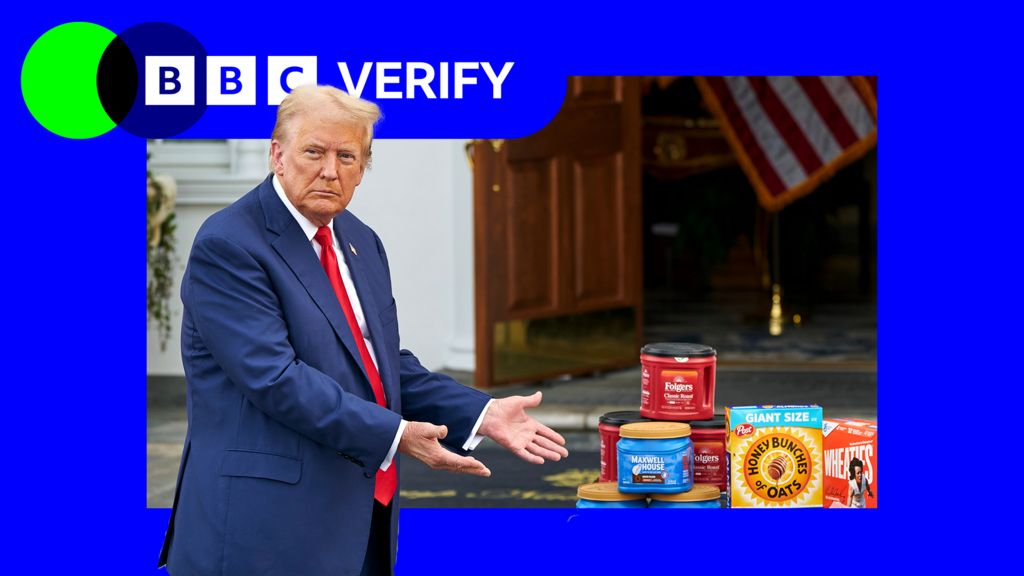
One year into his second term, President Donald Trump’s ambitious campaign promises to tackle inflation and reduce living costs are under scrutiny. Trump, who blamed his predecessor Joe Biden for the steep rise in prices, vowed to bring down costs for Americans ‘starting on day one.’ However, official data reveals a mixed picture of his efforts. While some grocery items like eggs have seen price drops, others such as coffee and ground beef have experienced significant increases. Food economics expert Professor David Ortega highlights that Trump’s tariffs and immigration policies have contributed to rising costs, particularly in sectors like agriculture where undocumented labor is prevalent. Additionally, energy prices have risen despite Trump’s pledge to slash electricity bills by half within 12 to 18 months. Professor James Sweeney of Stanford University attributes this to increased demand driven by data centers and AI, as well as cuts to renewable energy subsidies. Car prices have also surged, with tariffs playing a major inflationary role. While Trump has made some progress in reducing gas prices, they remain far from his campaign promise of below $2 per gallon. White House officials defend the administration’s policies, emphasizing efforts to expand energy production and reverse previous regulatory actions. As inflation pressures persist, the effectiveness of Trump’s economic strategies continues to be debated.
From gas to groceries, has Trump kept his promise to tackle rising prices?