A widespread, record-challenging heatwave has swept across Western Europe this June, pushing temperatures toward unprecedented highs for the month and forcing governments, local authorities and communities to roll out emergency adaptive measures to protect residents. With meteorologists predicting long-standing temperature records will be broken across multiple nations in the coming days, the BBC dispatched correspondents across the continent to document how communities are coping with the unseasonable extreme heat.
In the Netherlands, Amsterdam is anticipating a peak temperature of 38C later this week, and city officials have launched a targeted network of public cool-down hubs to help residents escape the swelter. These shaded, accessible spaces are hosted in a wide range of public and commercial venues, including libraries, urban community farms, theaters, churches, neighborhood community centers and even local supermarkets. Each hub provides free drinking water, public seating and restroom access, with many welcoming pets to accommodate owners who need to leave overheated homes. The 12 pilot hubs are concentrated in Nieuw-West, the district identified by city climate modeling as facing the highest heat risk, after officials assessed factors including existing tree cover, the share of vulnerable residents (young children and elderly people) and how quickly local housing retains heat. Local schools have also adjusted their schedules, adopting modified “tropical timetables” that shorten the school day, reduce lesson loads, add more frequent rest breaks, increase water access and boost classroom ventilation. Since there is no national legal maximum temperature for classrooms, each school sets its own adjustments, with the core guiding principle of keeping both students and staff working in safe, healthy conditions.
Across the border in France, authorities have rolled out a range of low-cost and innovative solutions to beat the heat. Paris’ 10th arrondissement town hall has partnered with three independent air-conditioned cinemas to offer free afternoon movie tickets for residents under 25 or over 65, encouraging vulnerable groups to escape the heat in cooled spaces. In Lyon, the city has temporarily dropped entry fees for all municipal museums, which are fully air-conditioned, to draw residents seeking relief from temperatures. A quirky homemade cooling hack has proven so popular that DIY stores across the country have reported a surge in demand for Meudon Whiting (Blanc de Meudon), a chalky powder that homeowners mix with water and paint onto window panes. The coating diffuses incoming sunlight to reduce indoor heating, and many residents report the low-cost trick delivers noticeable temperature drops inside homes. In Nantes, one local school has already applied this chalk coating to its classroom windows to protect students during lessons.
In Spain, the northeastern region of Aragón is recording some of the continent’s highest temperatures during this heatwave, and local officials across the country have adapted public services to help residents cool off. In Zaragoza and Huesca, authorities have cut entry prices for public swimming pools, while the northern city of Logroño, which expects highs of 40C, has made all public pool entry entirely free for the duration of the heat emergency. The city has also extended operating hours for ornamental public fountains until 11 p.m. and activated mobile water sprinklers in public spaces for residents to cool off. Extreme dry conditions have forced the cancellation of traditional San Juan festival celebrations across multiple northern communities: the city of León scrapped a scheduled public fireworks display, and many towns have called off the traditional ritual bonfire over elevated wildfire risk. Like many other European nations, Spain has established a network of air-conditioned public heat refuges that any resident can access to escape extreme heat, and a 2024 national heat safety law mandates that employers implement protective measures for outdoor workers, including banning strenuous manual outdoor labor during the hottest peak hours of the day.
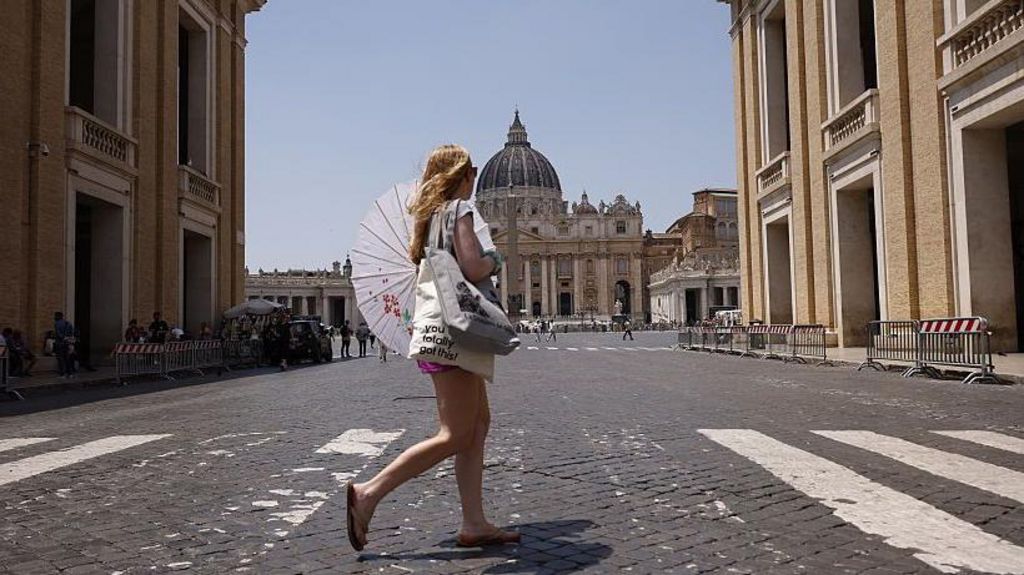
Italy is also facing extreme June heat that is unusual even for the Mediterranean nation, with more than a dozen cities already under top-level red heat warnings, and that list is expected to expand on Wednesday. The most severe conditions are concentrated in central and northern regions of the country. The Italian government has reactivated emergency support measures for heat-exposed workers, including farmers, construction crews and staff in poorly ventilated indoor workplaces. Under the policy, businesses can suspend or reduce operations during temperature peaks and access state-funded furlough payments to compensate workers without laying off staff. For most residents, the solution has been to run air conditioning at full blast with closed shutters, while vulnerable residents without home cooling are advised to seek out air-conditioned public spaces. Tourist services have also adapted: in Palermo, horse-drawn carriage rides, a popular tourist attraction, are only offered after dusk or on cooler days, while some restaurants in Turin have closed outdoor dining terraces to avoid exposing guests to dangerous heat. Other venues across Rome and northern Italy have ramped up use of giant outdoor fans and mobile sprinklers to cool outdoor spaces. The Italian Ministry of Health has also issued public guidance for people dining out, recommending diners choose pasta over heavier meat dishes and swap dehydrating coffee or cold beer for still water to avoid dehydration.
In Belgium, the most extreme heat is still approaching, with a national orange heat alert set to go into effect as temperatures climb toward the high 30s. The national weather service’s 1947 all-time June temperature record of 36.8C is widely expected to be broken this week. The Belgian federal government held an emergency cabinet meeting on Tuesday to coordinate the national response. The heat has already disrupted rail travel: older commuter trains not fitted with air conditioning have been temporarily pulled from service, while additional rail services have been added to accommodate crowds traveling to the cooler northern Belgian coast to escape the heat. A viral story from Brussels has highlighted how communities are adapting: high school students in the Brussels suburb of Tervuren moved their final exams into a local church to take advantage of the building’s naturally cool stone interior. The local pastor joked on Facebook that “the kids are doing their best, and the Holy Spirit is doing the rest.”
In Germany, forecasters predict record-breaking June temperatures will arrive on Friday, with highs potentially reaching 40C in western and southwestern regions of the country. Employers have adapted workplace policies for outdoor staff: Deutsche Post has advised postal workers to wear long-sleeved protective shirts and sun hats, while parent company DHL Group has added Bermuda shorts to the corporate clothing catalogue to allow for cooler work attire. After multiple drowning incidents over the past weekend, the German Life Saving Association (DLRG) has issued urgent warnings to residents underestimating the hidden risks of swimming in overheated natural waterways. The German Forest Conservation Association has also warned that the prolonged heat has pushed wildfire risk to critically high levels across the country, reminding residents that open fires are only permitted in designated, maintained fire pits at the edge of forests. Private health insurer DAK has also launched a dedicated public hotline to provide guidance on heat safety and managing heat-related health issues.