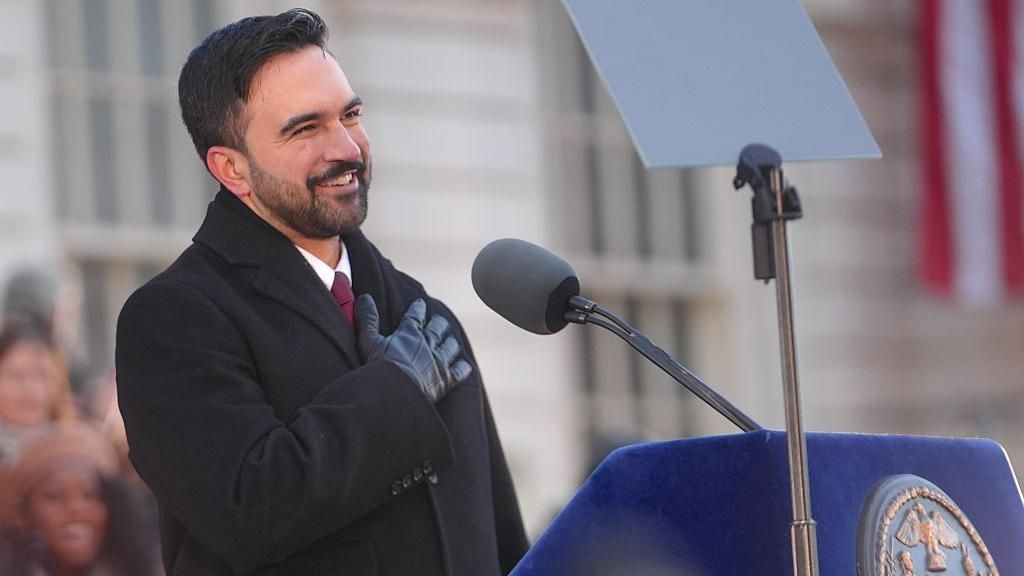
On a frigid January morning in 2026, Zohran Mamdani assumed leadership of America’s largest city amidst thousands of cheering supporters, pledging to fundamentally reshape New York’s governance. The 34-year-old democratic socialist, whose unexpected electoral victory stunned political establishments, promised to deliver an unprecedented agenda centered on safety, affordability, and governmental representation that mirrors the city’s diverse population.
Mamdani’s progressive platform includes revolutionary proposals: universal childcare, completely free public bus transportation, and municipally-operated grocery stores. His administration immediately faces the complex reality of implementing these ambitious policies within New York’s intricate political ecosystem. According to political analysts, while some objectives like rent freezes for subsidized housing can be achieved through strategic appointments to city boards, the more financially demanding promises encounter significant obstacles.
Professor Robert Shapiro of Columbia University notes the fundamental challenge: ‘Initiatives like free bus service and universal childcare require substantial funding. The primary constraints will be New York State’s financial capacity and Governor Hochul’s political willingness to support Mamdani’s proposed tax increases.’ The mayor’s plan to raise corporate taxes from 7.25% to 11.5% and generate $9 billion through wealth taxes requires state legislative approval—a potential stumbling block given Hochul’s moderate stance and her own reelection considerations.
The new administration must also navigate relationships with federal authorities and business leaders. Despite President Trump’s pre-election characterization of Mamdani as a ‘communist’ threat and warnings about withholding federal funds, their initial November meeting surprisingly yielded mutual praise. However, immigration policy remains a potential flashpoint between the progressive mayor and conservative president.
Wall Street’s initial apprehension toward Mamdani has gradually evolved into cautious engagement. After his primary victory sparked concerns among business leaders—some threatening relocation, others funding opposition campaigns—the mayor has actively sought dialogue with influential figures including JPMorgan Chase CEO Jamie Dimon and real estate developer Jeffrey Gural. While describing Mamdani as ‘personable’ and ‘smart,’ business leaders continue expressing concerns about his limited executive experience and potential tax policies driving corporations from the city.
Public safety presents another critical challenge. Despite homicide and shooting rates reaching near-record lows in 2025, maintaining security remains paramount. Mamdani proposes establishing a Department of Community Safety focusing on mental health programs, crisis response, and subway outreach workers—building upon but aiming to improve similar initiatives from the Adams administration that critics found inadequate.
Political analyst Patrick Egan observes that reduced crime rates provide ‘wiggle room to think creatively’ about public safety, though Democratic strategist Howard Wolfson emphasizes that policing effectiveness and quality-of-life crime management will ultimately define the administration’s perceived success or failure. Mamdani’s decision to retain Police Commissioner Jessica Tisch from the previous administration has been widely interpreted as a pragmatic move signaling continuity in public safety approaches.