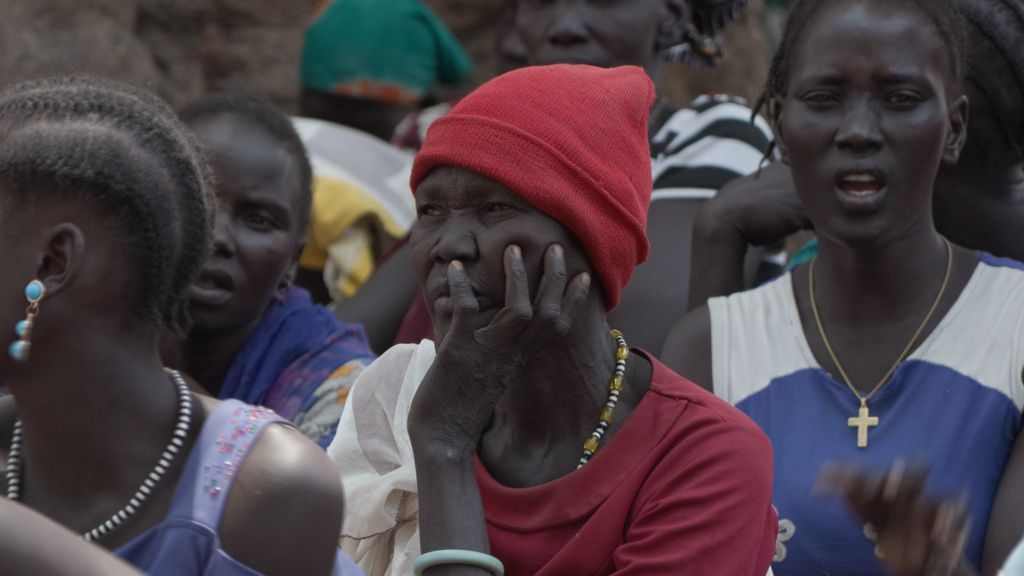
South Sudan, the world’s youngest nation, faces a catastrophic return to full-scale civil war as intensified military operations in Jonglei state trigger mass displacement and civilian casualties. The conflict between government forces loyal to President Salva Kiir and opposition factions aligned with suspended First Vice-President Riek Machar has created a devastating humanitarian crisis.
Recent fighting has displaced over 280,000 people, including Nyawan Koang, a 30-year-old mother of five who endured a two-day trek to reach the relative safety of Duk village after losing both parents in an airstrike. ‘Fire came from the sky and burned them,’ she recounted, describing how her family became trapped between warring factions.
The current violence stems from the collapse of a fragile 2018 peace agreement that ended a civil war claiming nearly 400,000 lives. The situation deteriorated dramatically when President Kiir suspended Machar—who now faces charges of murder, treason, and crimes against humanity—and dismissed several senior government figures, including Machar’s wife, Interior Minister Angelina Teny.
Military operations have intensified as government forces attempt to reclaim territory from the Sudan People’s Liberation Army in Opposition (SPLA-IO), which has been bolstered by White Army militants. Both sides stand accused of committing atrocities against civilians, with the UN documenting 189 civilian deaths in January alone from indiscriminate attacks, aerial bombardments, and targeted killings.
Despite government claims of responsible conduct, evidence suggests deliberate targeting of non-combatants. In one admitted incident, government soldiers executed more than 20 civilians at close range in Ayod county during late February. Army spokesman Maj Gen Lul Ruai Koang confirmed soldiers and commanders involved have been detained and face court-martial proceedings.
The conflict exacerbates an already dire humanitarian situation. According to the World Food Programme, 60% of Jonglei’s two million residents face acute hunger, while nationwide, 10 million South Sudanese require food assistance. Relief efforts face monumental challenges due to insecurity, inadequate infrastructure, and seasonal flooding that renders 80% of the country inaccessible during extended rainy periods.
With peace agreements crumbling and regional instability spilling across borders—over one million refugees have fled from Sudan’s civil war—observers fear South Sudan’s fragile stability may completely collapse, dashing hopes for lasting peace in the war-weary nation.