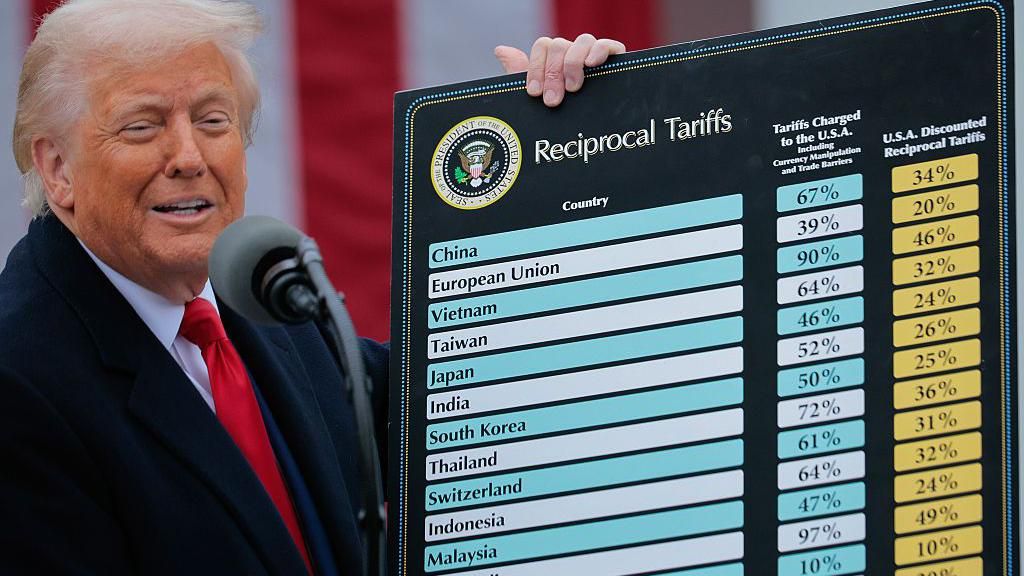
In response to growing public dissatisfaction with his economic policies, US President Donald Trump has proposed a $2,000 payment to most Americans, funded by tariff revenues. This idea, which Trump describes as a ‘subsidy,’ aims to address consumer concerns following the Republican Party’s poor performance in recent state elections. However, economists argue that the tariff revenue is insufficient to cover the cost of such payments, potentially requiring deficit financing. Treasury Secretary Scott Bessent has downplayed the likelihood of these payments, suggesting that tariff gains would instead lower tax rates under Trump’s 2025 spending package. Trump has also floated other ideas, including 50-year mortgages and redirecting expiring health insurance subsidies into direct cash payments. These proposals face significant challenges in Congress, where Republicans hold narrow majorities. Meanwhile, Trump’s administration continues to face criticism for its handling of rising costs in key sectors like beef and electricity. Despite these challenges, Trump’s political instincts remain sharp, as he seeks to recalibrate his policies to reflect public sentiment. His ability to connect with voters, however, is constrained by his position in the Oval Office, prompting discussions about potential nationwide speeches on the economy.
Fifty-year mortgages and $2,000 cheques: What’s behind Trump’s affordability drive?