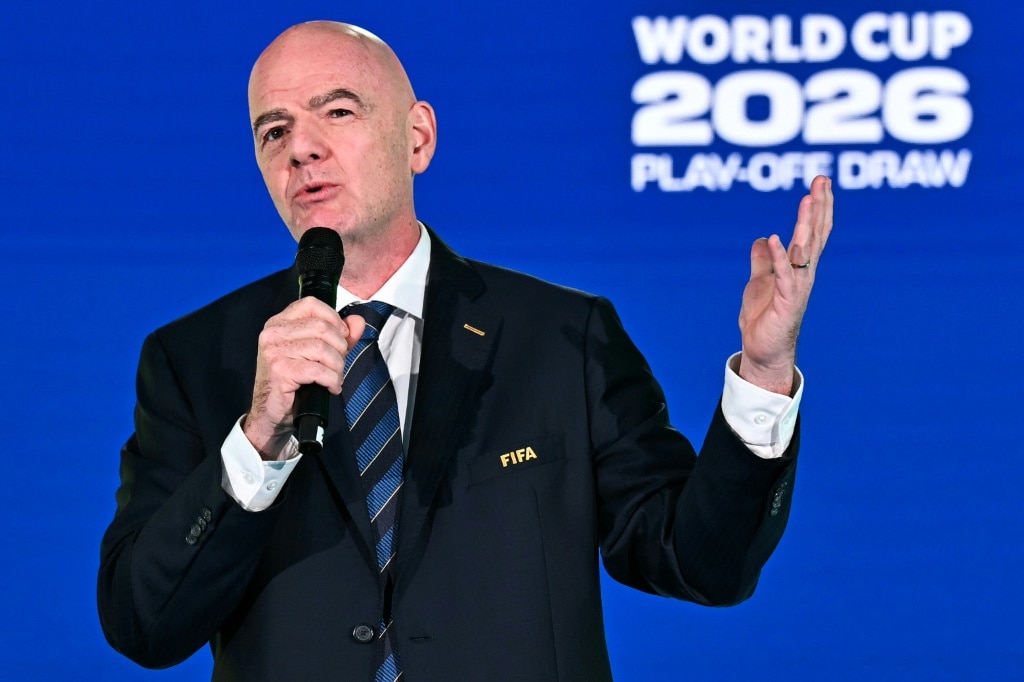
A major crisis has rocked global football’s governing body FIFA after a controversial proposal to open the men’s World Cup to private investment sparked widespread backlash, ultimately forcing the initiative’s withdrawal and leaving FIFA President Gianni Infantino fighting to keep his grip on power. In a rare show of solidarity held during a crisis meeting in Rabat, Morocco this Wednesday, top FIFA directors have formally reaffirmed their “full support” for the under-fire president, even as the organization issued a public apology for the missteps that sparked the uproar.
The now-shelved plan, centered on a new commercial entity called FIFA Forward Enterprise (FFE), would have handed operational control of flagship events including the World Cup and Club World Cup to the private-backed subsidiary. FIFA projected that the initiative could generate up to $4.2 billion in revenue based on a $20 billion valuation of FFE. If approved by member associations, the windfall would have delivered a one-off $20 million payment to each of FIFA’s 211 national member bodies by early 2027, and increased annual funding allocations for the 2027-2030 cycle from $8 million to $20 million per association.
Far from winning over stakeholders, the proposal triggered an unprecedented wave of opposition across the global football community. European football’s governing body UEFA threatened the ultimate sanction: a full boycott of the World Cup, football’s most profitable and watched global event. Facing mounting pressure, Infantino formally withdrew the proposal just six days after it was first leaked to the public, a move that did little to quell growing calls within the football community for his resignation.
In the official statement released following Wednesday’s closed-door meeting, FIFA’s leadership acknowledged multiple missteps throughout the process. “It was agreed that it was not the intention for the FIFA Council and FIFA Member Associations to feel excluded from the process and that the process should have been handled differently,” the statement read. The leadership also admitted that additional errors were made in the organization’s response after the plan was leaked to media outlets. In a separate communication sent to all FIFA Council members and national association leaders, FIFA issued a formal apology for the mismanagement and pledged to implement reforms to prevent similar missteps in the future.
Confirming what the organization had already signaled over the weekend, the statement added that the FFE proposal is permanently “off the table” and will not be revisited. A full internal review of the controversy will now be conducted, with a final report set to be presented to the FIFA Council at its next scheduled gathering.
The crisis comes as a sudden collapse of what had appeared to be a smooth path for Infantino to secure a fourth and final term as FIFA president. Just weeks ago, the 56-year-old Swiss lawyer was riding high off the planning success of the expanded 48-team 2026 World Cup, co-hosted by Canada, Mexico and the United States, with no challengers having stepped forward to contest his re-election, scheduled for next March in Rabat. That political momentum has evaporated entirely in the wake of the privatization plan scandal.
Criticism has poured in from every corner of the global football governance structure. UEFA dismissed the plan as a “shabby, back room, opaque deal” hatched by Infantino, saying the current leadership had lost the confidence of both UEFA and many other members of the global football family. CONCACAF, the governing body for North and Central American football, went even further, calling for “a comprehensive reckoning with this presidency” and slammed Infantino over what it called “poor governance and leadership.” The political backlash extended beyond football governance this week, as Canadian Prime Minister Mark Carney — whose country is a co-host of the 2026 World Cup — publicly stated he no longer has confidence in Infantino’s ability to lead FIFA.
Even within FIFA’s own senior ranks, opposition has emerged. An internal critical memo from FIFA Secretary-General Mattias Grafstrom, leaked to media earlier this week, laid out senior internal pushback against the plan. Only a small handful of high-profile football leaders have continued to stand by Infantino, most notably Moroccan Football Federation chief Fouzi Lekjaa. Morocco, which will co-host the 2030 World Cup alongside Spain and Portugal, has emerged as a key base of support for the FIFA president, with Lekjaa reiterating his backing Wednesday for Infantino’s 10-year record of initiatives aimed at growing global football, calling his decision to withdraw the plan a “wise” move made to protect the unity of the global football community.
Hours after Wednesday’s crisis meeting concluded, Infantino made a public appearance in Rabat, attending a group stage match of the Women’s Africa Cup of Nations between Zambia and Malawi at Al Medina Stadium. An AFP photographer on site spotted the FIFA president alongside Lekjaa at the stadium entrance, marking his first public appearance since the scandal escalated earlier this week.