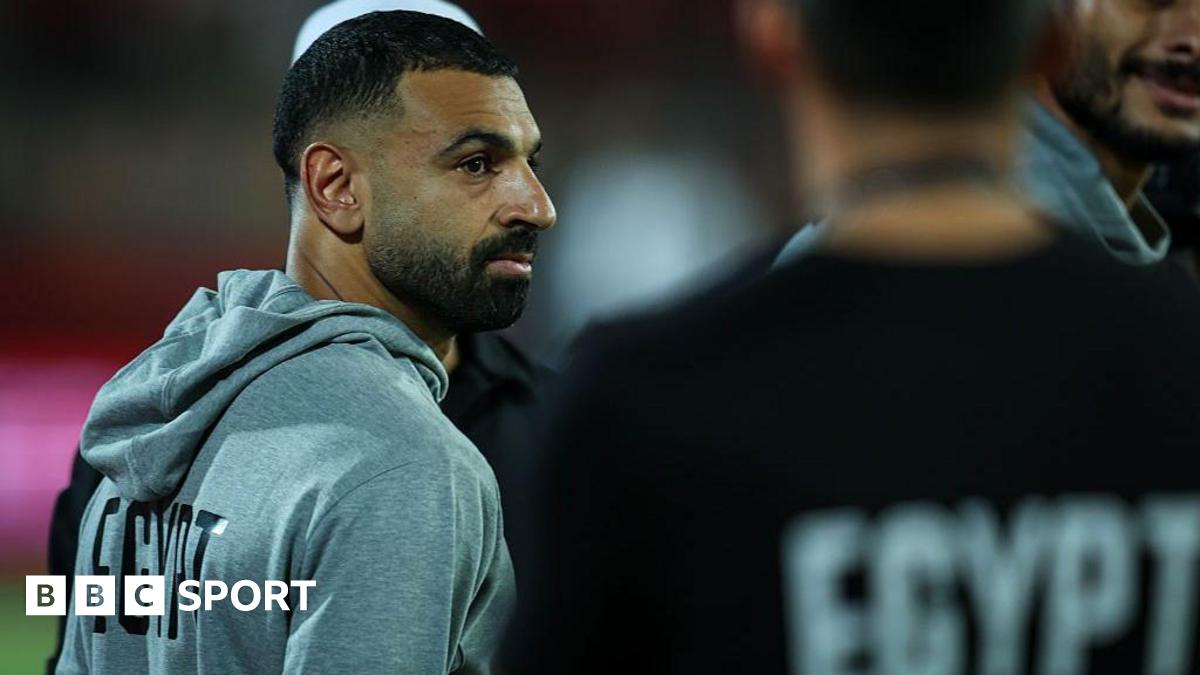
In the bustling streets of Cairo, where 23 million people navigate the chaotic urban landscape, a singular name dominates conversations: Mohamed Salah. The recent controversy surrounding his explosive interview about Liverpool has ignited what locals describe as a “national revolution” of support for their football icon.
When Salah claimed Liverpool had “thrown him under the bus” in his December 6th interview, the Egyptian response was immediate and overwhelming. Diaa El-Sayed, former Egypt assistant coach who has known Salah since his teenage years, stated: “This interview was like a revolution in Egypt. 99% of Egypt supports Salah.”
The contrast between British and Egyptian perspectives couldn’t be more striking. While British media heavily criticized Salah, with former defender Jamie Carragher calling the interview a “disgrace,” Cairo residents view their ‘Egyptian King’ through entirely different lenses. “Before Salah, no-one supported Liverpool here,” explains Cairo local Noura Essam. “Before Salah, we didn’t have a global figure, so we will always support him.”
Salah’s cultural significance transcends sports. During the 2018 presidential election, over one million Egyptians wrote his name on their ballots instead of voting for official candidates. He’s known affectionately as the ‘Fourth Pyramid’ – an unofficial national leader whose influence reaches far beyond football pitches.
At Ramses Square, where teenage Salah once changed buses during his nine-hour daily commute to training, cafe patrons expressed disbelief at his recent benchings by Liverpool manager Arne Slot. The situation became so tense that when Liverpool faced Inter Milan in Champions League, “all of Egypt supported Inter Milan,” according to Osama Ismail, former Egyptian FA spokesman.
The national team has mobilized to support their captain ahead of the Africa Cup of Nations. At Cairo International Stadium, where Egypt recently defeated Nigeria 2-1 in a friendly, the overwhelming mood was one of lifting their “son’s” morale. Sports Minister Ashraf Sobhy personally welcomed Salah upon his arrival in Cairo, demonstrating the government-level support he commands.
Ahmed Gamal Ali, a Cairo-based journalist, explains the national sentiment: “We say he is our son, so we were emotionally taken aback because it felt like a humiliation for one of our family. To see one of our own hurting was shocking.”
Within the Egyptian camp, support remains unwavering. Team staff describe working with Salah as “the best part of my job,” while players have universally posted social media support for their captain. Coach Hossam Hassan, Egypt’s all-time record goalscorer, has held extensive discussions with Salah, emphasizing that Egypt needs him at his best regardless of his Liverpool situation.
The underlying tension stems from Salah’s changing role at Liverpool and potential departure. While neither party appears eager for a January separation, a summer move seems increasingly likely, with Saudi clubs interested in the £400,000-per-week forward. Yet even potential departure carries nuance – there’s belief Salah might return to Liverpool with his family after retirement because they “love the British way of life.”
For now, Salah’s focus remains on international glory. He has never won the Africa Cup of Nations, losing finals in 2017 and 2021. His dedication to this goal is exemplified by his response to his daughters when they asked why he still trains despite winning everything with Liverpool: “No, not yet, this is Egypt.”
The narrative also touches on Salah’s football hero, Mohamed Aboutrika, whose number 22 Salah once wore as tribute until Aboutrika was placed on Egypt’s terror list in 2017 (a designation removed in 2024). Unlike his idol who won two Afcon titles, Salah seeks his first international trophy.
With Egypt drawn in a manageable World Cup group alongside Belgium, Iran and New Zealand for next year’s tournament, international success remains within reach. But immediate focus remains on Morocco, where Salah carries not just national hopes but personal motivation to prove he remains among football’s elite.
As Mohamed Mamoun, a fan at Cairo stadium, perfectly captures: “Salah always wants to win but there is double motivation now to prove that he is still one of the best. We already know he is the best.” Though not tournament favorites, with Salah, Egypt will always believe.