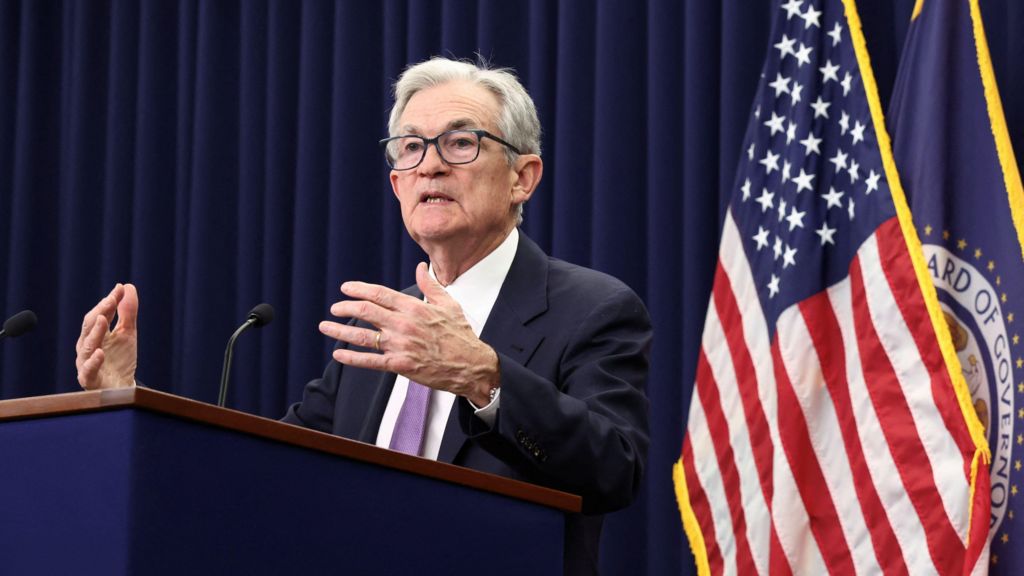
The U.S. Federal Reserve has implemented its third interest rate reduction of the year, lowering the benchmark rate by 25 basis points to a range of 3.50%-3.75%, marking the lowest level in three years. The decision reveals significant fractures within the central bank’s leadership as policymakers grapple with conflicting economic signals: a deteriorating labor market versus persistent inflationary pressures.
The rate cut approval was not unanimous, with three Federal Reserve officials dissenting from the majority decision. Stephen Miran, currently on leave from leading Trump’s Council of Economic Advisers, advocated for a more aggressive 50 basis point reduction. Conversely, Austan Goolsbee of the Chicago Fed and Jeffrey Schmid of the Kansas City Fed preferred maintaining the existing rate structure.
This policy divergence occurs against a backdrop of economic uncertainty exacerbated by the recent prolonged government shutdown, which created data gaps that have left policymakers operating with incomplete information. Recent labor market statistics show unemployment rising to 4.4% in September, while inflation remains elevated at 3%, exceeding the Fed’s 2% target.
The central bank’s updated economic projections indicate expectations for one additional rate cut in 2026, unchanged from previous forecasts. However, analysts note that incoming data, particularly next week’s November labor market and inflation reports, could significantly alter this outlook.
Compounding the policy uncertainty, the Fed faces impending leadership changes with Chair Jerome Powell’s term concluding in May 2026. President Trump is expected to announce his nomination for Powell’s successor within weeks, with Kevin Hassett emerging as the leading candidate. Hassett, a longtime Trump economic adviser and former Council of Economic Advisers chair, has consistently defended the president’s economic policies and questioned official economic statistics.
Market observers express concerns about potential political influence on Fed independence, noting that other candidates including Kevin Warsh, Christopher Waller, and Scott Bessent remain under consideration. The appointment decision could significantly impact market stability depending on the perceived independence of the selected candidate.