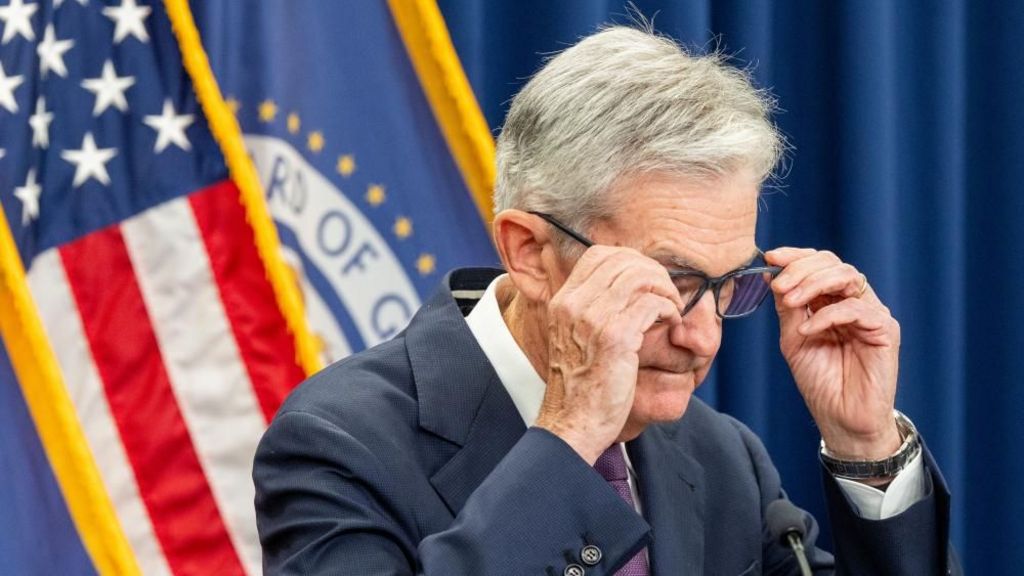
In a significant move reflecting growing concerns over the U.S. economy, the Federal Reserve announced a 0.25 percentage point reduction in its key lending rate on Wednesday, bringing the target range to 4%-4.25%. This marks the first rate cut since December 2022 and signals the potential for further reductions in the coming months. The decision, supported by 11 of the 12 voting members of the Federal Open Market Committee, underscores the central bank’s response to a weakening labor market and broader economic risks. Federal Reserve Chair Jerome Powell emphasized that while unemployment remains low at 4.3%, downside risks in the job market have become increasingly apparent. The move contrasts with the Fed’s July assessment, which described the labor market as ‘solid.’ Stephen Miran, a temporary member with ties to the White House, notably advocated for a more aggressive 0.5 percentage point cut. The decision comes amid persistent political pressure from President Donald Trump, who has repeatedly criticized the Fed for its reluctance to lower rates. Trump has accused Powell of stifling economic growth and even threatened to remove him from his position. Despite the political backdrop, analysts argue that the Fed’s decision was driven by economic fundamentals rather than presidential influence. Inflation, which surged post-pandemic, has moderated significantly, while job growth has stalled, with the U.S. reporting minimal gains in August and July and a net loss in June—the first since 2020. Economists predict further rate cuts, with Wells Fargo forecasting a 0.75 percentage point reduction by year-end. However, the Fed remains divided on future policy, with seven members opposing additional cuts and one advocating for rates below 3%. Powell acknowledged the complexity of the current economic landscape, stating, ‘There are no risk-free paths right now.’ The Fed’s independence has also come under scrutiny, as Trump’s administration has sought to influence its decisions through personnel changes and legal battles. Critics warn that such actions threaten the central bank’s autonomy, a cornerstone of its credibility. Despite the political drama, the Fed’s latest move is seen as a necessary step to address economic headwinds and support borrowing costs across the nation.