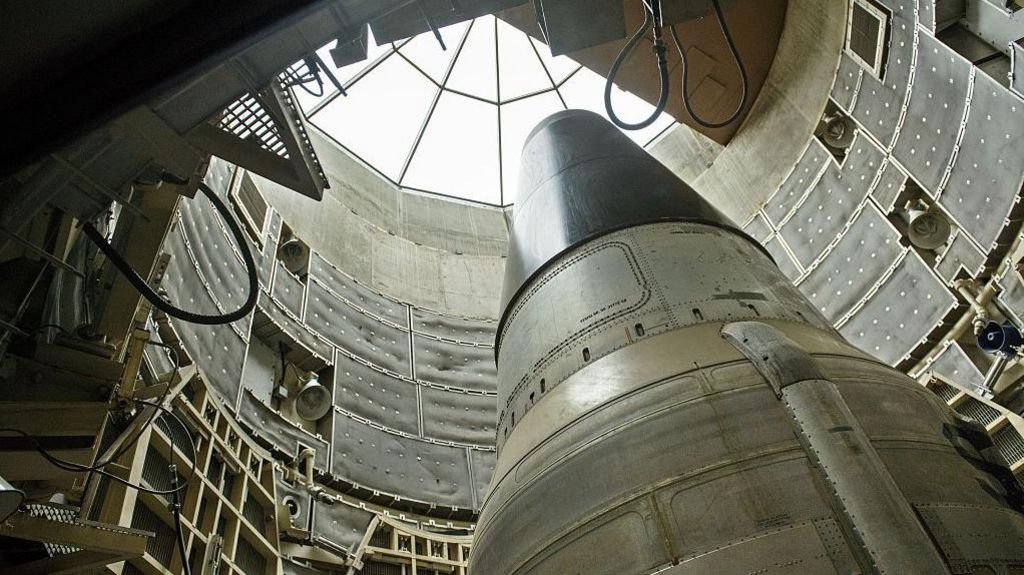
The expiration of the New Strategic Arms Reduction Treaty (New START) on Thursday signals a critical juncture in international security, terminating the final nuclear weapons control agreement between the United States and Russia. This development raises profound concerns about the potential acceleration of a new global arms race.
Established in 2010 during the Obama administration and signed by then-President Dmitry Medvedev, New START represented the culmination of decades of bilateral arms control efforts. The treaty imposed verifiable limits of 1,550 deployed strategic nuclear warheads for each nation while implementing comprehensive transparency measures including data exchanges, notifications, and on-site inspections.
The collapse follows Russia’s suspension of the treaty three years ago amid escalating tensions surrounding the Ukraine conflict, though both nations were believed to be maintaining compliance until recently. This expiration continues a disturbing pattern of disintegrating arms control frameworks, including the Intermediate-Range Nuclear Forces Agreement, the Open Skies Treaty, and the Conventional Armed Forces in Europe Treaty.
International responses reflect growing apprehension. Pope Leo recently urged treaty renewal, emphasizing the necessity of preventing renewed nuclear competition. Admiral Sir Tony Radakin, Britain’s former armed forces head, warned that the foundational architecture of global security now risks complete unraveling.
Current modernization programs underscore the emerging arms race dynamics. Both nations are actively enhancing their nuclear capabilities, with Russia developing innovative systems like the Poseidon nuclear-powered autonomous torpedo and Burevestnik nuclear cruise missile. Concurrently, the United States, Russia, and China are advancing hypersonic missile technology capable of exceeding 4,000 mph, presenting unprecedented defense challenges.
The diplomatic landscape appears increasingly complex. Washington insists future agreements must include China’s expanding nuclear arsenal, while Moscow demands inclusion of European nuclear powers France and United Kingdom. Darya Dolzikova of RUSI’s Proliferation and Nuclear Policy Programme notes that evolving military technologies and growing nuclear weapon salience complicate future negotiations.
Despite brief discussion during the recent Alaska summit between Presidents Putin and Trump, no substantive progress emerged. The current administration’s stance remains ambiguous, with President Trump suggesting willingness to pursue “a better agreement” while demonstrating limited urgency.
This treaty termination marks the end of a stabilizing era in nuclear diplomacy, potentially ushering in a more volatile and dangerous period of great power competition with global implications for security and non-proliferation efforts.