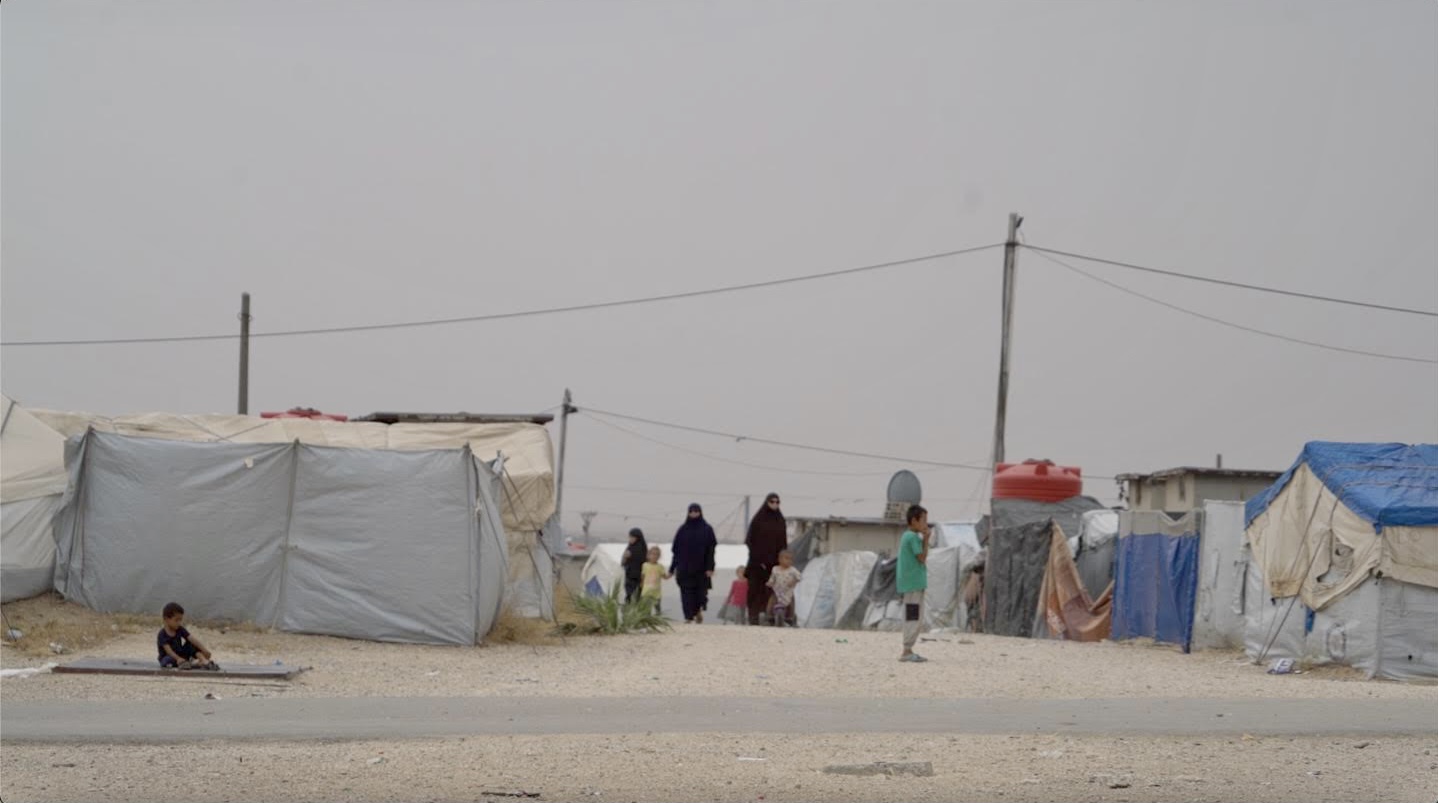
A new report from Sweden-based human rights organization Repatriate the Children (RTC) has sounded a fresh alarm over steeply escalating violence, intimidation, and degrading treatment against women and children detained at northeastern Syria’s Roj Camp, the country’s last major detention facility for foreign nationals alleged to have ties to the Islamic State group. The report, based on first-hand testimonies collected from more than 40 women of diverse nationalities held at the camp between January and May 2026, confirms that human rights violations against detainees have grown significantly in both frequency and severity since the start of the year.
Located near the Iraqi border in Syria’s northeastern Hasakah province, Roj Camp is currently co-administered by the Democratic Autonomous Administration of North and East Syria and the Kurdish-led Syrian Democratic Forces (SDF). It became the sole major camp for foreign families linked to former IS fighters after the larger Hol Camp ceased operations in January 2026, amid shifting territorial control as Syria’s new Damascus government under President Ahmed al-Sharaa reclaims authority over Kurdish-held areas that have been self-governed for much of Syria’s decade-long civil war. As of mid-2026, the camp holds 2,373 people across 769 households representing 54 nationalities; the vast majority of detainees are third-country nationals, neither Syrian nor Iraqi. Official United Nations data from late 2025 confirms that children make up 63% of the camp’s population, with women accounting for another 35%, and men just 2%.
Multiple detainees interviewed for the report described a daily reality shaped by unrelenting fear and abuse. Nightly armed raids by camp security have become routine, during which guards conduct widespread ransacking of tents, confiscate or steal personal property including money, mobile phones, food, and even a community-funded generator, carry out unprovoked beatings, and separate children from their parents. Detainees report being warned that snipers posted on camp towers will shoot anyone who leaves their tent during raids, leaving families trapped in constant terror as they wait to see if their tent will be targeted next. Women detailed additional degrading treatment, including having cold water poured over them during winter to intensify exposure to freezing temperatures, and consistent verbal abuse that includes guards telling detainees “there are no human rights” and taunting them to ask God for rescue.
Many detainees linked the sharp deterioration in conditions to broader regional instability following the SDF’s territorial losses earlier this year. “It is like they are taking out all of their frustration on us. And we cannot do anything to protect ourselves,” one detained woman told RTC researchers. Beyond physical violence, basic services in the camp have also collapsed: widespread electricity shortages, inadequate access to healthcare, and failure to meet basic nutritional needs have left detainees in increasingly desperate condition. One woman reported that a French national held at the camp died in April after guards denied her care for severe headaches, leading to a fatal heart attack. Detainees described crippling psychological harm, with many noting that constant fear has destroyed their mental health, leaving them trapped in what one called a “live horror movie.”
Children, who make up the majority of the camp’s population, have borne the brunt of the escalating abuse. Multiple testimonies documented children being beaten, threatened with death, and separated from their parents for days or weeks without explanation. In one case, a 12-year-old boy was held for three days, returned with visible bruising from beatings, and told he would be killed if he spoke about the experience. In another, guards beat a mother and her three young daughters with iron sticks during a night raid before detaining all of the children. In some instances, children are only returned to their families after demands for bribes, and families who inquire about detained relatives are met with threats of extended detention. Many mothers have gone to extreme lengths to prepare for potential separation: one woman wrote her family’s home country contact details on her children’s arms, so they could be identified if they were separated during a raid.
RTC co-founder Beatrice Eriksson told Middle East Eye that the situation has reached a crisis point, noting that the international community has largely normalized the prolonged detention of these families. “We’re not talking about a temporary emergency. We’re talking about children who have spent years growing up behind fences. And it seems that the world has gradually become used to it and accepted this situation,” Eriksson said. “It’s very dark for many of these children because they’re so young.”
Longstanding arguments from Western governments that repatriation of their citizens is impossible because the camps are controlled by non-state armed groups no longer hold, the report emphasizes. Following the collapse of the Assad government and the January 2026 agreement between Damascus and the SDF, the internationally recognized Syrian government now holds increasing influence over northeast Syria, creating new diplomatic pathways to resolve the crisis. Eriksson argues that the only barrier to repatriation now is a lack of political will, noting that international law guarantees detainees the right to return to their countries of origin. She also called out European governments for hypocrisy: many demand that Damascus accept the deportation of Syrian nationals from Europe, while refusing to repatriate their own citizens held in Roj Camp.
“Governments must just take responsibility for their own citizens. If anyone is suspected of a crime, investigate them. If they can be prosecuted, prosecute them. But children shouldn’t spend their entire childhood detained just because governments are reluctant to deal with a politically difficult issue,” Eriksson said. The report warns that continued failure to repatriate perpetuates widespread harm and intergenerational trauma, leaving detainees exposed to violence, exploitation, human trafficking, and recruitment by armed groups. From a counterterrorism perspective, the report concludes, prolonged unlawful detention in catastrophic conditions does not reduce risk—it creates new risk. Neglect leaves vulnerable detainees desperate for support, Eriksson noted, increasing the chance they may turn to extremist groups for help. “We need to break this cycle of violence,” she said.
Despite the new opportunities for repatriation, only two repatriations have been carried out at Roj Camp since January 2026, both to Australian citizens, one in April and one in May. Middle East Eye has contacted both the Syrian government and Kurdish regional officials to request comment on the allegations in the report, and as of publication, no response has been received. International human rights bodies have long flagged dangerous conditions in northeast Syria’s detention camps: UN experts have previously warned that conditions in Roj and Hol camps may qualify as cruel, inhuman, or degrading treatment, while Amnesty International has documented repeated allegations of gender-based violence against female detainees.