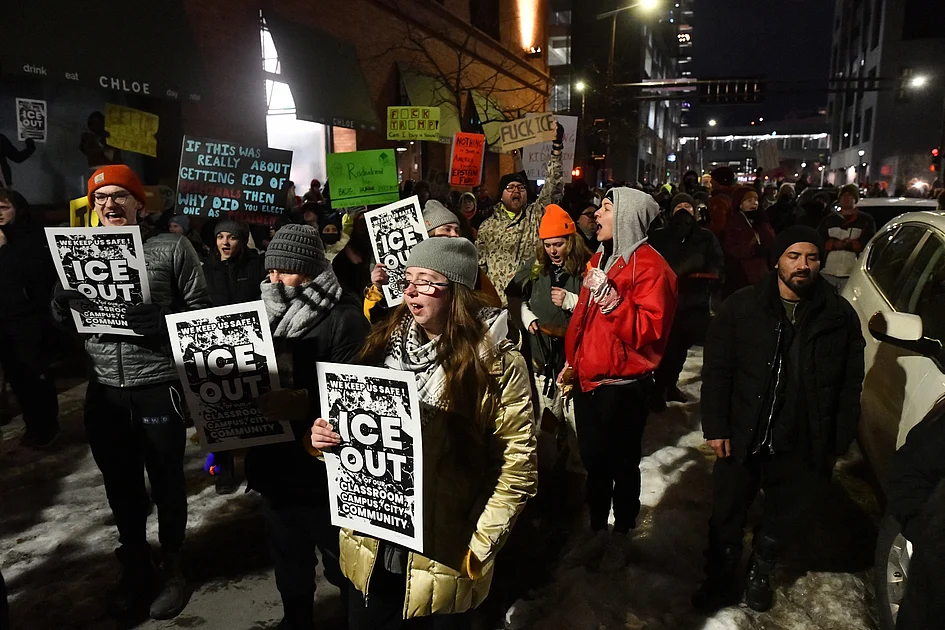
The fatal shooting of a Minneapolis woman by a U.S. Immigration and Customs Enforcement (ICE) agent has ignited nationwide protests and intensified federal-state tensions. Renee Good, a 37-year-old mother of three and activist, was killed during what authorities described as the “largest DHS operation ever” involving approximately 2,000 federal officers deployed to Minneapolis.
Protest organizers have coordinated over 1,000 events across the country under the banner “ICE Out For Good,” demanding an end to large-scale ICE deployments ordered by President Donald Trump. The shooting occurred during neighborhood patrols where activists track and document ICE activities, a practice that has become common in cities led by Democratic politicians.
The incident has produced sharply conflicting narratives. Homeland Security Secretary Kristi Noem characterized Good’s actions as “impeding” and “stalking” ICE agents, claiming the officer fired in self-defense against what she termed an “act of domestic terrorism.” Conversely, Minneapolis Mayor Jacob Frey dismissed the federal account as a “garbage narrative,” citing bystander video that appears to contradict official claims.
Minnesota Governor Tim Walz, who previously condemned the ICE deployment as “reckless” governance, has placed the state’s National Guard on alert and initiated an independent state investigation alongside the federal FBI probe. The legal jurisdiction question has emerged as a point of contention, with some Trump administration officials asserting federal officers enjoy immunity from state prosecution.
The shooting occurred just blocks from where George Floyd was killed in 2020, drawing inevitable comparisons to the previous administration’s handling of civil unrest. Video evidence shows conflicting details about the moment of shooting, with footage suggesting the vehicle may not have made contact with the officer despite claims that Good attempted to ram federal agents.
This incident represents the latest escalation in ongoing tensions between the Trump administration and Democratic-led cities over immigration enforcement strategies, with additional violent encounters reported in Portland, Oregon, further complicating the national landscape.