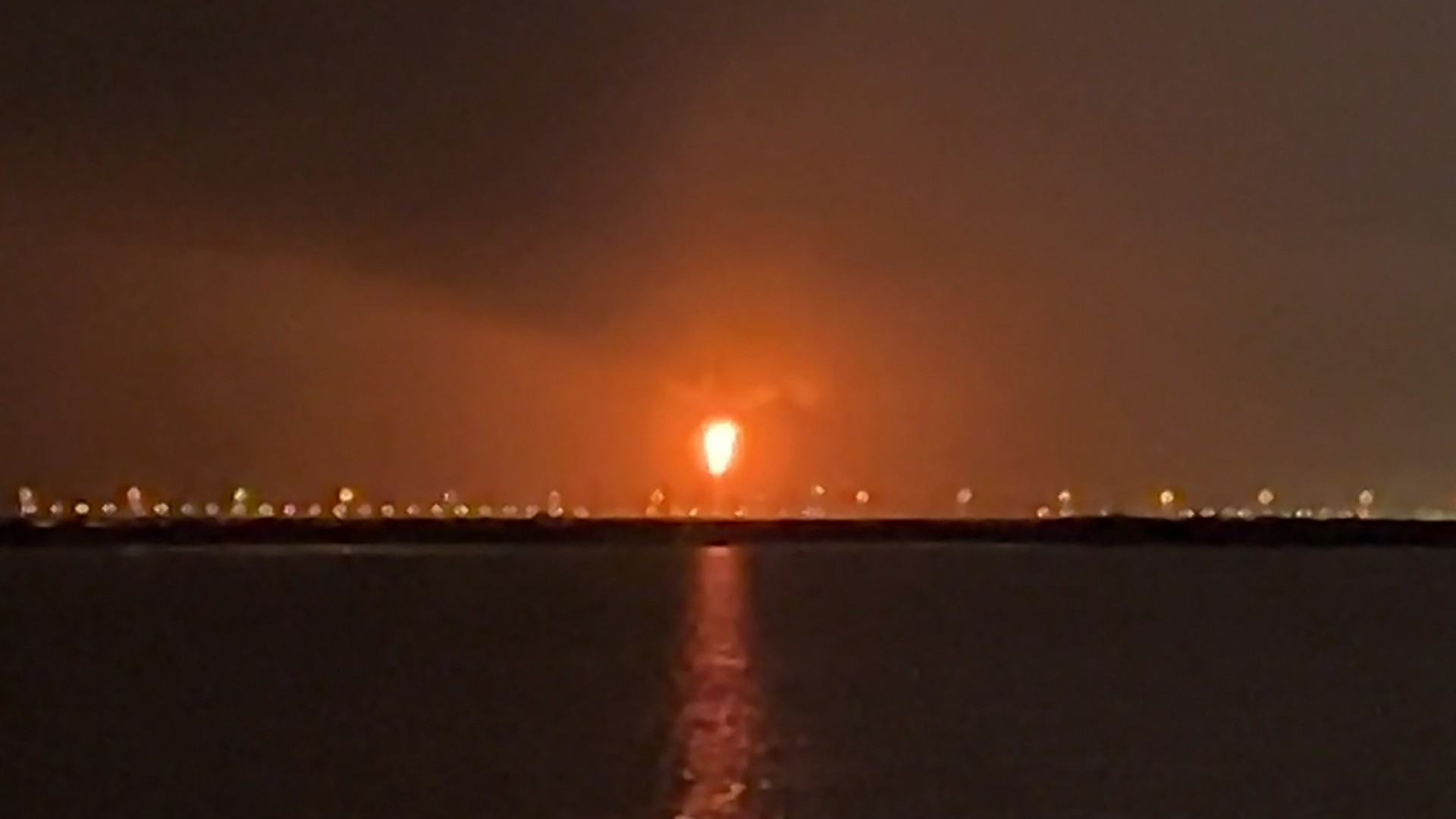
A sudden overnight explosion at Qatar’s primary liquefied natural gas (LNG) processing hub has left at least 54 people injured and 18 others unaccounted for, Qatari authorities confirmed in official statements released Monday.
The blast took place at the Barzan plant within the Ras Laffan Industrial City, a major energy complex located approximately 80 kilometers north of the capital Doha. Qatari Interior Ministry officials characterized the incident as an “internal explosion” stemming from a technical malfunction, ruling out foul play in the initial assessment. Emergency search and rescue teams were rapidly deployed to the site immediately after the incident was reported, and operators of the facility confirmed they have successfully brought the resulting fire under control.
In a public update, the ministry emphasized that no hazardous leakage from the facility has been detected, and there is no current threat to broader public safety in the surrounding areas. The facility is operated by QatarEnergy, the Gulf state’s state-owned national energy giant, which confirmed that all emergency protocols were activated without delay after the blast.
Spanning 295 square kilometers — an area roughly one-third the size of New York City — Ras Laffan Industrial City is the beating heart of Qatar’s multi-billion-dollar natural gas industry, the sector that forms the foundation of the country’s national economy. The complex processes massive volumes of natural gas extracted from Qatar’s offshore North Field, one of the largest natural gas reserves on Earth, converting the raw resource into LNG, liquefied petroleum gas (LPG), liquid fuels, petrochemical feedstocks and other valuable energy products for global export.
The incident comes on the heels of severe damage the facility sustained just months earlier, in March, when Iranian missile strikes targeted sites across Gulf nations hosting U.S. military installations, in retaliation for the U.S.-Israeli military campaign against Iran. Those strikes damaged two of Ras Laffan’s 14 LNG processing trains and one of its two gas-to-liquid facilities, cutting the country’s total LNG export capacity by 17% overnight. QatarEnergy CEO Saad al-Kaabi explained after the attack that the disruption would take 12.8 million tonnes of annual LNG production offline for three to five years, resulting in an estimated $20 billion in lost annual revenue.
Virtually all of Ras Laffan’s energy output is shipped to global markets via the Strait of Hormuz, the narrow strategic waterway separating Iran from Oman’s Musandam peninsula that Tehran has effectively closed in response to the ongoing U.S.-Israeli campaign. The combination of the March attack on the facility and the closure of this critical shipping chokepoint has already severely constrained Qatar’s primary export, adding new layers of uncertainty to the country’s energy sector and global natural gas markets already grappling with regional instability.