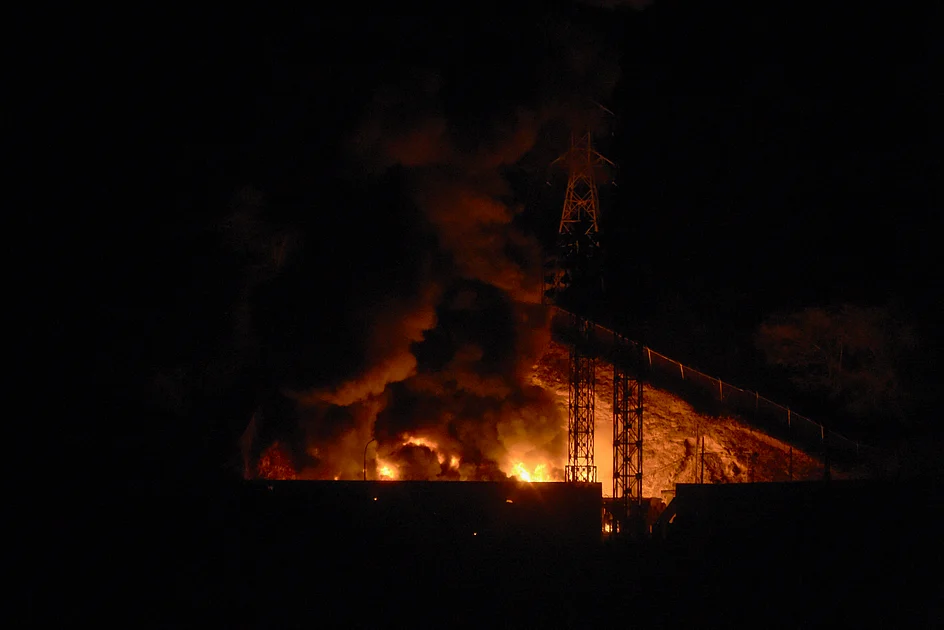
In a dramatic escalation of long-standing tensions, United States military forces conducted airstrikes against multiple Venezuelan military installations on January 3rd, 2026, including targets within the capital region of Caracas. The operation, characterized by former President Donald Trump as a “large-scale strike” against a “narco-terrorist regime,” represents the most significant direct military confrontation between the two nations in modern history.
The Trump administration has formally justified the intervention as a counter-narcotics measure, alleging that the government of Nicolás Maduro has systematically facilitated cocaine shipments from Venezuela to the United States. In a controversial social media announcement, Trump further claimed that Maduro and his wife, Cilia Flores, were apprehended during the operation and subsequently transported out of the country. Venezuelan authorities, however, have declared a national emergency while vehemently denying these capture claims and demanding verifiable proof of the leaders’ status.
This crisis culminates months of escalating hostilities that began with a US naval interdiction operation in the Caribbean in September 2025. The subsequent expansion of American military assets throughout the region, coupled with the seizure of a Venezuelan oil tanker and restrictive measures against sanctioned vessels, has severely strained Venezuela’s already crippled economy.
Washington’s accusations extend beyond general drug trafficking, specifically indicting Maduro as the leader of the ‘Cartel of the Suns’—an alleged network involving high-ranking Venezuelan military and political figures. These charges, initially filed by the US Justice Department in 2020, have been consistently dismissed by Caracas as politically motivated fabrications designed to orchestrate regime change.
Analysts suggest that while counter-narcotics provides the public justification, the conflict is fundamentally rooted in geopolitical competition. Venezuela’s strategic alliances with Russia, China, and Iran, combined with its vast petroleum reserves, have long positioned it as a focal point of US foreign policy concerns in Latin America. The operation is viewed by many as an attempt to curb growing foreign influence and reassert regional dominance.
Domestically, the strikes have received notable support among Venezuelan diaspora communities, particularly in electorally critical states like Florida. Recent polling indicates significantly higher support for military intervention among Venezuelans abroad (64%) compared to those within the country (34%).
The global implications are substantial, with energy markets monitoring the situation closely. Any prolonged disruption to Venezuela’s oil production capacity could trigger fluctuations in worldwide crude prices, potentially affecting economic stability and inflation rates across international markets.