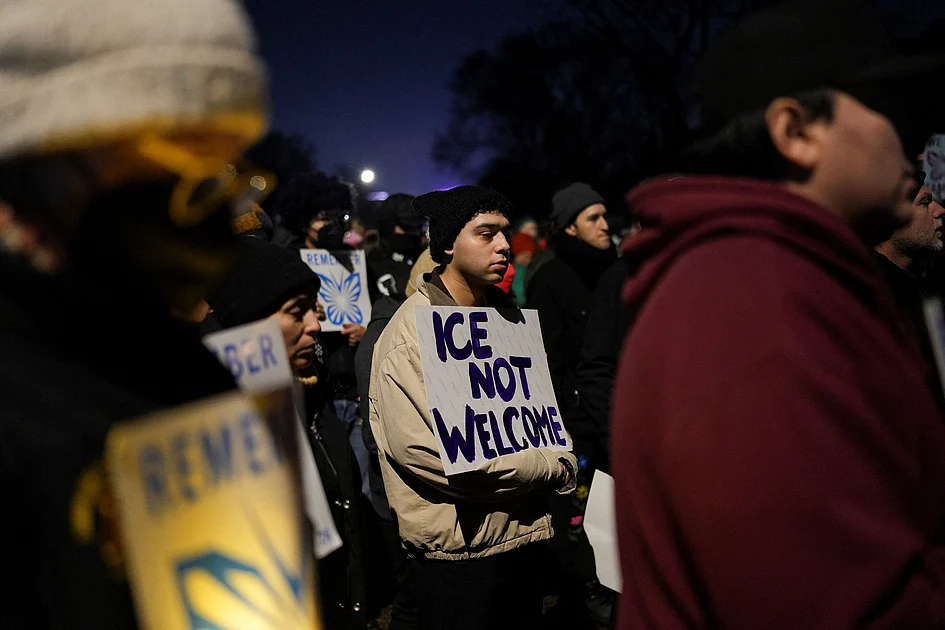
A profound legal and political confrontation has emerged following the fatal shooting of a 37-year-old Minneapolis woman by a U.S. Immigration and Customs Enforcement (ICE) agent during Wednesday’s federal operations. The incident has ignited intense scrutiny over the boundaries of federal authority and accountability mechanisms for law enforcement personnel.
The Department of Homeland Security initially characterized the shooting as defensive, claiming the agent feared for his life when a “violent rioter” allegedly attempted to run over officers. However, this official narrative faces serious challenges from video evidence authenticated by Reuters, which depicts a more complex sequence of events. The footage reveals agents approaching the vehicle, with one officer moving in front of the car before discharging multiple rounds as the driver attempted to maneuver away from the scene.
At the heart of the legal controversy lies the doctrine of federal immunity, which typically shields federal agents from state prosecution for actions undertaken within their official capacity. Minnesota state law permits deadly force only when reasonable officers would deem it necessary to prevent death or serious harm—a standard that mirrors federal guidelines but operates within different jurisdictional frameworks.
The potential for state prosecution faces significant hurdles, as the agent could petition for case removal to federal court and assert immunity protections. Successfully prosecuting such cases requires demonstrating that the officer’s actions were objectively unreasonable, clearly unlawful, or fell outside official duties—a formidable legal challenge given existing precedents.
Federal prosecution remains equally improbable due to the exceptionally high evidentiary threshold. Prosecutors would need to establish that the agent knowingly violated constitutional rights or acted with reckless disregard for legal boundaries—a standard that has resulted in few successful cases against law enforcement officials.
The incident has reignited debates about qualified immunity, which protects federal officers from civil lawsuits unless their conduct unequivocally violates established constitutional rights. This legal principle, extensively documented in Reuters’ 2020 investigative series, has frequently shielded officers from accountability in excessive force cases.
With the Trump administration maintaining support for the agent’s actions, the case exemplifies deepening tensions between federal enforcement strategies and local accountability measures, potentially establishing significant precedents for future law enforcement interactions during federal operations.