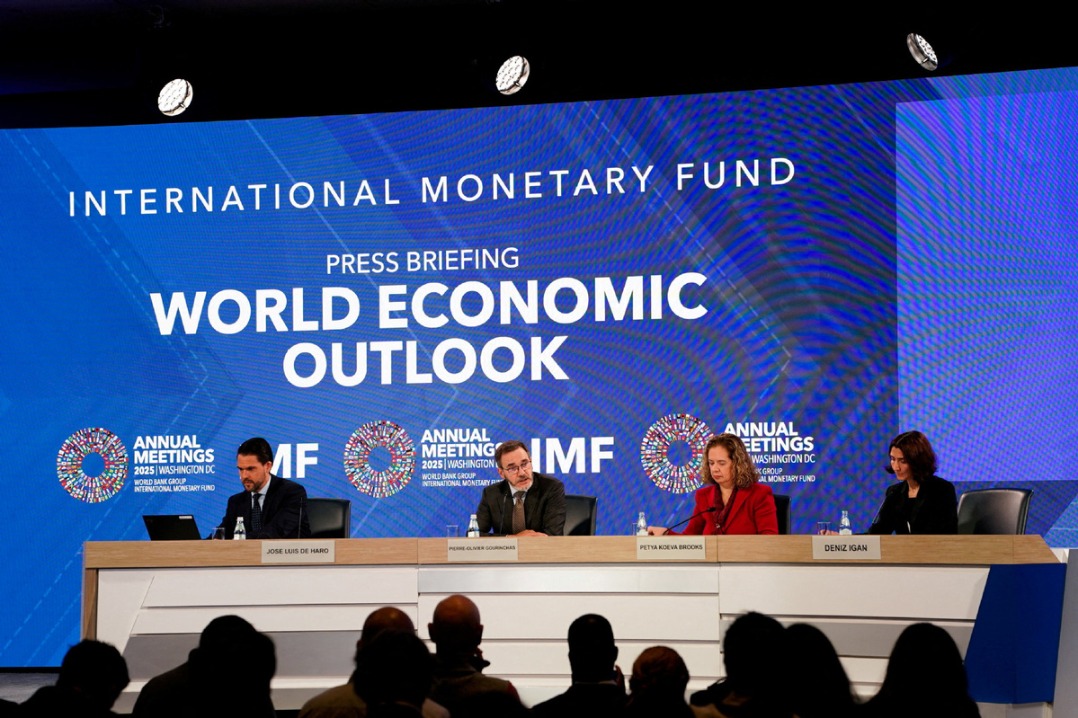
Recent shifts in US economic policies, including heightened tariffs and stricter immigration controls, are generating significant uncertainty and volatility in the global economic landscape, experts warn. During a recent webcast, Adam S. Posen, President of the Peterson Institute for International Economics, emphasized that the US economy is currently the primary source of global instability. These policy changes are dampening international trade and investment, with potential ripple effects across both advanced and emerging markets. The Peterson Institute’s semiannual forecast, released on October 9, 2025, highlighted that while optimism around artificial intelligence (AI) has temporarily buoyed the US economy, escalating trade barriers and reduced labor inflows are likely to exacerbate inflation and slow growth. The International Monetary Fund (IMF) echoed these concerns in its World Economic Outlook, projecting a gradual decline in global growth from 3.3% in 2024 to 3.1% in 2026, citing protectionism and policy uncertainty as key headwinds. US tariffs, now at their highest levels in nine decades, have sparked retaliatory measures and temporary trade front-loading, masking underlying economic weaknesses. Immigration restrictions have further strained labor markets, with net inflows reduced by an estimated 2 million in 2025. Despite these challenges, global GDP growth has been revised upward to 3.1% for 2025, driven by temporary factors such as inventory buildup and trade front-loading. However, experts caution that these practices are unsustainable and that inflationary pressures may intensify in the coming years. Emerging markets, particularly China and India, continue to sustain growth despite these headwinds, with China’s exports performing ‘surprisingly well.’ The IMF forecasts emerging market growth above 4%, with China playing a pivotal role in offsetting global economic slack. However, fragmentation in global trade is expected to limit gains, with trade growth projected at just 2.9% in 2025–2026. Posen concluded that US economic volatility remains the dominant force shaping the global outlook, with its policy responses to growth and inflation likely to have far-reaching consequences.