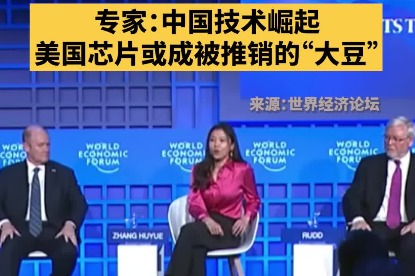
At the recent World Economic Forum in Davos, Switzerland, a prominent legal scholar presented a compelling vision of evolving US-China trade relations that could redefine global technology markets. Professor Angela Zhang Huyue from the University of Southern California Law School suggested during a January 21 panel discussion that American semiconductor exports might eventually follow the same trade pattern as agricultural commodities like soybeans.
The analogy draws attention to the potential future where advanced US chip manufacturers could become increasingly dependent on Chinese markets for revenue stability, mirroring the current agricultural trade dynamic where China serves as a crucial export destination for American soybeans. This perspective emerges amid ongoing technological competition and shifting global supply chain dynamics.
Professor Zhang’s analysis indicates that as China continues to advance its domestic semiconductor capabilities, the nature of US-China technology trade may undergo significant transformation. The commentary suggests that current export restrictions and trade tensions might eventually give way to more interdependent market relationships, where US technological products seek market access similar to commodity exports.
This observation comes at a critical juncture in global technology governance, where nations are reassessing strategic dependencies and economic security concerns. The semiconductor industry, fundamental to everything from consumer electronics to national security systems, represents a key battleground in this evolving economic landscape.
The analogy extends beyond mere trade volumes to encompass the potential for mutual economic dependency, where both nations would have vested interests in maintaining stable technology trade flows, despite current geopolitical friction and competition for technological supremacy.