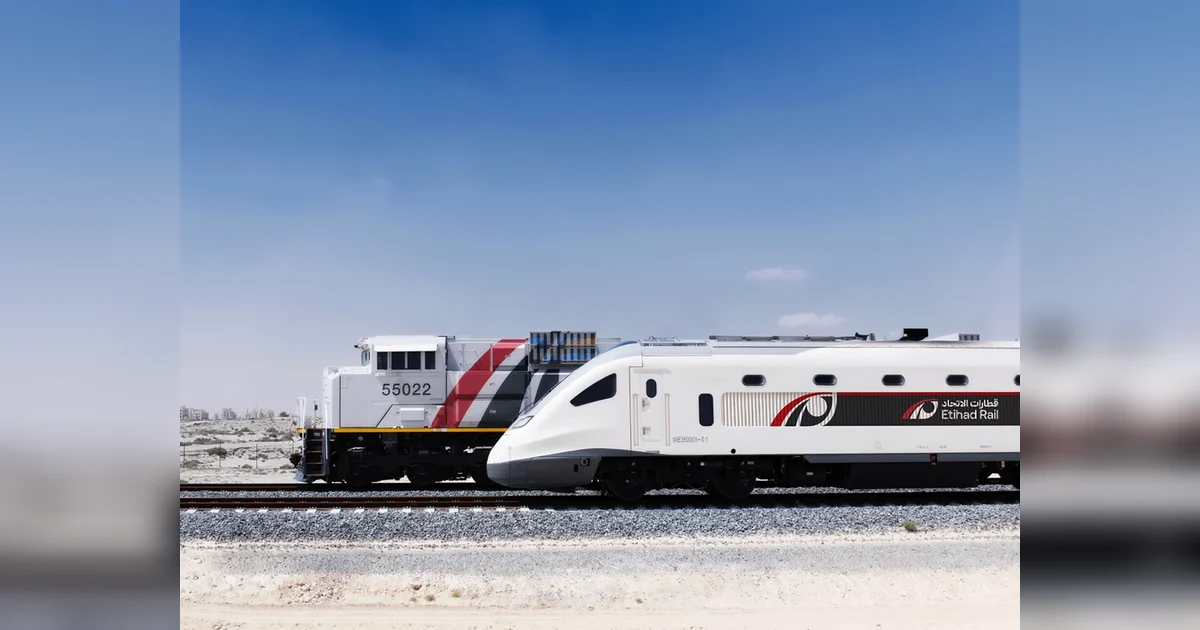
The United Arab Emirates is poised to revolutionize its transportation infrastructure with the scheduled 2026 launch of the Etihad Rail passenger network. This ambitious high-speed rail system will seamlessly connect 11 key urban centers and regions across the emirates, fundamentally reshaping domestic travel patterns and economic connectivity.
Spanning 900 kilometers from Ghuweifat in Abu Dhabi to Fujairah on the eastern coast, the network promises to dramatically reduce inter-emirate travel times. Projections indicate a mere 57-minute journey between Abu Dhabi and Dubai, while the Abu Dhabi-Fujairah route will take approximately 100 minutes—less than half the current road travel duration. The Ruwais-Abu Dhabi connection will be completed in just 70 minutes.
Beyond transportation benefits, Etihad Rail represents a strategic national investment expected to serve as the country’s economic backbone. Urban planning experts anticipate the network will stimulate suburban development as residents gain convenient access to urban centers via rail. The project aligns strongly with the UAE’s sustainability objectives and Net Zero 2050 initiative by potentially removing hundreds of cars from roadways daily.
International partnerships have been established to ensure operational excellence. Etihad Rail recently formed a joint venture with global transport leader Keolis, creating Etihad Rail Mobility. This entity will oversee comprehensive operations including train services, multimodal connections (buses, taxis, parking), and staff training programs.
Station infrastructure will feature three distinct categories: operational maintenance depots, freight terminals, and passenger stations. Key locations already announced include Sakamkam in Fujairah and University City in Sharjah, with potential connectivity to Al Maktoum International Airport at Dubai World Central.
The rail service will utilize modern trains capable of reaching speeds up to 200 km/h, each accommodating 400 passengers across economy, family, and business class configurations. Stations will incorporate automated barrier systems similar to Dubai Metro, along with advanced ticketing machines for seamless journey planning.
With an anticipated capacity of 36 million annual passengers by 2030, Etihad Rail represents one of the most significant infrastructure developments in recent UAE history, promising to enhance economic integration, reduce environmental impact, and transform how residents navigate the federation.