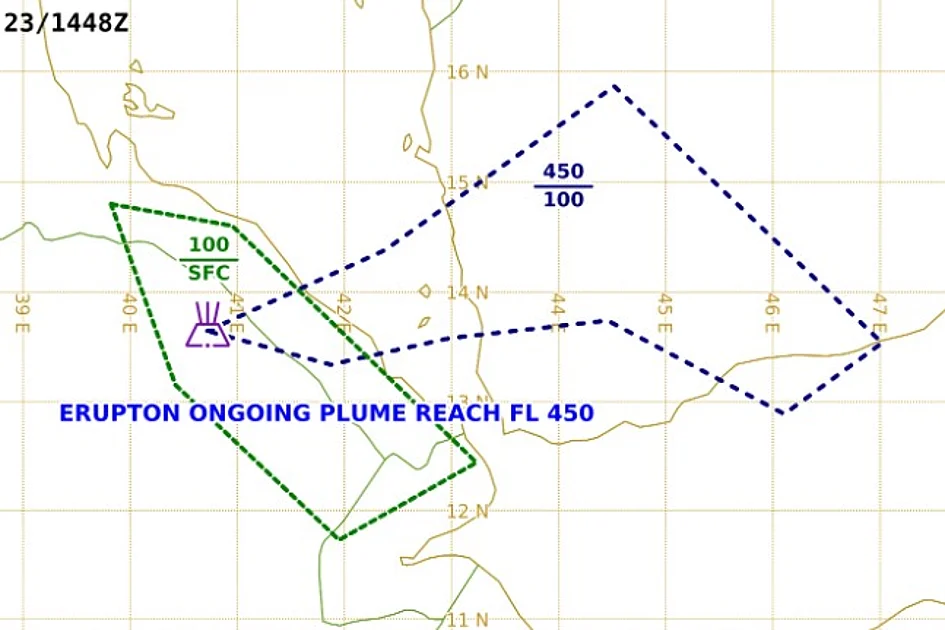
A long-dormant volcano in Ethiopia’s northeastern Afar region, Hayli Gubbi, has erupted for the first time in nearly 12,000 years, according to the Toulouse Volcanic Ash Advisory Centre (VAAC). The eruption, which occurred on Sunday, sent thick plumes of smoke soaring up to 14 kilometers (nine miles) into the sky. Located approximately 800 kilometers (500 miles) northeast of Addis Ababa near the Eritrean border, the volcano lies within the geologically active Rift Valley, where two tectonic plates converge. The Smithsonian Institution’s Global Volcanism Program confirmed that Hayli Gubbi had no recorded eruptions during the Holocene epoch, which began around 12,000 years ago. Volcanologist Simon Carn of Michigan Technological University also corroborated this on Bluesky, stating that the volcano has no history of Holocene activity. The eruption produced a significant ash cloud that drifted over Yemen, Oman, India, and northern Pakistan. Environment authorities in Oman and Saudi Arabia have been monitoring the situation but assured the public of no direct impact. The VAAC’s latest update indicates that the eruption has ceased, and the ash cloud is now moving towards China.