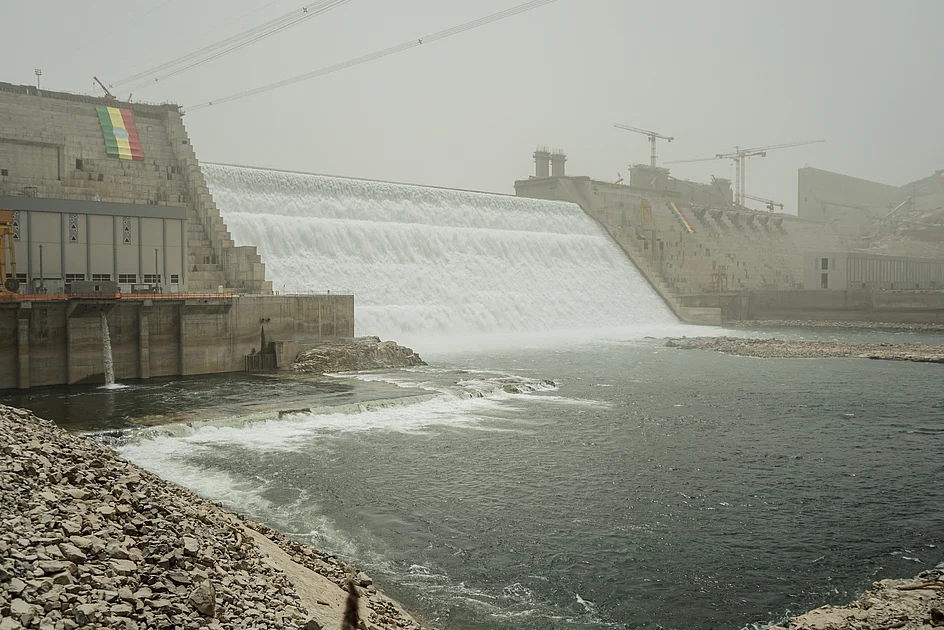
Ethiopia has officially launched the Grand Ethiopian Renaissance Dam (GERD), Africa’s largest hydroelectric project, marking a significant milestone in the nation’s development ambitions. The $5 billion dam, situated on a tributary of the River Nile, is expected to generate up to 5,150 MW of electricity, providing power to millions of Ethiopians and enabling energy exports to neighboring countries. However, the project has exacerbated long-standing tensions with downstream Egypt, which relies on the Nile for 90% of its freshwater supply. Egypt fears the dam could disrupt its water access during droughts and has vehemently opposed the project, citing violations of colonial-era water treaties. Sudan, another downstream nation, has joined Egypt in calling for legally binding agreements on the dam’s operation but could benefit from improved flood management and affordable energy. The GERD has become a symbol of national unity in Ethiopia, which funded the project domestically without foreign assistance. Despite the geopolitical rift, Ethiopian Prime Minister Abiy Ahmed has emphasized the dam’s potential as a ‘shared opportunity’ for regional development. Independent studies indicate no significant disruptions to downstream water flow so far, attributed to cautious reservoir filling during wet seasons. However, rural Ethiopians may face delays in accessing the dam’s benefits, as only half of the population is connected to the national grid. The dam’s reservoir has flooded an area larger than Greater London, promising steady water supply for hydropower and irrigation while mitigating floods and droughts. Meanwhile, Ethiopia’s strategic plans to gain access to the Red Sea via Eritrea or Somalia have further strained relations with Egypt, which has backed Ethiopia’s regional adversaries. Analysts warn that tensions over the dam could escalate, potentially destabilizing the region.