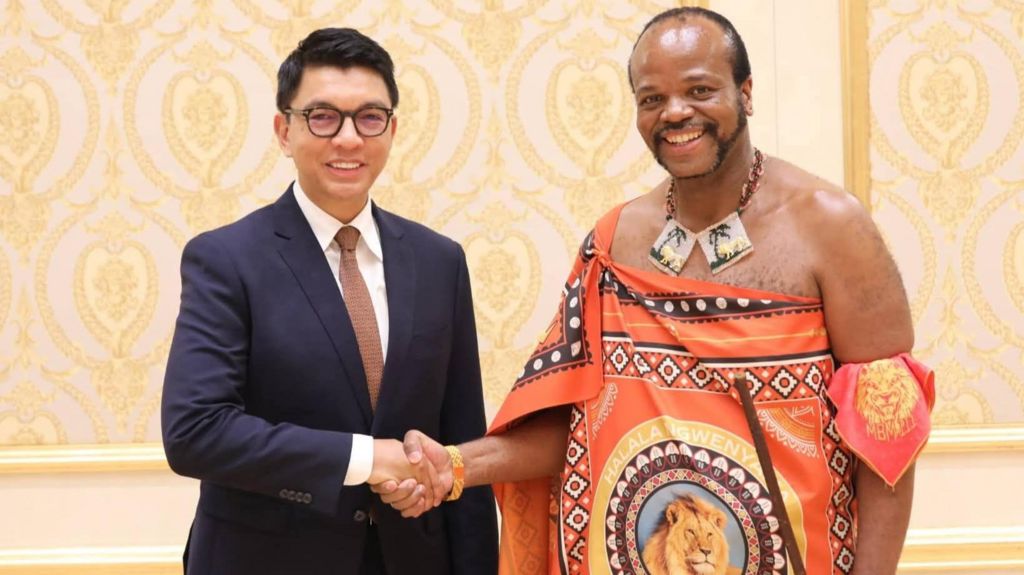
A significant diplomatic rift has emerged between Madagascar’s military government and the Kingdom of Eswatini following a controversial meeting between King Mswati III and deposed Malagasy President Andry Rajoelina. The encounter, which took place last week in Eswatini, has drawn sharp condemnation from Madagascar’s current military leadership.
Colonel Michael Randrianirina, Madagascar’s military leader, issued a formal statement characterizing the visit as a “grave infringement of sovereignty” and “politically unacceptable.” The military government emphasized that Rajoelina had voluntarily renounced his Malagasy nationality after acquiring foreign citizenship, rendering any claims of legitimate representation “legally unfounded.”
The backdrop to this diplomatic confrontation stems from Rajoelina’s ouster in October 2025 following widespread youth-led protests over persistent power and water shortages. The demonstrations culminated in military intervention that ultimately removed Rajoelina from power, with reports indicating approximately 30 casualties during the unrest.
Eswatini’s monarchy has defended the meeting through spokesperson Percy Simelane, asserting that the engagement was conducted in consultation with the Southern African Development Community (SADC) and was part of Eswatini’s regional diplomatic facilitation role. “The deposed leader was not seeking protection or intervention from the Kingdom of Eswatini,” Simelane clarified, describing Madagascar’s criticism as “misguided and unfortunate.”
The military authorities in Antananarivo expressed concern that Rajoelina’s reception could disrupt Madagascar’s ongoing national reconciliation process and constitutional restoration efforts. Colonel Randrianirina has previously committed to organizing new elections within a two-year timeframe, in alignment with SADC’s directive for Madagascar to submit a detailed roadmap for democratic restoration by February 28th.
This meeting marks Rajoelina’s first visible diplomatic engagement since fleeing Madagascar, signaling potential complications in the region’s political dynamics as Madagascar navigates its transition back to constitutional governance.