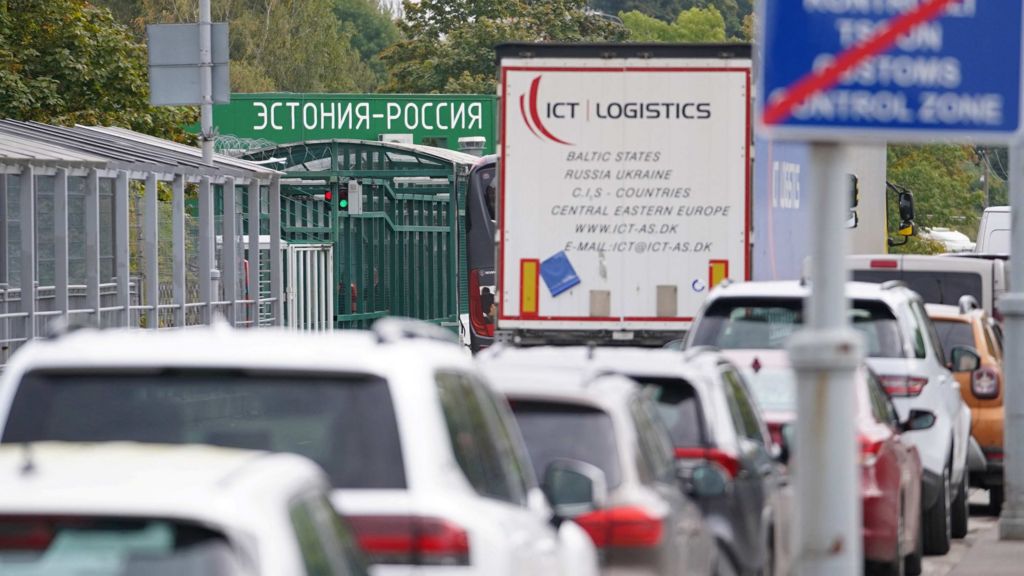
Estonia’s national government has formally announced plans to close all remaining operational road border crossings with Russia starting December 1, in direct response to a foiled alleged arson and sabotage attempt at a domestic drone manufacturing facility that Estonian authorities have tied directly to the Russian state. The targeted facility, operated by Threod Systems, a leading European producer of tactical reconnaissance and combat drones with public client lists including NATO member states and Ukraine, was breached by a group of suspects last Saturday, who attempted to ignite widespread damage using flammable accelerants before being intercepted by heightened on-site security. No major structural harm was inflicted on the plant, according to Prime Minister Kristen Michal, who framed the incident as a deliberate escalation in the Kremlin’s ongoing broader hybrid warfare campaign targeting European nations. Local Estonian media reports confirm the detained suspects are Latvian nationals, apprehended immediately following the failed break-in. Estonia’s Foreign Minister Margus Tsahkna emphasized that the upcoming border closure will drastically curtail Moscow’s operational capacity to deploy covert hostile operatives on Estonian sovereign territory. The formal regulatory approval for the border shutdown is slated to be finalized in an official government session next week. Currently, Estonia maintains 3 active road border checkpoints across its 338-kilometer combined land and maritime border with Russia, all of which already operate under strict entry restrictions. One of the highest-traffic crossing points sits in Narva, Estonia’s third-largest city, which is home to a large Russian-speaking ethnic minority population; the impending full closure is expected to create significant logistical and personal disruptions for cross-border family communities with relatives residing on both sides of the frontier. The Russian government has forcefully rejected all allegations of involvement in the sabotage plot, with Kremlin spokesperson Dmitry Peskov dismissing Estonia’s accusations as entirely baseless and criticizing the planned border closure as a deliberate act of “building a wall” between the two neighboring states, adding that historical precedent has proven such barriers never benefit the parties that construct them. The incident aligns with a wider pattern of allegations across Western and Central European nations, which have repeatedly accused the Russian state of orchestrating covert sabotage operations targeting military and civilian supply chains supporting Ukraine since Moscow launched its full-scale invasion of the country in February 2022. Earlier this year, six individuals were convicted and handed prison sentences in the United Kingdom for a Russia-linked arson attack on a London warehouse that stored humanitarian and military aid earmarked for Ukrainian forces. Baltic state officials have for years raised public alarms over sustained hybrid warfare incursions from Russia, as well as longstanding concerns over the Kremlin’s unstated territorial ambitions in the region, while major European Ukraine allies including France, Germany, the United Kingdom and Poland have all publicly documented similar alleged Russia-linked sabotage plots on their domestic soil over the past 12 months.
Estonia to close Russia border crossings after attempted drone factory arson attack