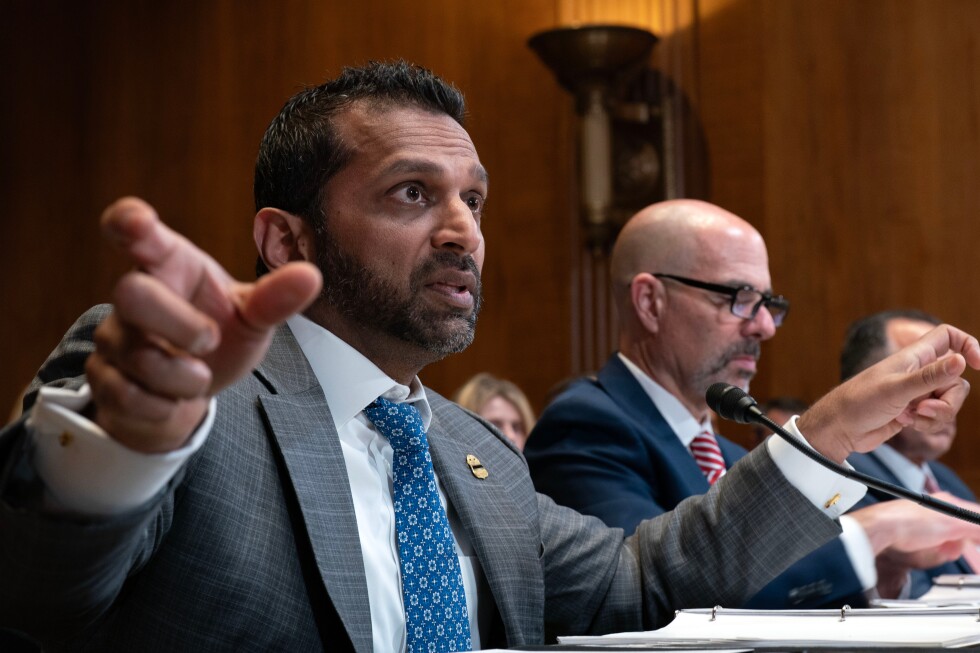
Controversy has engulfed FBI Director Kash Patel after an undisclosed exclusive snorkeling excursion at the hallowed USS Arizona Memorial in Pearl Harbor, Hawaii, was uncovered through government emails obtained by the Associated Press, adding to a growing pattern of scrutiny over his blend of official work and personal leisure during taxpayer-funded travel.
Last August, Patel made a planned stop in Hawaii to tour the FBI’s Honolulu field office and meet with local law enforcement on his way to official engagements in Australia and New Zealand. What the FBI did not disclose in its public statements was that after concluding his business in Oceania, Patel returned to Hawaii for two additional days, during which he took part in the coordinated military VIP snorkeling trip around the sunken USS Arizona, a military cemetery that holds the remains of more than 900 U.S. sailors and Marines killed in the 1941 Japanese attack that drew the United States into World War II.
Snorkeling and recreational diving are almost universally prohibited at the site, which is managed jointly by the U.S. Navy and the National Park Service. Only a small number of authorized groups are permitted access: marine archaeologists and National Park Service crews conducting routine condition surveys, and divers facilitating the interment of USS Arizona survivors who choose to be buried alongside their former shipmates. Since at least the Obama administration, a tiny, select group of high-ranking dignitaries with direct oversight responsibility for the memorial have been quietly granted exceptions, though neither the Navy nor the Park Service has released details on how often these excursions occur or who receives approval.
Interviews with former officials and individuals familiar with the site’s protocols confirm that no FBI director dating back to at least 1990 has ever requested or received permission to snorkel at the memorial. One anonymous former government diver told the AP that granting access to a non-memorial official like Patel is highly unusual, as the activity poses unique physical risks, and creates unnecessary security, safety, and logistical burdens at one of the nation’s most sensitive historic sites.
The revelation of the undisclosed trip has reignited criticism of Patel’s leadership, which has been dogged for more than a year by questions over his inappropriate use of government resources. Most recently, in February, Patel faced backlash after video emerged of him partying in a locker room with the U.S. men’s Olympic hockey team following their gold medal win at the Milan Winter Olympics. Patel has defended that appearance, claiming it was tied to a pre-planned cybercrime investigation with Italian law enforcement.
Stacey Young, founder of Justice Connection — a coalition of former federal prosecutors and agents that advocates for the Department of Justice’s institutional independence — condemned the excursion. “It fits a pattern of Director Patel getting tangled up in unseemly distractions — this time at a site commemorating the second deadliest attack in U.S. history — instead of staying laser-focused on keeping Americans safe,” Young said.
The Navy confirmed the outing in a statement to the AP, though it was unable to identify who originally approved or arranged the trip. Navy spokesperson Captain Jodie Cornell noted that all participants were instructed not to make contact with the sunken wreckage and received a full briefing on the site’s status as a sacred cemetery. The service called Patel’s excursion “not an anomaly” but declined to share details on how frequently similar VIP trips are organized. The National Park Service, for its part, said it was not involved in coordinating the trip and declined all further comment.
Reactions to the excursion have been split among veterans and family members of the USS Arizona’s fallen crew. Hack Albertson, a Marine veteran who participates in annual authorized dives to survey the wreck on behalf of the Paralyzed Veterans of America, called the trip inappropriate. “It’s like having a bachelor party at a church. It’s hallowed ground,” Albertson said. “It needs to be treated with the solemnity it deserves.”
By contrast, some leaders of groups representing survivors’ families said they did not object to rare official excursions, though many expressed frustration that family members of fallen crew members are routinely denied the same access. Deidre Kelley, national president of the Sons and Daughters of Pearl Harbor Survivors, noted that no original survivors of the attack remain alive, writing, “I have not heard of anyone who would object to these visits as they are very rare.”
Former acting Defense Secretary Christopher Miller, for whom Patel served as chief of staff during the final months of the Trump administration, confirmed he had snorkeled at the site during an official visit years ago, describing the trip as a “somber and meaningful historical tour” rather than a recreational activity. Miller added that Patel did not join him on that earlier excursion.
Flight tracking data shows the FBI director’s official Gulfstream G550 jet remained in Hawaii for two nights after Patel’s official business concluded, before flying onward to Las Vegas, where Patel maintains his permanent residence. The FBI has defended the overall Hawaii trip as part of Patel’s official national security engagements, noting that top military commanders at Joint Base Pearl Harbor–Hickam routinely host senior U.S. officials on official travel. The bureau has declined to answer specific questions about the snorkeling excursion or what other activities Patel conducted during his two extra days on the island.
This is not the first controversy to arise from Patel’s August trip to Oceania. After opening the FBI’s first standalone office in Wellington, New Zealand, Patel faced criticism when it was revealed he had gifted local police and intelligence leaders 3D-printed replica pistols that are illegal to possess under New Zealand’s gun control laws.
The Associated Press’s investigative team obtained records of the excursion through a public records request, with additional reporting contributed from correspondents in Honolulu and New York.